5 Insanely Simple Tricks to Find Dim Sum
Master dim sum with 5 simple tricks: spot yum cha traditions, navigate carts, ID Big Four, pick teas, and explore top spots!
What Is Dim Sum — and Why Everyone Is Obsessed With It
Dim sum is a Cantonese tradition of sharing small, bite-sized dishes — dumplings, buns, rolls, and more — enjoyed over tea during brunch. The term literally translates to "touch the heart."
Here's a quick overview of what you need to know:
- What it is: Small plates of steamed, fried, or baked dishes shared family-style
- When it's served: Traditionally late morning through early afternoon
- Where it comes from: Guangdong (Canton) province in southern China
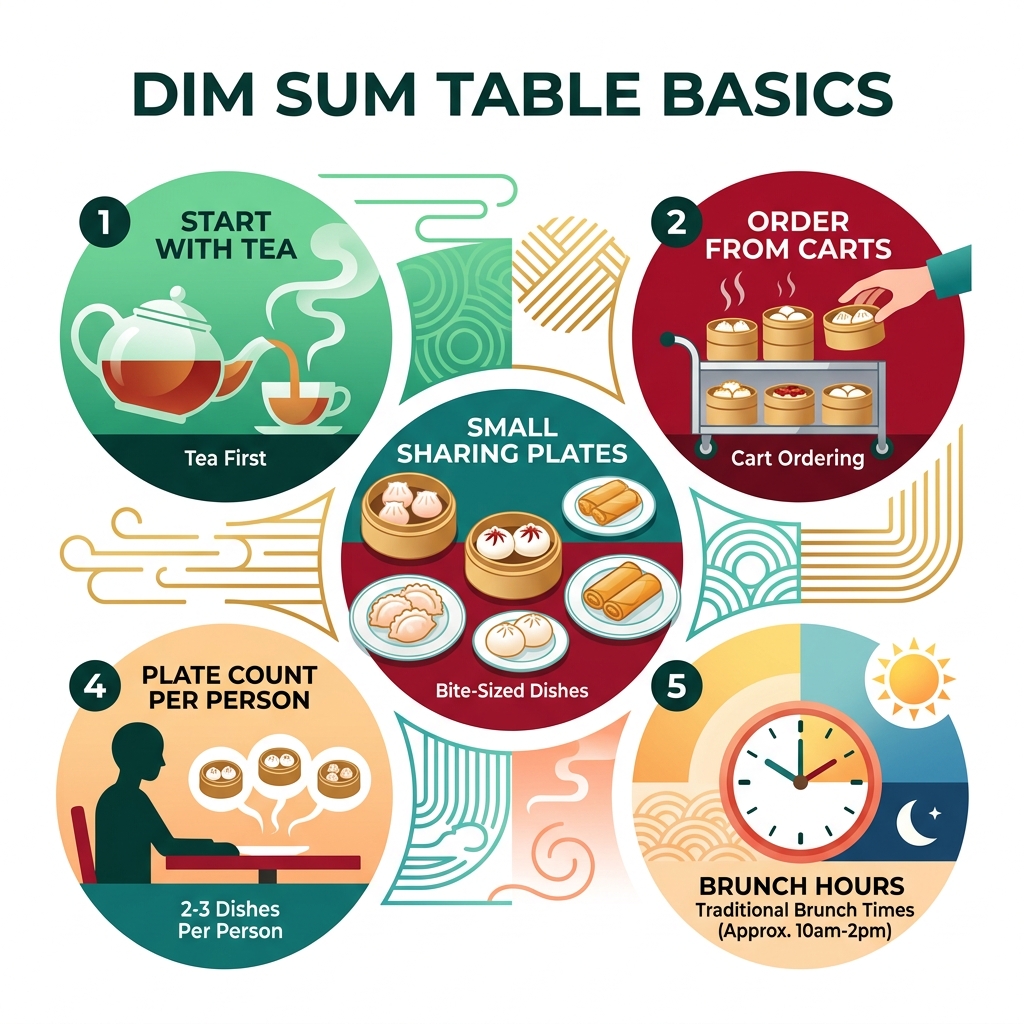
- How it works: Order from rolling carts or a checklist menu, always starting with tea
- How much it costs: Roughly $12–$20 per person for 2–3 dishes each
There's a reason dim sum fills restaurants from Hong Kong to Los Angeles every Sunday morning. It's not just food — it's an experience. Steaming bamboo baskets stacked high, the clatter of carts rolling past, tea poured for elders first. It's leisurely, communal, and deeply satisfying.
But if you've never been, the whole thing can feel a little overwhelming. Which dishes do you order? How do you flag down the cart? What tea do you choose?
That's exactly what this guide is for. Whether you're a first-timer or a regular looking to go deeper, these five simple tricks will help you find — and fully enjoy — great dim sum right here in Southern California.
Essential dim sum terms:
Trick 1: Look for the "Yum Cha" Tradition
To find the most authentic dim sum, you have to look for the spirit of "yum cha." In Cantonese, yum cha literally means "to drink tea." While we often focus on the dumplings, the tradition actually began in teahouses. Hundreds of years ago, weary travelers along the famous Silk Road and rural farmers would frequent local teahouses in the Guangdong province for a rest.
Initially, it was believed that eating food with tea would lead to excessive weight gain, but once it was discovered that tea actually aids digestion, teahouse owners began adding small snacks to their service. This eventually evolved into the elaborate brunch culture we see today in places like Downtown Los Angeles and the San Gabriel Valley.

What is Dim Sum and What Does it Mean?
The term dim sum (or dian xin in Mandarin) has a poetic etymology. Most scholars agree it means to "touch the heart." It refers to small food items intended not to sate a massive hunger, but to delight the soul and accompany a good pot of tea. Historically, it was a snack for the "morning after" or a light mid-day meal. In modern L.A., we treat it as a grand brunch, but the core remains the same: small portions, high variety, and shared joy.
The Historical Evolution of Dim Sum
The history of dim sum is as layered as a piece of turnip cake. Some legends date the term back to the Eastern Jin Dynasty (317–420 AD), where a general had civilians make buns and cakes to send to the front lines as a way to show "a little bit of heart" (gratitude) to his soldiers.
By the 10th century, particularly in the city of Guangzhou, teahouses saw a massive boom due to increased commercial travel. Royal chefs during the Song Dynasty (960–1279) further refined the craft, creating delicate dishes like minced pheasant and desserts made from steamed milk. As Cantonese people emigrated globally, they brought these traditions to the West, with the first major dim sum parlors opening in U.S. Chinatowns in the 1920s.
Trick 2: Master the Pushcart and Menu Navigation
If you walk into a dim sum hall in Culver City or Monterey Park and see metal trolleys whizzing by, you’ve found a traditional gem. These pushcarts are the heartbeat of the old-school experience. Each cart is typically heated by steam or a small flame and helmed by a server who calls out the dishes inside.
When a cart passes, you simply point to what you want. The server will place the bamboo basket on your table and press a stamp onto a card that stays at your table. This card tracks your bill based on the size of the dish (small, medium, large, or "special").
However, many modern restaurants—including high-end spots in Beverly Hills or Santa Monica—have shifted to "a la carte" checklist menus. You simply tick off what you want with a pencil, and the kitchen steams it to order. While less theatrical, this often results in fresher, hotter food.
| Feature | Pushcart Service | A La Carte (Checklist) |
|---|---|---|
| Speed | Instant gratification | 10-15 minute wait |
| Visuals | You see exactly what you get | You order based on names/photos |
| Freshness | Can vary depending on cart laps | Steamed fresh to order |
| Vibe | Loud, bustling, traditional | Quieter, modern, organized |
Pricing and Cost of a Dim Sum Brunch
One of the best things about dim sum is that it is incredibly budget-friendly for the quality of labor involved. Typically, a dim sum brunch costs between $12 and $20 per person. We recommend ordering about 2 to 3 dishes per person in your group.
Dishes are priced by category. A "small" dish might be $4.00, while a "special" or "extra-large" dish (like sticky rice or ribs) might be $7.00 or $8.00. Because everything is shared, you can taste a dozen different flavors without breaking the bank.
Trick 3: Identify the "Big Four" and Seasonal Varieties
Across the globe, there are at least two thousand types of dim sum, though most local restaurants in Los Angeles County will feature a rotation of about 40 to 50 common varieties. If you want to find the "real deal," look for the "Big Four" staples. If a kitchen masters these, they are likely top-tier.
- Har Gow (Shrimp Dumplings): The benchmark of a chef's skill. The skin should be translucent, sturdy enough to hold with chopsticks, but thin enough to melt in your mouth. A master chef aims for 12 or more pleats on each dumpling.
- Siu Mai (Pork and Shrimp Dumplings): Open-topped dumplings usually filled with ground pork, shrimp, and mushrooms, topped with a dot of crab roe or carrot.
- Char Siu Bao (BBQ Pork Buns): These come in two forms—steamed (white and fluffy) or baked (with a shiny, sweet glaze).
- Egg Tarts (Dan Tat): Flaky pastry crusts filled with a rich, yellow egg custard.
Popular Steamed and Fried Dim Sum Dishes
Beyond the staples, our favorites include Cheung Fun (rice noodle rolls filled with shrimp or beef and doused in sweet soy sauce) and Lo Mai Gai (sticky rice wrapped in a lotus leaf). If you’re feeling adventurous, look for "Phoenix Talons"—braised chicken feet in a savory black bean sauce. For a sweet finish, don't miss Sesame Balls filled with red bean or lotus paste. You can check out a Visual Glossary to help identify these on the carts.
Modern Variations and Fusion Twists
L.A. is a hub for innovative restaurants that push the boundaries of tradition. We’ve seen a rise in "Instagrammable" dim sum, such as buns shaped like little pigs or hedgehogs. Fusion twists are also popular, with chefs incorporating luxury ingredients like truffle, Wagyu beef, or even "chicken and waffles" inspired dumplings. Some locations even offer Halal dim sum, substituting pork with chicken or beef to cater to a wider community.
Trick 4: Follow the Tea Steam for Authenticity
You cannot have dim sum without tea. In fact, if a restaurant doesn't ask for your tea order immediately, it might not be a traditional spot. Tea is essential because it acts as a palate cleanser and helps wash down the oil and richness of the fried and steamed dishes.
Common pairings include:
- Jasmine: Light, floral, and the most popular choice for beginners.
- Chrysanthemum: A herbal, slightly sweet tea often mixed with Pu-erh.
- Pu-erh (Bo-lay): An earthy, fermented black tea known for its health benefits, including aiding digestion and potentially lowering cholesterol.
- Oolong: A semi-fermented tea that strikes a balance between green and black tea.
Key Etiquette Rules for Eating Dim Sum
To eat like a pro in the San Gabriel Valley or Hollywood, follow these six rules:
- Pour for others first: Always fill your friends' cups before your own. It’s a sign of respect.
- The Finger Tap: If someone pours tea for you, tap your index and middle fingers twice on the table. This is a silent "thank you." Legend says an emperor once traveled incognito; his servants couldn't kowtow without blowing his cover, so they used their fingers to represent "bowing."
- The Lid Signal: When your teapot is empty, don't wave down the server. Simply flip the lid over or leave it slightly offset. They’ll see it and bring hot water.
- Communal Chopsticks: Use the serving spoons or the "public" chopsticks provided to move food to your plate.
- Don't claim a whole basket: Each basket usually has 3 or 4 pieces. Take one and leave the rest for the table.
- Pace yourself: Dim sum is a marathon, not a sprint. Order a few things at a time so they stay hot.
Trick 5: Explore Beyond the Chinatown Borders
While L.A.'s historic Chinatown is a great starting point, the most concentrated "dim sum" hubs have moved east and west. You can find high-quality restaurants in every corner of the county, from the upscale spots in Beverly Hills to the massive banquet halls of the San Gabriel Valley.
For those in Southern California, local favorites often mentioned include Capital Seafood, China Garden, and Seafood Cove. These spots are known for their consistency and ability to handle large crowds on weekend mornings.
Making Dim Sum at Home
If you can't make it to a restaurant, you can recreate the experience in your own kitchen. Many Asian supermarkets in areas like Silverlake, Echo Park, or Venice sell high-quality frozen dumplings.
Tips for home cooking:
- Use a Bamboo Steamer: It absorbs excess moisture and gives the dumplings a better texture than metal steamers.
- Don't Overcrowd: Leave space for the steam to circulate.
- Line the Basket: Use parchment paper or cabbage leaves to prevent sticking.
- Catering: Many local restaurants also offer catering packages for birthdays or corporate events, bringing the "dumpling culture" directly to you.
Frequently Asked Questions about Dim Sum
What is the best time to go for dim sum?
Early is always better! Most restaurants serve from 10:00 AM to 2:30 PM. Arriving by 10:30 AM ensures you get the freshest batches and avoids the massive hour-long waits that happen around noon.
How many dishes should I order per person?
A good rule of thumb is 2 to 3 dishes per person. If you are a group of four, 8 to 10 dishes will provide a massive variety and leave everyone full.
Is dim sum always served with tea?
Yes, in a traditional setting. Even if you order another drink, a pot of tea is usually standard for the table. It is the core of the yum cha experience.
Conclusion
At Edible L.A., our mission is to share the story of our local food culture, season by season. Dim sum is a vital part of the Southern California tapestry—a meal that encourages us to slow down, talk to our neighbors, and share a "little bit of heart."
Whether you’re exploring a hidden gem in Glassell Park or a bustling hall in the San Gabriel Valley, dim sum is about more than just the food. It’s about the steam, the tea, and the people around the table. So grab your chopsticks, tap your fingers in thanks, and dive into one of the world's greatest culinary traditions.