Pan Fried Plantains Are the Side Dish You Deserve
Learn how to cook plantains in a pan for caramelized maduros! Ripeness guide, frying tips, and pro storage for perfect sweet side dish.
The Side Dish L.A. Has Been Selling On
How to cook plantains in a pan is simpler than most people think — and the results are wildly good.
Here's the quick version:
- Choose ripe plantains — look for yellow skin with black spots or mostly black skin
- Peel and slice diagonally into ½-inch thick pieces
- Heat oil (coconut, avocado, or vegetable) in a nonstick skillet over medium heat
- Fry 2-3 minutes per side until deep golden brown and caramelized
- Drain on paper towels, season with salt, and serve immediately
That's really it.
Pan-fried sweet plantains — known as maduros or plátanos maduros in Caribbean and Latin American cuisine — are one of those dishes that feel indulgent but take under 15 minutes start to finish. They're crispy at the edges, soft in the middle, and naturally sweet without adding a gram of sugar.
In Los Angeles, plantains show up across dozens of cuisines — Cuban, Dominican, Salvadoran, Jamaican, and more. They deserve a permanent spot on your weeknight rotation.
Plantains 101: The Starchy Powerhouse
At first glance, a plantain looks like a banana that’s been hitting the gym. It’s larger, has thicker skin, and more pronounced angular seams. Botanically, they are cousins, but in the kitchen, they play completely different roles. While a banana is a fruit you peel and eat raw, a plantain is a starchy powerhouse that behaves more like a potato.
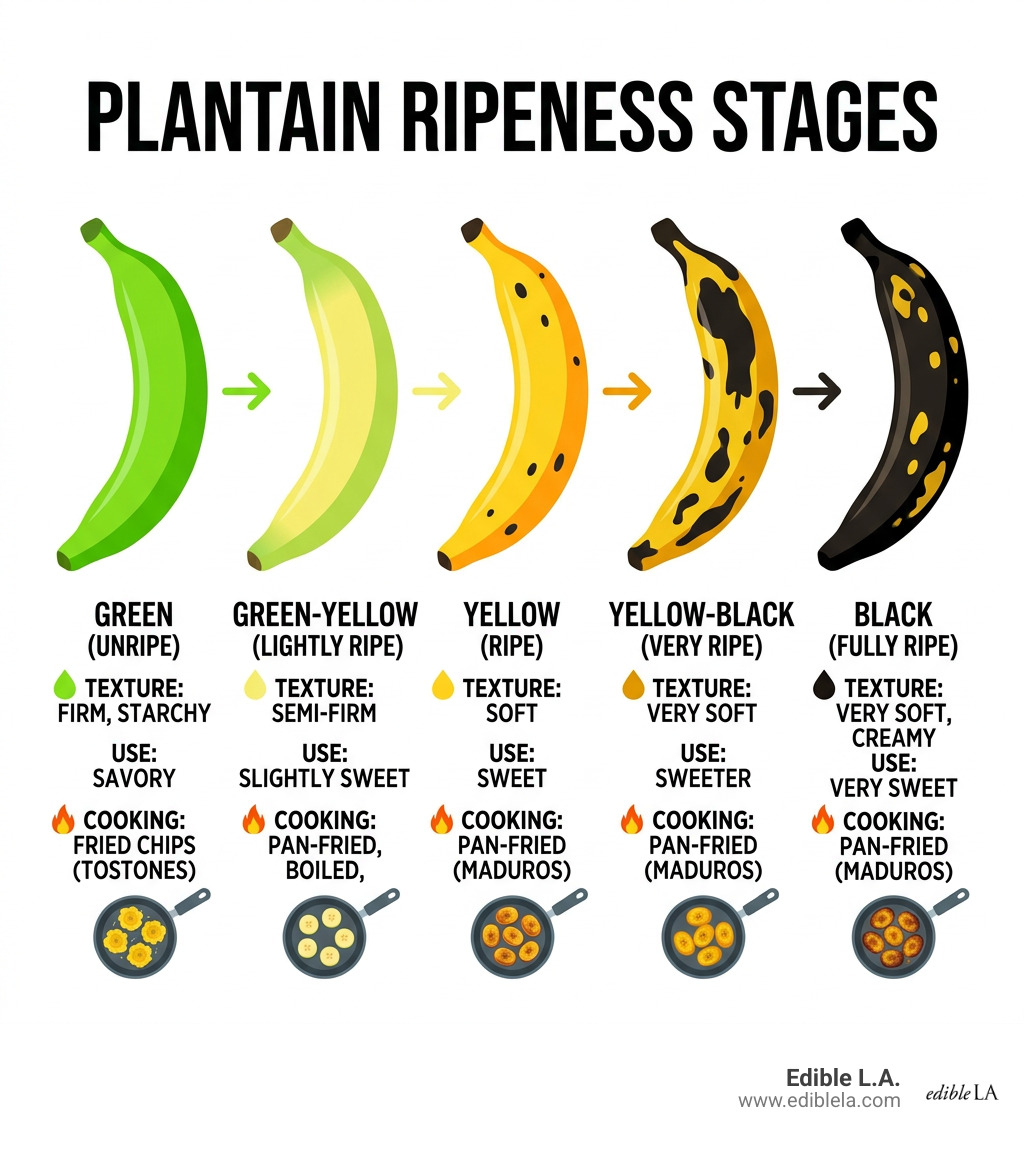
The magic of the plantain lies in its starch-to-sugar conversion. As the plantain ripens, its complex starches break down into natural sugars. This means the fruit you use when it's green is a totally different ingredient than the one you use when it's black.
Comparing Plantain Stages
| Stage | Appearance | Texture | Flavor | Best Use |
|---|---|---|---|---|
| Green | Bright green, very firm | Hard, starchy | Neutral, potato-like | Tostones, chips, mash |
| Yellow | Yellow with some black spots | Semi-firm | Mildly sweet | Savory sides, stews |
| Black | Mostly black or very dark | Soft, slightly squishy | Very sweet, floral | Maduros (Sweet fried) |
Beyond their versatility, Plantain nutritional benefits make them a worthy addition to your plate. They are rich in potassium, magnesium, and Vitamins A, B6, and C. For those of us in L.A. following Paleo or grain-free lifestyles, plantains are a favorite "safe" starch that provides more fiber and nutrients than a standard white potato.
Selecting the Right Ripeness for Maduros
If your goal is a plate of sweet, caramelized maduros, you have to be patient. You are looking for plantains that look like they’ve seen better days. The skin should be deeply speckled, nearly "blackity-black," as some Caribbean cooks say.
A ripe plantain should feel soft to the touch—not mushy like a rotting peach, but yielding, similar to a ripe avocado. If you find only green plantains at your local market in Echo Park or Silverlake, don't worry. Buy them and let them sit on your counter for 7 to 14 days. They will eventually turn that dull yellow and then black, signaling that the sugars are ready to caramelize.
How to Cook Plantains in a Pan: A Step-by-Step Guide
Once you have your perfectly ripe fruit, it’s time to get cooking. The goal is a "Beautiful Golden Brown" (BGB) finish with a soft, melt-in-your-mouth interior.
The Prep: Peeling and Slicing
Peeling a ripe plantain is much easier than peeling a green one, but it still requires a knife.
- Trim the ends: Cut off both the top and the bottom of the plantain.
- Score the skin: Use the tip of your knife to make a shallow slit lengthwise down the skin. Be careful not to cut deep into the flesh.
- Peel: Slide your thumb under the skin and pull it back. It should come off in one or two large pieces.
- The Diagonal Slice: For the best results, slice the plantain on a "bias" (a diagonal angle). This increases the surface area, which means more room for caramelization. Aim for about 1/2-inch thickness. If they are too thin, they’ll burn; too thick, and the middle won't get soft.
For the best results, we recommend using a high-quality Frying Pan. A nonstick skillet is particularly helpful here because the high sugar content in ripe plantains makes them prone to sticking.
Choosing the Right Fat for How to Cook Plantains in a Pan
The oil you choose affects both the flavor and the "crisp factor."
- Coconut Oil: This is a favorite in many Caribbean households. It adds a subtle tropical aroma and handles medium heat beautifully.
- Avocado Oil: Great for those who want a neutral flavor and a high smoke point.
- Neutral Oils: Grapeseed, canola, or vegetable oil work perfectly fine and are very economical.
Avoid using butter alone, as the milk solids will burn before the plantain is fully caramelized. If you love the flavor of butter, try a 50/50 mix of butter and oil.
Mastering Heat Control for How to Cook Plantains in a Pan
Heat management is the most critical part of how to cook plantains in a pan. If the heat is too high, the outside will burn before the inside softens. If it’s too low, the plantains will just soak up oil and become soggy.
- The Sweet Spot: Set your stove to medium or medium-low.
- The Sizzle Test: Drop one slice in. It should sizzle immediately but gently.
- Batch Cooking: Do not overcrowd the pan. If the slices are touching, they will steam instead of fry. Cook in two or three batches if necessary.
- The Flip: Fry for about 2-3 minutes on the first side. When the edges look dark and caramelized, flip them over. The second side usually takes slightly less time (1-2 minutes).
- Doneness Indicators: You’ll know they’re done when they are BGB (Beautiful Golden Brown) and a fork slides into the center with zero resistance.
Pro-Tips for Flavor, Texture, and Storage
While maduros are perfect with just a pinch of salt, you can elevate them with a few simple additions.
Seasoning Options
- The Classic: A simple sprinkle of sea salt immediately after they come out of the pan. The salt balances the intense sweetness.
- The Sweet Tooth: A dusting of cinnamon and a drizzle of honey or agave.
- The Spicy Kick: A pinch of cayenne or red pepper flakes to create a sweet-and-heat profile.
- The Salvadoran Way: In Los Angeles, we love the traditional pairing of platanos-fritos-con-frijoles-licuados-from-salvisoul-cookbook. The combination of sweet plantains with savory, creamy black beans and a dollop of crema is a flavor "duet" that is hard to beat.
Storing and Reheating Leftovers
If you happen to have leftovers (a rare occurrence!), they store quite well.
- Cooling: Let them cool completely to room temperature.
- Container: Place them in an Airtight container storage.
- Refrigeration: They will stay fresh in the fridge for up to 3-5 days.
Reheating is an art. Avoid the microwave if you can, as it makes them rubbery. Instead, pop them back into a dry nonstick pan over medium heat for a minute on each side, or use a toaster oven/air fryer at 350°F for 3-4 minutes to restore that slightly crisp exterior. You can even freeze cooked slices for up to a month—just reheat them directly from the freezer in an air fryer.
Frequently Asked Questions
What is the difference between maduros and tostones?
This is the most common point of confusion for plantain newcomers.
- Maduros: Made from ripe (black) plantains. They are sliced once, fried once, and are sweet and soft.
- Tostones: Made from green (unripe) plantains. They are fried once, removed and smashed flat with a tostonera (or the bottom of a glass), and then fried a second time. They are savory, starchy, and very crunchy—think of them like a thick, tropical potato chip.
How can I ripen plantains faster at home?
If you have a craving but your plantains are stubbornly green, try these tricks:
- The Paper Bag: Place them in a brown paper bag with an apple or a banana. These fruits release ethylene gas, which speeds up the ripening process.
- The Oven Method: If you need them today, place unpeeled plantains on a baking sheet and bake at 300°F for 15-20 minutes until the skins turn black. Let them cool before peeling. While not quite as sweet as naturally ripened fruit, it works in a pinch!
Can I make these in an air fryer instead?
Yes! While pan-frying is the traditional method, the air fryer is a great low-oil alternative.
- Slice the ripe plantains and lightly coat them with cooking spray.
- Arrange them in a single layer (use air fryer liners for easy cleanup).
- Air fry at 380°F for 8-10 minutes, flipping halfway through. They won't be quite as "silky" as pan-fried versions, but they are still delicious.
Conclusion
At Edible L.A., our mission is to celebrate the diverse food culture of Los Angeles County, from the street food of Downtown to the hidden gems in Culver City and Hollywood. Learning how to cook plantains in a pan is more than just learning a recipe; it's about embracing a seasonal, starchy staple that has sustained cultures for generations.
Whether you're serving them alongside a spicy jerk chicken, a bowl of black beans, or even as a breakfast side with eggs and avocado, pan-fried plantains bring a touch of tropical sunshine to any L.A. kitchen. For more inspiration on how to use local, seasonal ingredients, check out our More seasonal recipes and join us in supporting our vibrant local food community.