by Lisa Alexander
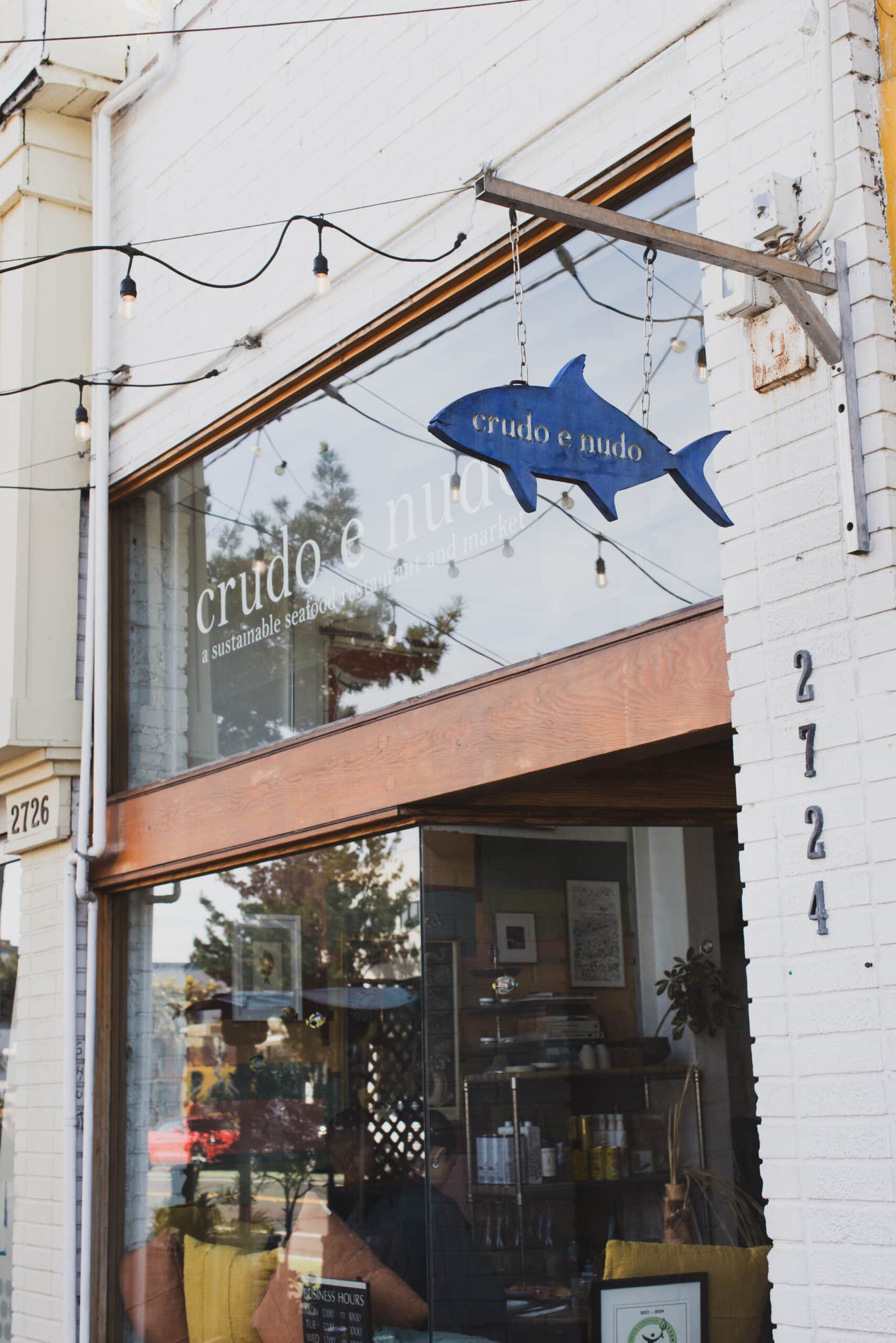
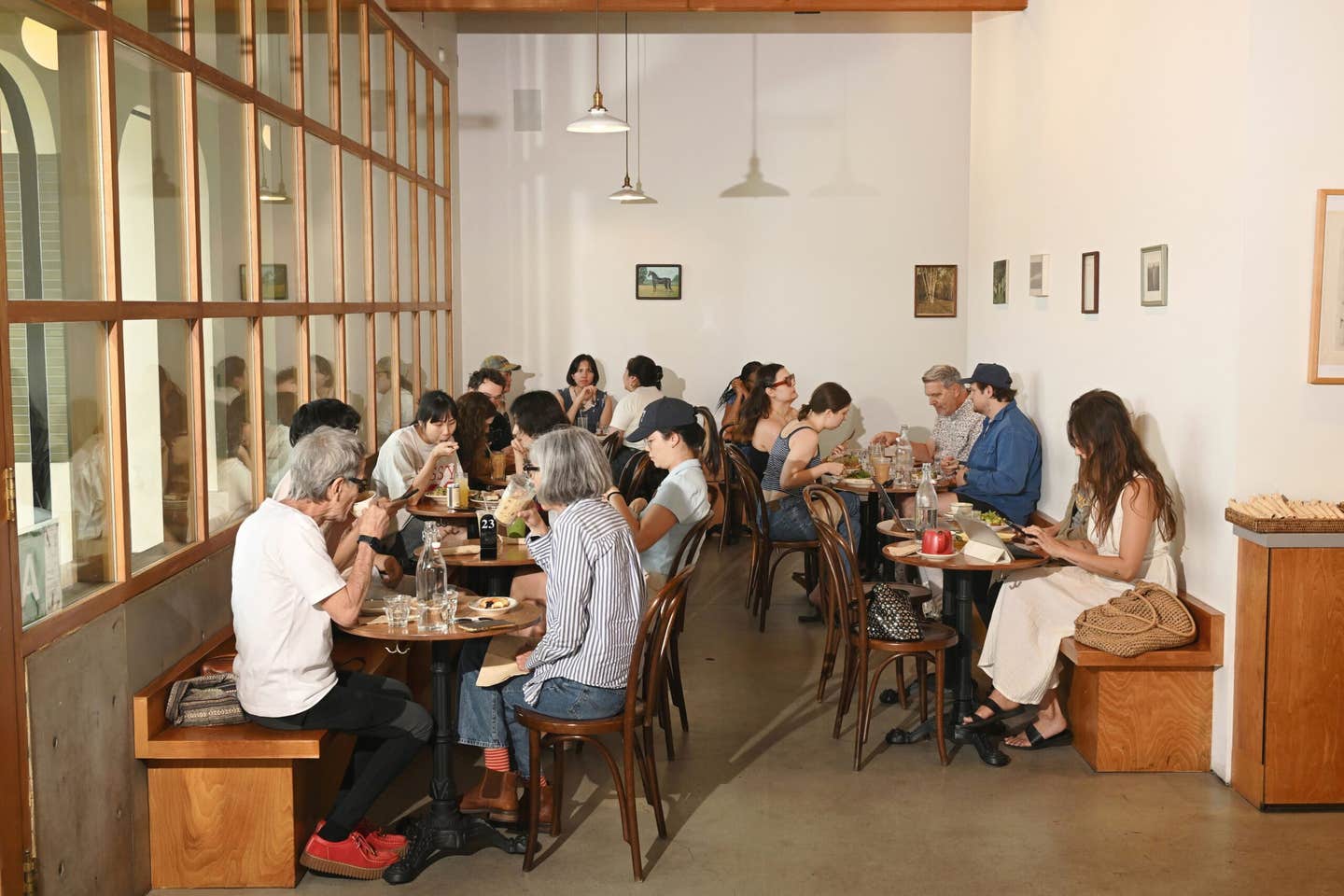
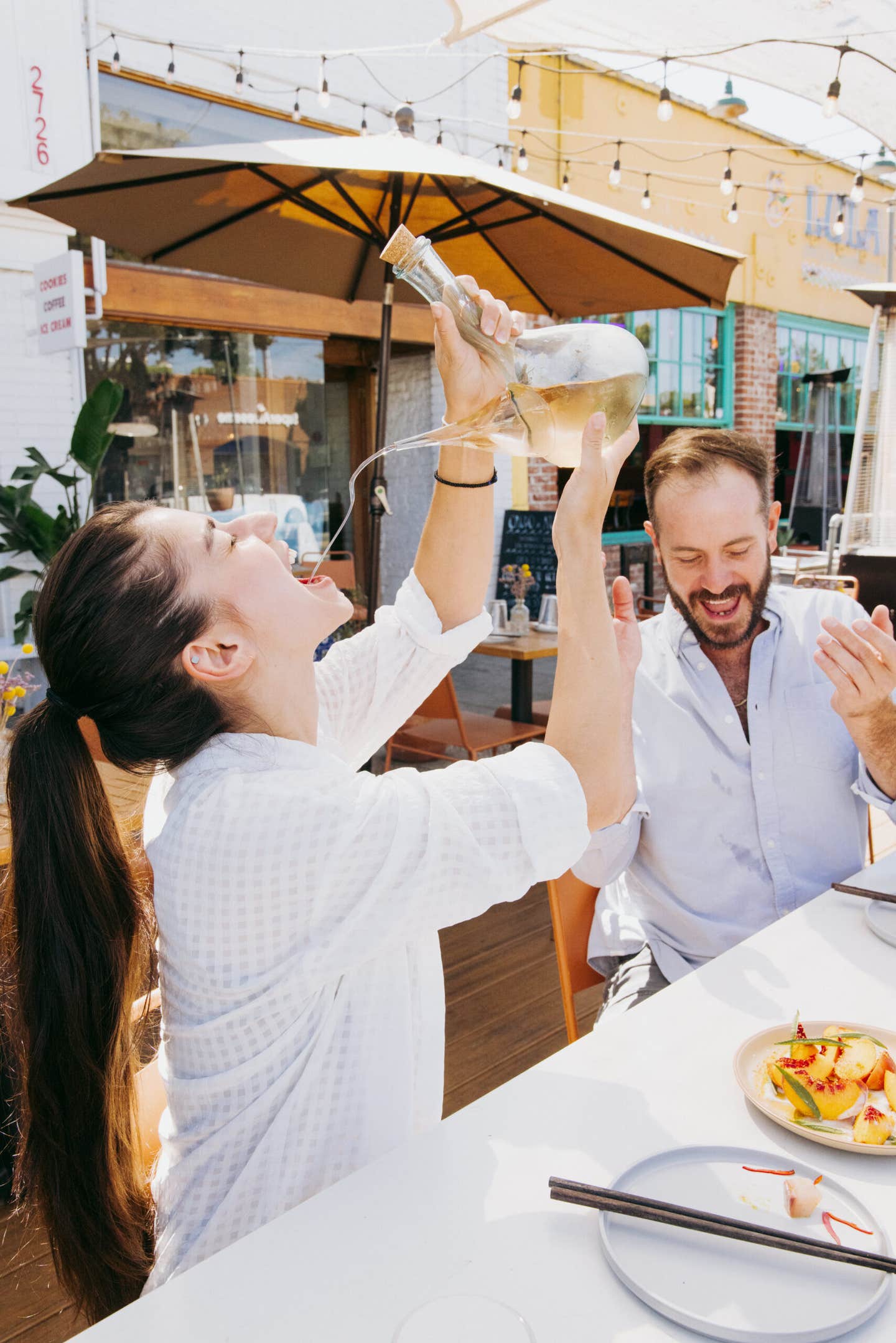
At Saturday lunch at Crudo e Nudo with Chef Rose Wilde, Chef Brian Bornemann brought out plate after plate of colorful crudos. As the restaurant itself is mighty but teeny tiny, we were seated on the sunny terrace.
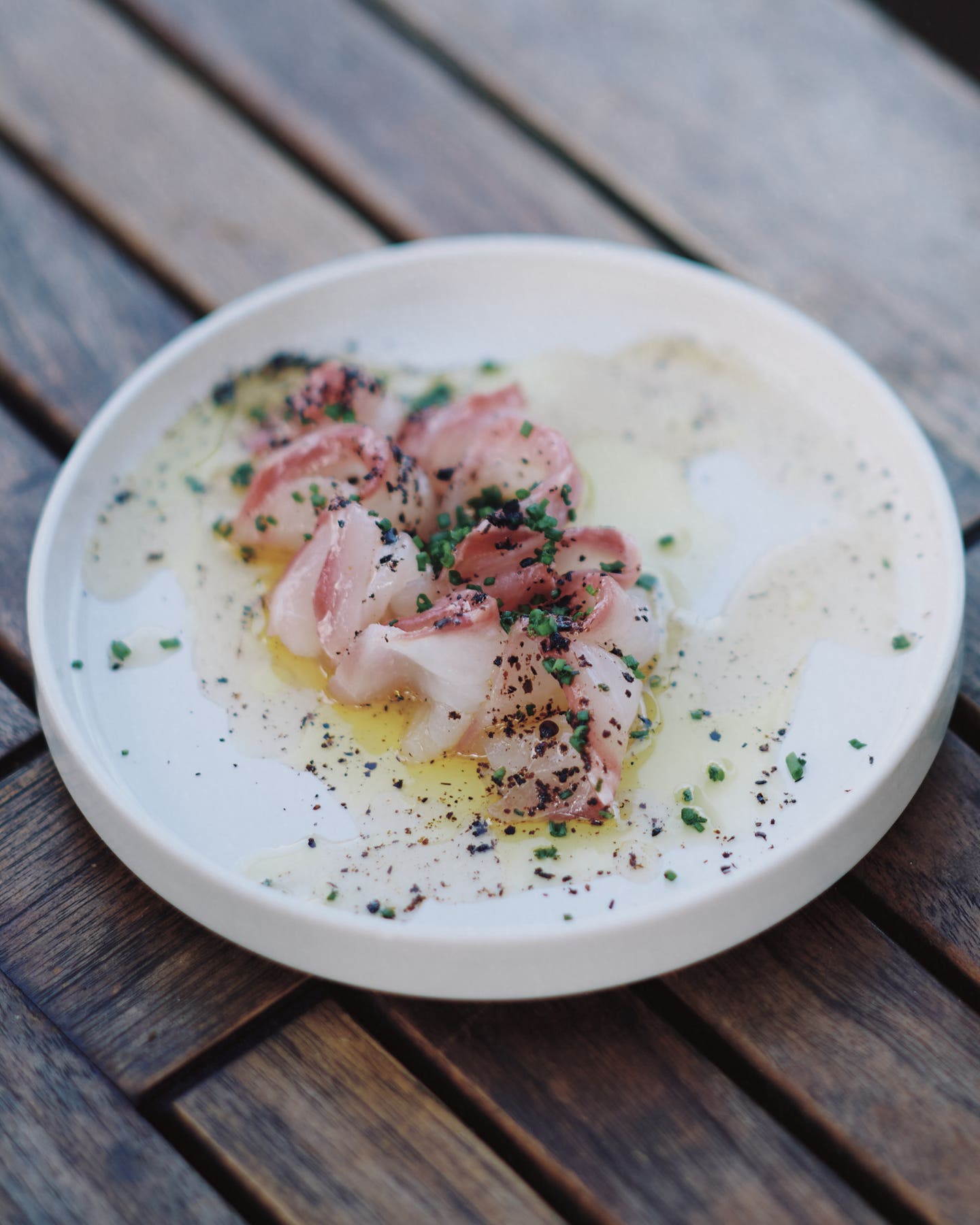
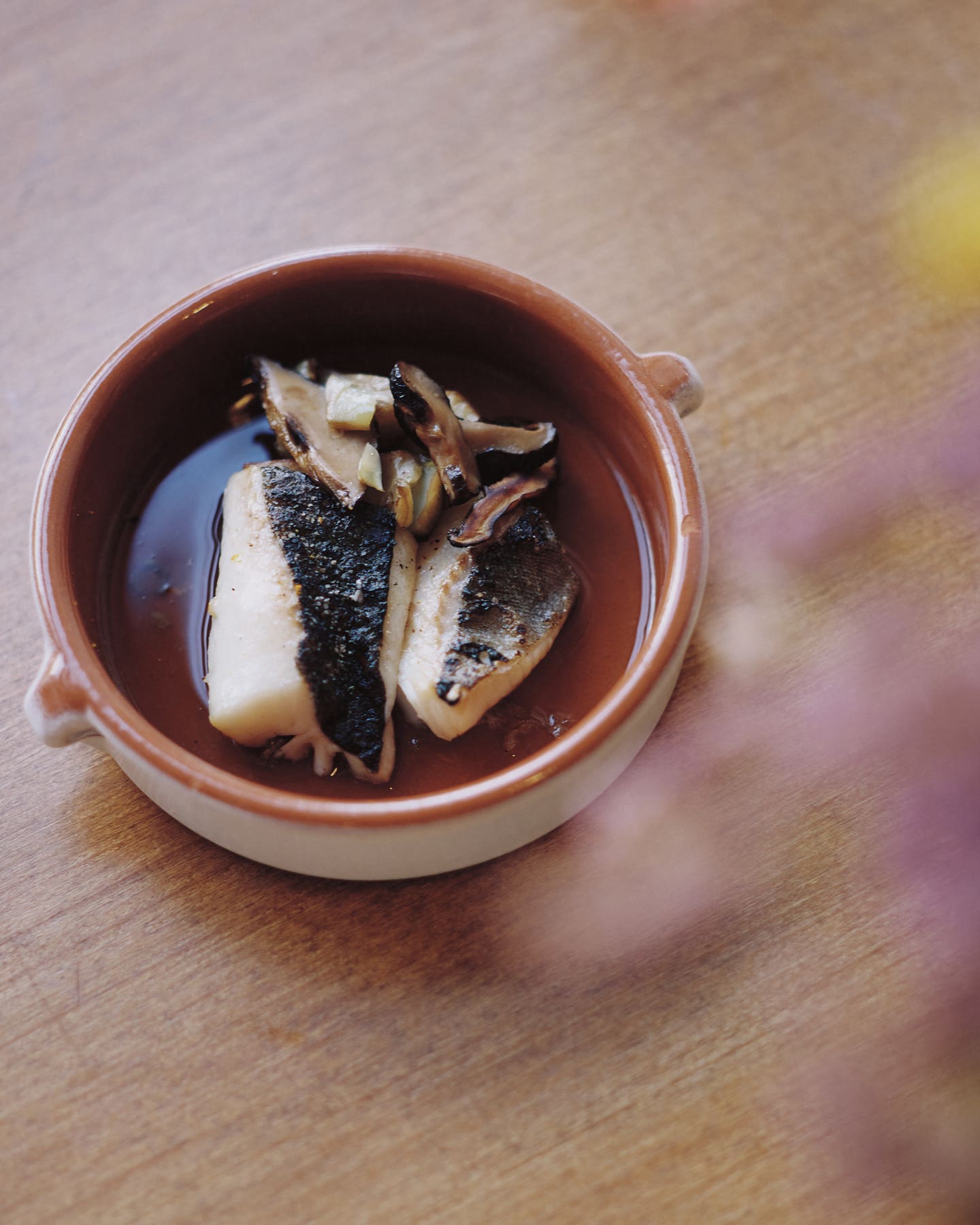
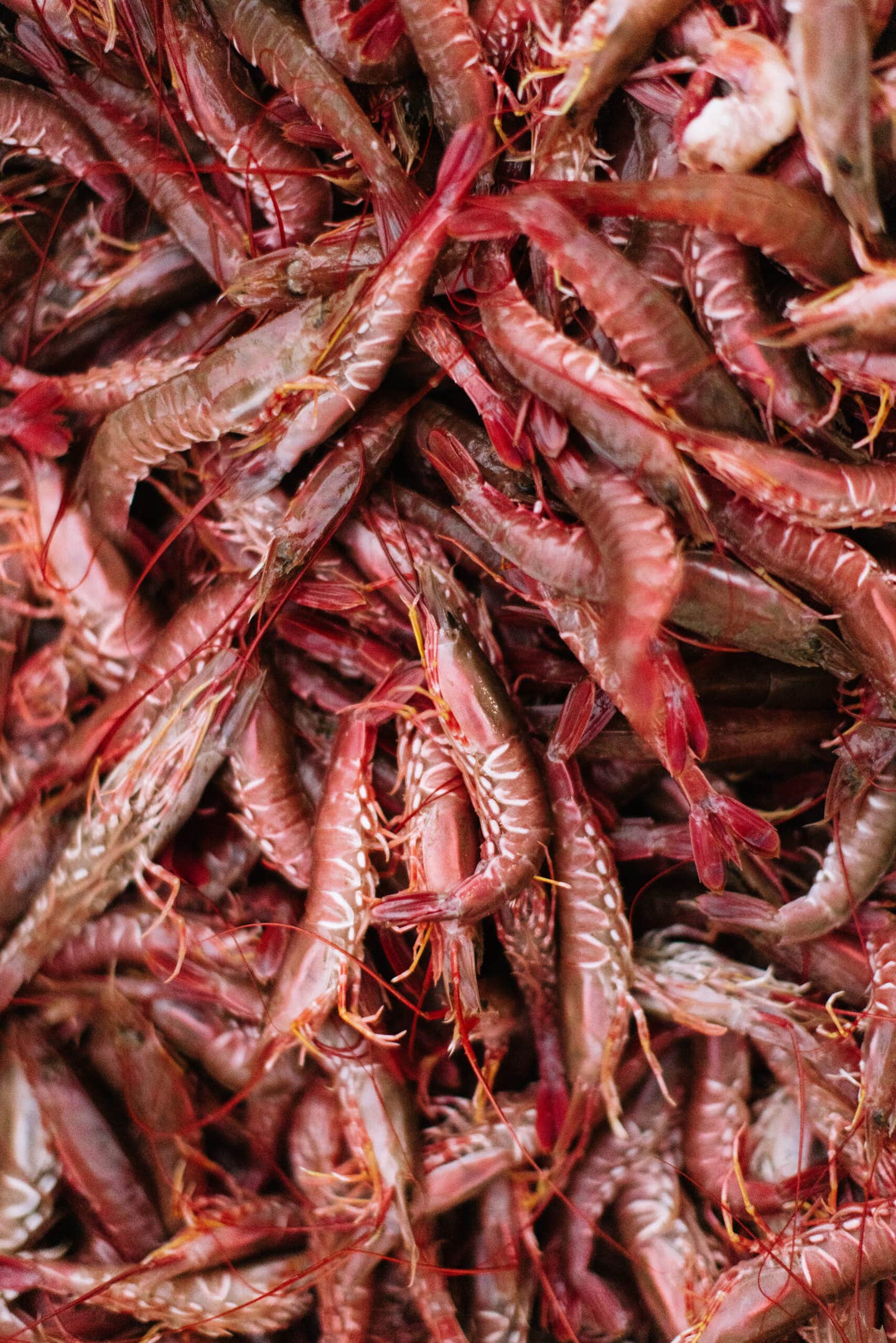
The crudo trio was gorgeous, pink slices of tuna finished with blood orange and lemon oil, and yellowtail so tender it melted like butter. I also loved the Seared Scallops, nestled together on celery root puree, drizzled with pistou and sprinkled with pine nuts. Head-on prawns with diavolo sauce with espelette peppers were messy, spicy, and tasty like from the best kind of seafood shack. A bowl of percebes (a goose barnacle famed and prized in Spain) also arrived with smoked olive oil, fennel pollen, and shiso shoyu. These were from Sitka, Alaska, and wowed with their intensely oceanic flavor and chewy texture.

We topped it off with Bornemann's favorite orange wine, Serpentinite of 80% Riesling and 20% Falanghina, which he said came from his friend, local winemaker, and "The Riesling Whisperer" Ryan Stirm.
Crudo e Nudo is clearly fueled by Chef Bornemann's passion for all things from the sea. Head to the bathroom in back, and you walk through a kitchen where a chef is carefully removing scales from a whole fish on the cutting block, flanked by a fridge filled with more hanging fish. I've had a lot of questions about the dry-aging process, especially as it's been championed and talked about by so many chefs recently, including Junya Namasaki of Yess, Anna Sonnenshein and Niki Vahle of Little Fish, Gilberto Cetina of Holbox, and Liwei Liao of The Joint, so it felt like the perfect opportunity to get some answers from Bornemann.
ELA: Tell us about the dry aging you do at the restaurant, as well as the ikejime process.
Bornemann: All fish we purchase are ikejime, if not shinkejime. 50% of what we purchase is processed on the boat by the fisherman, while the other 50% is either ikejime aquaculture or Seremoni-Grade fish that has been ikejime'd by a machine on the boat. The shortest definition is that the fish is brain-spiked and bled through the gills as a more humane way to dispatch the fish and avoid the conventional suffocation process. When fish are dispatched by the shinkejime method, the fisherman also runs a wire down the spine to further ensure no communication exists between the central nervous system and the flesh. This ensures the fish does not experience its own death. When handled and transported correctly, this yields a product where the fish does not deteriorate and remains in immaculate condition as if it were still in the water.
So that our fish never become "fishy," we receive all fish with guts in and scales intact. This allows us to process them using the sukibiki tradition, where we remove the scales, guts and gills with a knife. We scale this way because it is a less messy process than traditional scaling. Sukibiki requires no water for cleanup and also prevents perforations in the fish's delicate flesh. Because we never let the fish touch tap water and only wipe them with a towel, and we are the only ones handling the fish, we are then able to hang the fish on a hook and dry age it for as long as we need in our fridge. Hanging the fish so that none of the skin contacts any other surface is important, because it deteriorates rapidly as soon as it touches anything—it thinks it is dead on the ocean floor. A fish normally doesn't touch anything but water, but in this case, it only touches air. So when the fish is dispatched properly through ikejime and handled properly, then scaled and gutted properly, and then hung without ever touching tap water, it can last for weeks without becoming "fishy."
ELA: Where are you currently sourcing your fish?
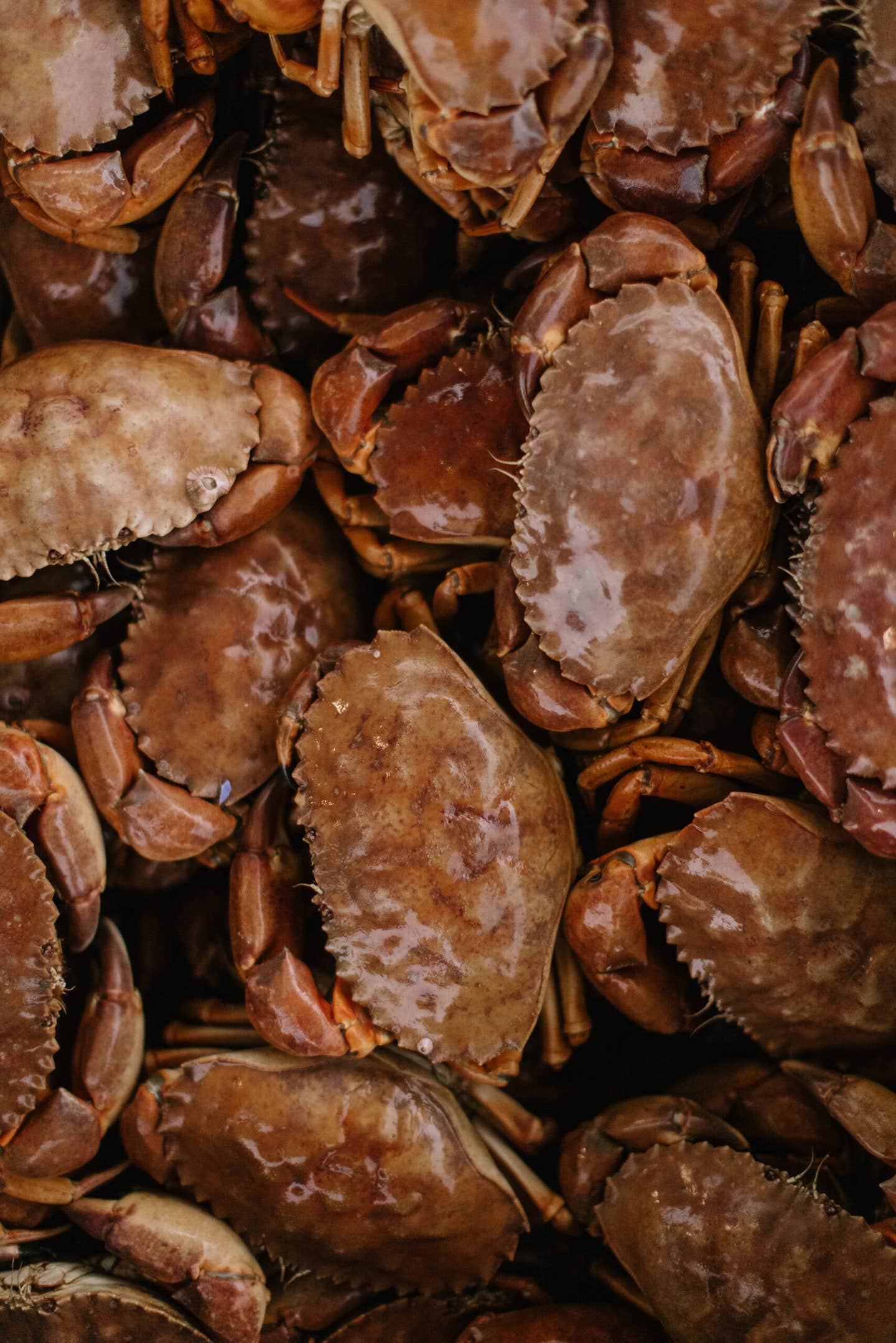
Bornemann: We source from local fishermen such as Bailey Raith, Brady Phillips, Stephanie Mutz, Dave Osborne, and Captain Ben Hyman, along with other fishermen in the Channel Islands. We also purchase Seremoni-Grade fish whenever it is available. We then source from specific aquacultures in Baja, such as Omega Azul and Mollusca for Kumamoto Oysters. We also work with the Cultured Abalone Farm in Santa Barbara and source wild product from Baja as well. This is an ever changing and evolving process. It's species-specific and depends on the time of year. This is really just an overview, and there are so many fish people that contribute to making Crudo e Nudo's menu work.
ELA: How do these techniques affect the overall flavor?
Bornemann: For fin-fish, there is a vast difference between any properly dispatched and handled fish compared to anything commercially handled. The latter will always become "fishy" and deteriorate in texture and flavor rapidly.
ELA: What is your personal favorite crudo currently on the menu?
Bornemann: My favorite thing right now as it's top of season, which is not actually raw, are the West Coast percebes. We would love to get them more locally, but since they are on the "do-not-catch list in California, and basically impossible to get across the border from Mexico, the closest legal West Coast percebes that we can source are from Sitka, Alaska. They're hand-harvested by a diver named Evan O'Brien, and delivered to us through E-Fish.