A guest holds the menu longer than almost anything else on the table. Before the bread arrives, the cover has already said something about the kitchen, the prices and how much the owners care about details. Here is how to make that first impression work for a restaurant, and what to check before ordering covers.
The menu is the first thing a guest touches
A table can be set beautifully, but nobody picks up the cutlery to study it. The menu is different. Guests hold it, open it, pass it across the table and read it for several minutes. A cover with frayed corners, a sticky film of old cleaning spray or pages that slide out sends a message the food then has to correct. A cover that feels solid and clean does the opposite: it tells guests that the place is run with attention.
This matters most for restaurants that change their menu often. Seasonal kitchens, farm-driven spots and wine bars reprint pages every few weeks. If each reprint means a new laminated sheet or a new printed booklet, the menu becomes a running cost and a running chore. A good cover turns the menu into two parts: a durable outside that stays for years and paper inside that can change every morning.
Match the material to the room
There is no single best material. There is the one that fits the room, the service style and the way staff clean up at the end of the night.
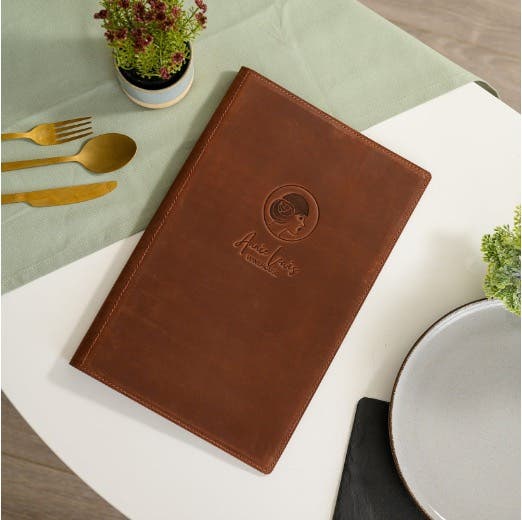
- Genuine leather suits dining rooms where guests stay for a long time. It darkens and softens with use, so small scratches blend into the surface instead of standing out.
- Faux (PU) leather gives a similar look at a lower price and wipes clean quickly, which makes it practical for busy cafes and brunch places.
- Fabric brings colour and texture and works well where the interior is soft and informal.
- Wood is the most rigid option. It works as a board for a one-page menu or as a hard cover for a wine list, and it takes engraving well.
Whatever the material, ask the maker how it should be cleaned. A cover that needs special care will not get it on a Friday night.
Check how pages go in and out
The binding decides how much time staff spend on every menu change. Screw posts hold a stack of pages firmly and suit menus that change every few weeks. An elastic band or a clip lets staff swap a single sheet in seconds. Corner pockets hold one page per side and keep it flat. Plastic sleeves protect paper from spills, but they add glare under strong light, so they fit casual service better than a candlelit room.
Capacity matters too. A typical screw-post cover holds about 8 to 12 sheets of heavier paper. If the wine list is longer than that, it deserves its own cover.
Pick the size before the design
In the US most kitchens print on Letter (8.5 x 11 in) or Legal (8.5 x 14 in) paper, and half-Letter is common for dessert, cocktail and wine lists. Choose the paper size first, then order covers made for it. A menu designed for a custom page size looks great until the office printer runs out of the special paper.
Put your name on it, quietly
A logo on the cover works best when it is part of the material. Debossing presses the logo into leather and leaves no ink to wear off. Engraving does the same for wood. Foil adds a metallic accent for places that want a little shine. Printed logos allow full colour, which helps when the brand depends on a specific shade.
Before production, ask for a digital mockup with your logo at real size. It is the cheapest moment to notice that the logo is too large or sits too close to the edge.
Order a small batch first
Most restaurants do not need two hundred covers on day one. Start with enough for the dining room plus a few spares, use them for a month and see how they handle real service. Some workshops make this easy. Inko Horeca, for example, produces custom menu covers in its own workshop in Uzhhorod, Ukraine, takes orders from a single piece and sends a mockup for approval before anything is made.
When the first batch has been through a few busy weekends, the staff will tell you what to change: a different size for the bar, a darker colour for the patio, one more cover for the host stand.
A short checklist
- What paper size does the kitchen print on?
- How often does the menu change, and who changes the pages?
- How will the covers be cleaned every night?
- How many pages does the longest menu have?
- Is the logo file ready in vector format?
Answer these five questions and choosing a cover becomes a practical decision instead of a guess. The guest will never think about any of it. They will simply pick up the menu and feel that the restaurant has its details in order.