Why LA’s Artisan Food Producers are Taking Over Your Pantry
Discover LA’s artisan food producers revolutionizing your pantry with small-batch, farm-to-fork mastery. Shop local now!
LA's Artisan Food Scene Is Booming — Here's What You Need to Know
Artisan food producers are small-scale makers who craft food and drink by hand, using traditional methods, quality ingredients, and real skill — the opposite of factory-line production.
Here's a quick look at who they are and why they matter:
- Who they are: Independent makers — bakers, cheesemakers, fermenters, chocolatiers, olive oil producers, and more
- What sets them apart: Small-batch production, local sourcing, and hands-on craftsmanship
- Why it matters: Their work supports local economies, reduces food miles, and puts genuinely better food on your table
- How to find them: Farmers' markets, specialty shops, tasting rooms, and direct-to-consumer online stores
Something is happening in Los Angeles kitchens, market stalls, and shared production hubs. A growing wave of independent food makers is quietly reshaping what ends up in your pantry.
These aren't big brands with factory lines. They're neighbors. Chefs who walked away from restaurants. Home bakers who outgrew their kitchens. People with a family recipe, a rooftop garden, or a passion for a single perfect ingredient.
The artisan food movement is built on a simple idea: food made with care tastes better and means more. It connects eaters directly to the people and places behind what they eat — a philosophy sometimes called farm-to-fork.
And in a city as food-obsessed as Los Angeles, that idea is catching fire.
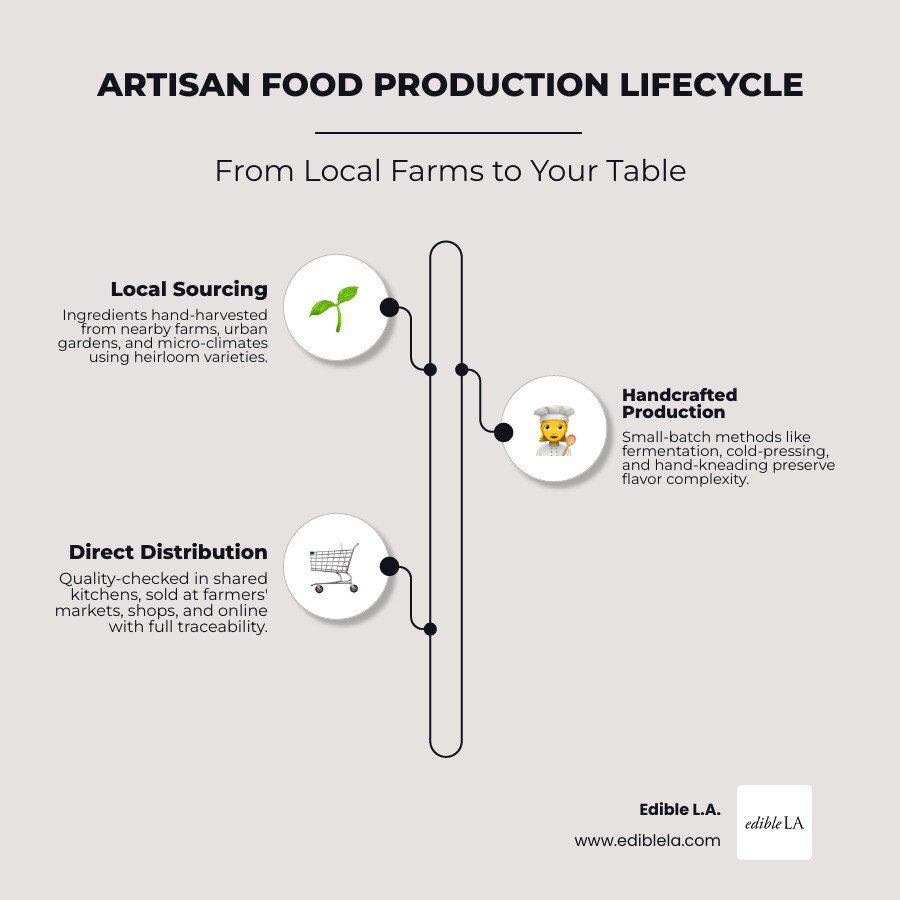
Handy Artisan food producers terms:
What Defines True Artisan Food Producers?
In an era where every supermarket cracker box seems to have the word "artisan" printed on it, the term can feel a bit diluted. However, for those of us in the Los Angeles food community, "artisan" isn't just a marketing buzzword — it's a standard of production.
True Artisan food producers are defined by the level of human intervention in the process. While mass production relies on automation to ensure every single item is identical, an artisan relies on their senses. They watch the color of the crust, smell the fermentation of the dough, and taste the oil as it comes off the press.
Expert criteria for artisanal food generally boil down to three specific requirements: Time, Heritage, and Skill.
- Time: Artisan products cannot be rushed. Whether it’s the months required to age a cloth-bound cheddar or the days spent nurturing a sourdough starter, time is an essential ingredient.
- Heritage: Many makers use techniques passed down through generations or revived from historical records to preserve flavors that industrial processes have stripped away.
- Skill: This is the "hand" in handmade. It takes years to master the "knife whisperer" techniques of someone like Jonathan Broida or the precision required to temper chocolate by hand.
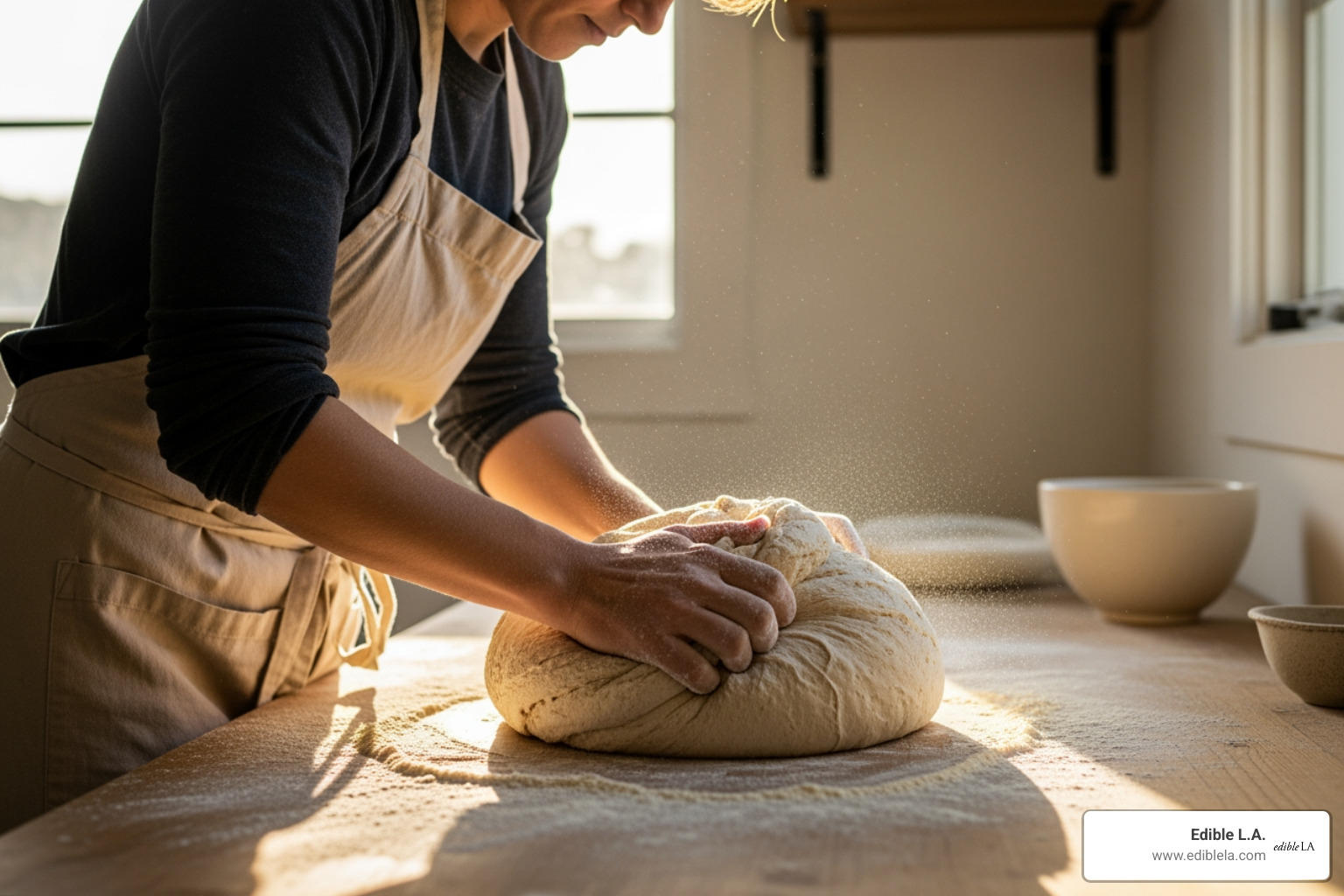
Comparison: Artisan vs. Mass Production
| Feature | Artisan Production | Mass Production |
|---|---|---|
| Volume | Small-batch, limited runs | High-volume, continuous lines |
| Ingredients | Locally sourced, seasonal, heirloom | Commodity-grade, synthetic additives |
| Methods | Traditional, hand-crafted | Automated, machine-led |
| Flavor Profile | Complex, varying by batch/terroir | Uniform, standardized, predictable |
| Economic Impact | Reinvests in the local community | Profits often leave the local region |
The Role of Skill and Heritage in Artisan Food Producers
The soul of an artisan product lies in the history it carries. In Los Angeles, we are incredibly lucky to have makers who draw from deep cultural wells. Take, for example, the story of Robert Hall, whose work exemplifies how personal history and dedication to a craft can create something truly unique.
Heritage also manifests in the ingredients themselves. Many Artisan food producers in LA prioritize heirloom varieties of grains, fruits, and vegetables. These aren't the high-yield crops designed for long-haul trucking; they are varieties chosen for their flavor complexity and their connection to the land.
Fermentation is another area where skill and heritage collide. From the tangy zip of local kombucha to the deep funk of traditionally cured meats, fermentation requires a partnership between the maker and beneficial microorganisms. It’s a slow, living process that mass producers often bypass using chemicals or rapid-heat treatments, which ultimately sacrifices both flavor and gut-health benefits.
From Bean-to-Bar to Sourdough: The Staples of an Artisan Pantry
If you want to start transitioning your pantry to a more local, artisanal focus, there are a few "gateway" products that perfectly illustrate the difference in quality.
Sourdough and Ancient Grains
In Los Angeles, sourdough has become a symbol of the artisan revival. Unlike commercial bread, which uses fast-acting yeast and additives to rise in an hour, artisan sourdough relies on a "starter" — a fermented culture of flour and water. This process breaks down gluten and phytic acid, making the bread easier to digest and far more flavorful. If you want to try your hand at this ancient craft, we love sharing the Clark Street Sourdough Recipe as a testament to the power of simple, organic flour and patience.
The Bean-to-Bar Revolution
Chocolate is another pantry staple being redefined. Most commercial chocolate is made from "bulk" cacao, where the nuances of the bean are roasted away to create a uniform taste. But What Exactly is Bean-to-Bar? It is a process where the maker handles every step, from sourcing ethically grown beans to roasting, winnowing, and grinding. This direct-trade approach ensures that farmers are paid fairly and that the unique "terroir" of the cacao — whether it tastes of red fruit, tobacco, or jasmine — shines through in the final bar.
Oils and Cheeses
Your pantry isn't complete without high-quality fats. Local Artisan food producers are cold-pressing olive oils from California groves, capturing the peppery, grassy notes that vanish in industrial heat-refining processes. Similarly, raw milk cheeses and plant-based alternatives are gaining ground. For those looking for dairy-free options that don't skimp on traditional fermentation techniques, you can discover our great plant-based cheeses that bring that same artisan rigor to the vegan world.
Innovation and Tradition Among Artisan Food Producers
One of the most exciting things about the LA food scene is how makers innovate while staying rooted in tradition. We see this in the rise of urban farming and small-scale manufacturing within city limits.
- Rooftop and Urban Growing: Some makers are utilizing every inch of the city, growing specialty chilies on rooftops to create small-batch hot sauces that are harvested and bottled within the same zip code.
- Proprietary Cultures: In fermentation, innovators are moving away from standardized cultures to develop their own unique "house" starters, resulting in flavors you literally cannot find anywhere else.
- Radical Sourcing: We see makers going to great lengths for their ingredients, such as the journey from seed to bar with radical chocolate.
- Sustainability: Artisan makers often lead the way in sustainable packaging, using compostable materials or glass-return programs that large corporations find difficult to scale.
Why Small-Scale Manufacturing Matters for the Local Economy
When you buy from Artisan food producers, your money doesn't just buy a jar of jam; it invests in the resilience of Los Angeles. Small-scale manufacturing creates a "multiplier effect" — for every dollar spent at a local food business, a significantly higher portion stays within the local economy compared to a purchase at a national chain.
Community Resilience and the "Missing Middle"
Small food businesses often face a "missing middle" challenge. They outgrow their home kitchens but aren't yet ready for a massive industrial factory. This is where food hubs and shared community kitchens come in. These spaces allow makers to share the cost of expensive, certified equipment, enabling them to scale their businesses sustainably.
This ecosystem also creates jobs. Because artisan production is labor-intensive rather than machine-intensive, these businesses employ more people per square foot than automated factories.
Legislation and Protection
The legal landscape for small makers has improved thanks to efforts like the Tester-Hagan Amendment. This legislation helps protect small farmers and producers from the staggering costs of regulations designed for massive, multi-billion dollar food corporations. By allowing for scaled oversight, it ensures that your local jam maker isn't put out of business by paperwork meant for a global conglomerate.
Environmental Impact
Artisan production is inherently more traceable. When you know the maker, you often know the farmer. This shortens the supply chain, drastically reducing the carbon footprint associated with long-distance shipping. Furthermore, many artisans use "value-added" processing — like turning surplus farm fruit into preserves — which helps reduce food waste at the agricultural level.
How to Discover and Support Local Makers
Finding these incredible products is half the fun. Los Angeles offers a wealth of avenues to connect with the people behind your food.
The Farmers' Market Circuit
The gold standard for discovery is the local farmers' market. Locations like the Hollywood Farmers' Market, Culver City Farmers Market, and the Santa Monica Farmers Market are hubs for Artisan food producers. Here, you can talk directly to the makers, ask about their sourcing, and often sample the products before you buy.
Public Markets and Food Halls
For a curated experience, visit our historic public markets. A local deep dive into Grand Central Market’s Fat & Flour shows how a single stall can become a destination for world-class craftsmanship. You might also explore the legendary Sarita’s Pupusería for a taste of heritage that has anchored the market for decades.
Specialty Boutiques and Shops
Beyond the markets, LA is home to specialized shops that act as curators for the best artisan goods:
- Milkfarm (Eagle Rock/Glassell Park area): A brilliant stop for cheese and pantry staples.
- The Cheese Store of Beverly Hills: An institution for high-end artisan finds.
- Farmshop (Brentwood): A beautiful space that highlights California-inspired artisan products.
Online Marketplaces and Tasting Rooms
Many makers now offer direct-to-consumer shipping, allowing you to stock your pantry from the comfort of your home. Additionally, keep an eye out for tasting rooms and workshops. Whether it's a sourdough baking class or a chocolate tasting, these events are a great way to deepen your appreciation for the craft.
Frequently Asked Questions about Artisan Food
How do I know if a product is truly artisanal?
Look for transparency. A true artisan product will usually list specific ingredient origins and the story of how it was made. Check the label for "small-batch" or "handcrafted" certifications, but more importantly, look at the ingredient list. If it’s full of words you can’t pronounce, it’s likely not artisanal. True artisans rely on the quality of the raw ingredients rather than chemical stabilizers.
Are artisan products always organic?
Not always, but there is a high overlap. Many Artisan food producers source from small farms that follow organic or regenerative practices but may not have the budget for official USDA organic certification. Most artisans are happy to tell you exactly how their ingredients were grown — just ask!
Why are artisan foods more expensive than mass-produced items?
It comes down to three things: Fair wages, premium ingredients, and time. When you buy a $12 jar of jam, you are paying for fruit that was picked at peak ripeness (not green), a maker who was paid a living wage to hand-stir that jam in a copper pot, and the absence of cheap fillers like high-fructose corn syrup. You are paying for quality assurance that a machine simply cannot provide.
Conclusion
At Edible L.A., we believe that every meal is an opportunity to support the community we love. By choosing to fill your pantry with goods from local Artisan food producers, you aren't just eating better; you're participating in a seasonal story of Los Angeles. You're supporting the sourdough baker in Silverlake, the chocolatier in Downtown LA, and the cheesemonger in Beverly Hills.
Our mission is to share these stories, season by season, so you can feel more connected to the flavors of our city. Ready to explore more? Explore our neighborhood guides to find the best makers, markets, and hidden gems in your own backyard.
Whether you're looking for the history of Garibaldina, L.A.’s Oldest Italian-American Society or just the perfect See’s Best in Candy for a gift, we're here to guide you through the rich, diverse, and delicious landscape of Los Angeles.