A Vertical Menu That Tells the Story of Peru
Lima is vibrant, perched high on dramatic cliffs and overlooking a long and perfect surf break.
Chef Virgilio Martinez' Altitude Attitude
by Lisa Alexander
LIMA, Peru—In 2023, Virgilio Martinez’s Central in Lima was named the best on The World’s 50 Best Restaurants list. When I asked Martinez how it felt, he said it was a “wow”—and then he told his team that everything had to be the same and they should all get back to work.
Turns out it’s a slippery thing, this “best in the world,” inspiring pride and joy, yes, but I’ve also met chefs who are haunted by “the list” and their place on it. I was especially curious about Martinez and Pia Leon, his equally famous wife, because they’ve created a trio of restaurants—Mil, Central, and Kjolle—that are not only spectacular, but also united in a very clear mission, maybe even a manifesto, that perhaps transcends “the list.”
Lima is vibrant, perched high on dramatic cliffs and overlooking a long and perfect surf break. I stayed at Fausto, a lovely house in the Miraflores neighborhood, and at Atemporal, its sister hotel. Both were private houses that had been renovated into boutique hotels full of character and eccentricity just steps from the famous boardwalk, or El Malecón. Atemporal was a Tudor mansion, its gracious staircase leading to common spaces filled with art, and antique furnishings boldly re-covered in modern textiles. Both Fausto and Atemporal felt like staying at the house of a quirky aunt with fabulous taste. The breakfast was a tower of dragon fruit and Peruvian cheese, ginger-y green juice, perfect coffee, all served in a little garden area with Seussian foliage, a lovely home base from which to explore Lima’s pre-Incan ruins and fabulous food.

The site of Central is lushly landscaped, a former museum complex that occupies a block in Barranco, a bohemian neighborhood packed with galleries and cafés. If you’ve seen Virgilio, the Netflix documentary, you know that Martinez grew up on these streets, skateboarding in the parks on the cliffs with his friends—he’s a poster boy here.
I was seated in front of the kitchen—my favorite view—and got to watch the orchestral way his team wordlessly made room for each other and worked in what seemed like perfect synchrony.

I first saw Martinez in earnest conversation (I just missed Leon). Then he was speaking to a couple to my right. He looked concentrated, again, leaning forward, as he said something to them and disappeared back into the kitchen. I had been hoping to speak with him, but then I thought how, night after night, he must feel on display. I’d resigned myself to an epic solo meal when he appeared, like smoke, at my elbow.
I asked him how he came up with the idea for Central because, more than anything, the place is a concept, a very modern idea from his signature demonstration tables (marble at Central, wood at his Andes restaurant) that showcase all the products he uses; to the room filled with rough, color-spattered, sometimes gilded bowls; to the servers, who are justly proud of their work; to the chef’s garden; to the shed with its rows of tinctures and herbs.
“I went to those kitchens in Europe,” he said. “The famous ones, and then I came back here and thought ‘What am I going to do?’ I can’t cook like that over here. I wanted to transcend gastronomy.”
The concept at Central is deeply intellectual as well as intuitive.
“Every day is different,” he said, “because the seasons are always changing, and every day we get new products from all over Peru. Every day is a surprise.”

Imagine a succession of dishes and courses, each one centered on the products themselves: A plate of what looked like rocks turned out to be edible clay in which tiny, twisted potatoes from high altitudes were cooked. Another rough slab of a plate held four piranha heads, mouths open and tiny perfectly straight teeth visible. Corn, in all its colors and shapes, was arrayed on another tray—the ears grow smaller and rounder and sweeter higher up.
The pairings were equally spectacular: Apo, a wine only served at Central and Mil, a heady Syrah, liquors made of honey and herbs, and the juices of Amazonian fruits. The only way to identify so many flavors I’d never had before was to compare—that tastes like vanilla, this is dulce de leche, this is almost like beef, no, like lamb.

By the end of the evening, I staggered into the dark garden feeling overwhelmed by the intricacy of Martinez’s vision, and its determination to showcase the diversity of Peru.
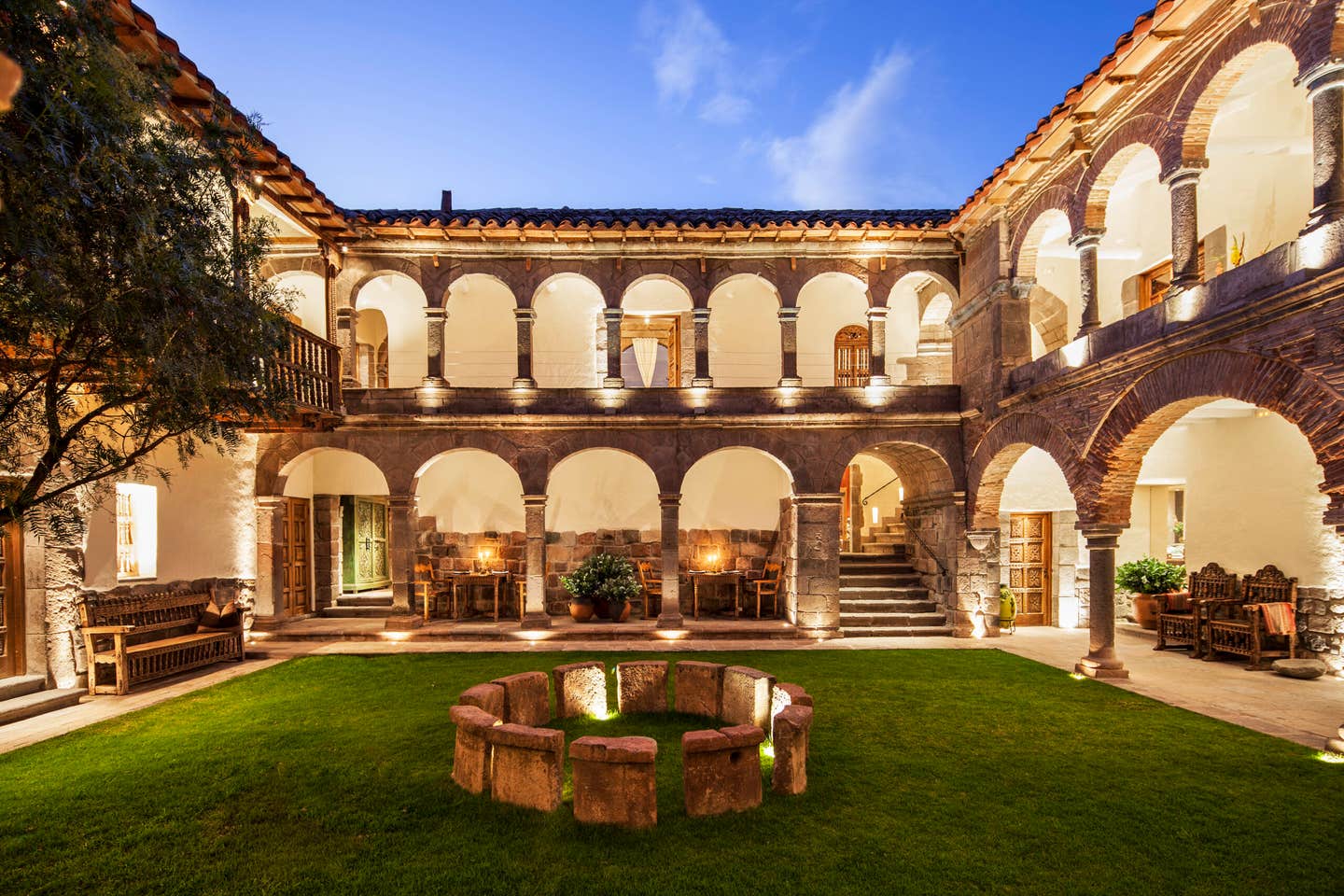
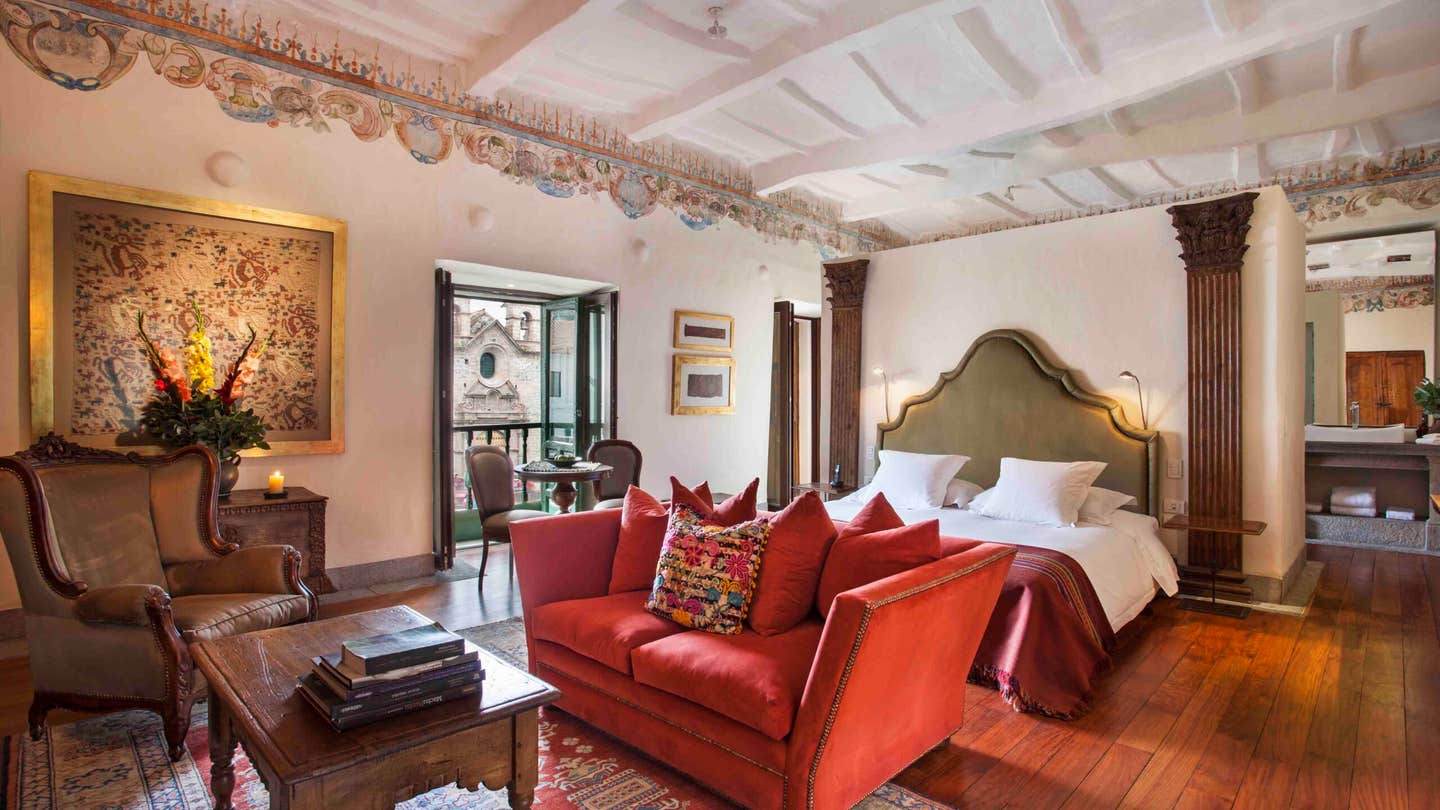
In Cusco, I stayed at the Peruvian-owned Inkaterra La Casona, a 16th century Spanish Colonial mansion built on the site of an elite Incan warrior training ground. The walls were thick, the rugs subtly colored. On opening the front door, the fragrant smoke of palo santo wafted out. General Simón Bolivar himself hung up his spurs in this courtyard. I had an early meal at the restaurant that included a tender salad of delicate lettuces, and a spicy-sweet zucchini ice cream.
The following day I was driven down (from 12,000 to 8,000 feet above sea level) to the Sacred Valley. We went through villages with dirt roads, dogs lounging by the side of the road, children playing, and women in bowler hats and bright circular skirts.
My home in the Sacred Valley was Inkaterra Hacienda Urubamba, a sprawling ranch with lovely casitas (crisp sheets, chimenas, bright textiles). Many of the guests were backpackers or excited travelers leaving to catch Belmond’s Hiram Bingham luxury train to Machu Picchu. I had expected to be surrounded by green but, visiting as I did at the tail end of their winter, everything was apricot colored. The next morning, I headed up again to Mil, Martinez’s “gastronomical laboratory.”

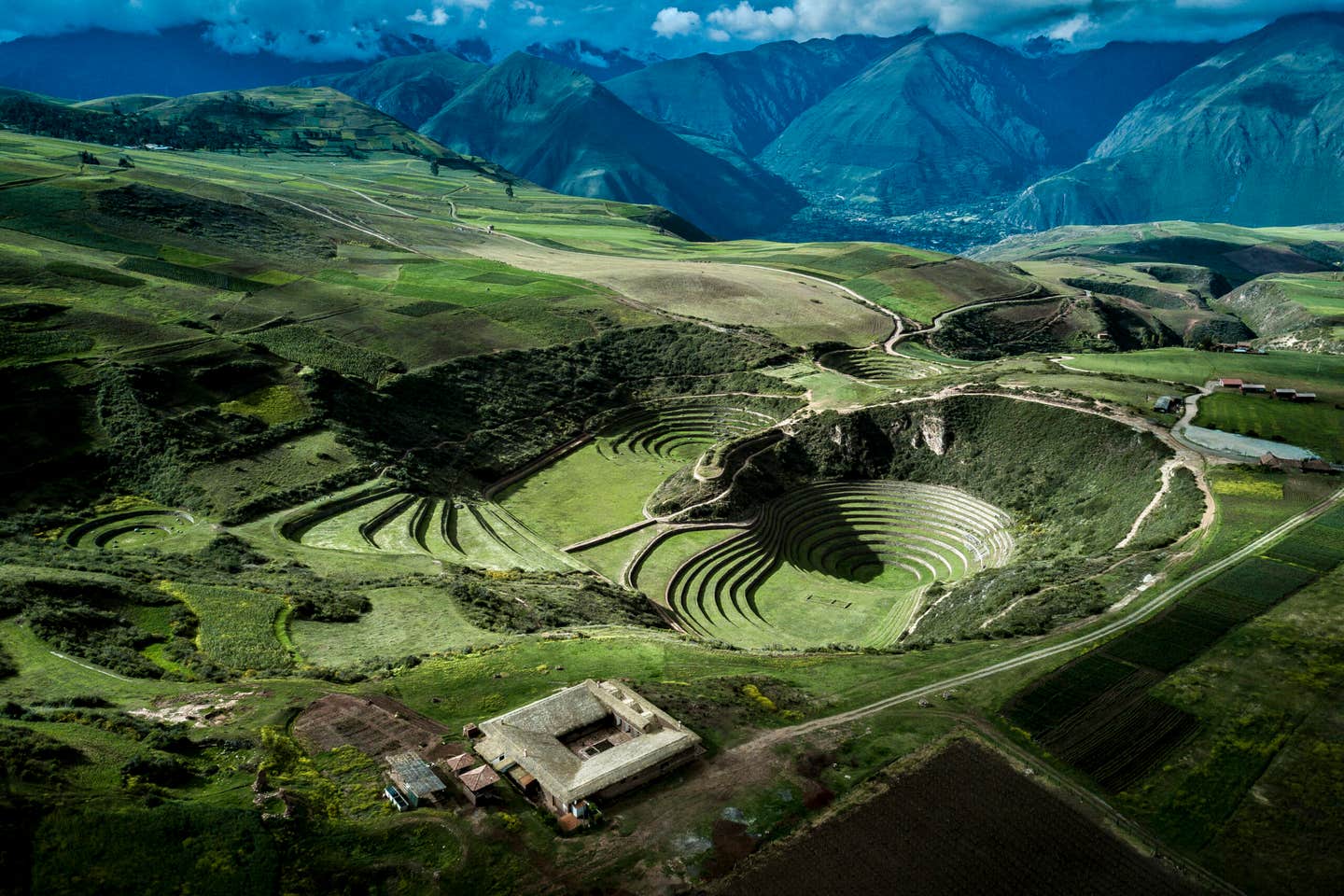
The minimalist restaurant is quiet and quietly bustling, its staff working amidst drying herbs, and racks of neatly labeled bottles containing a rainbow of ferments and tinctures. It overlooks the Moray archaeological site, three ancient sets of terraces built into the ground. Functioning as a kind of agricultural test kitchen, the carefully varied altitudes within the circles told the Incans what grew best at what height. Scientists have discovered 15 different microclimates here, as well as a giant sundial and fallen stones said to be huge statues before the Spaniards blew them up, looking for gold. It’s a perfect setting for Mil, Martinez’s mirror gastronomical laboratory of food.
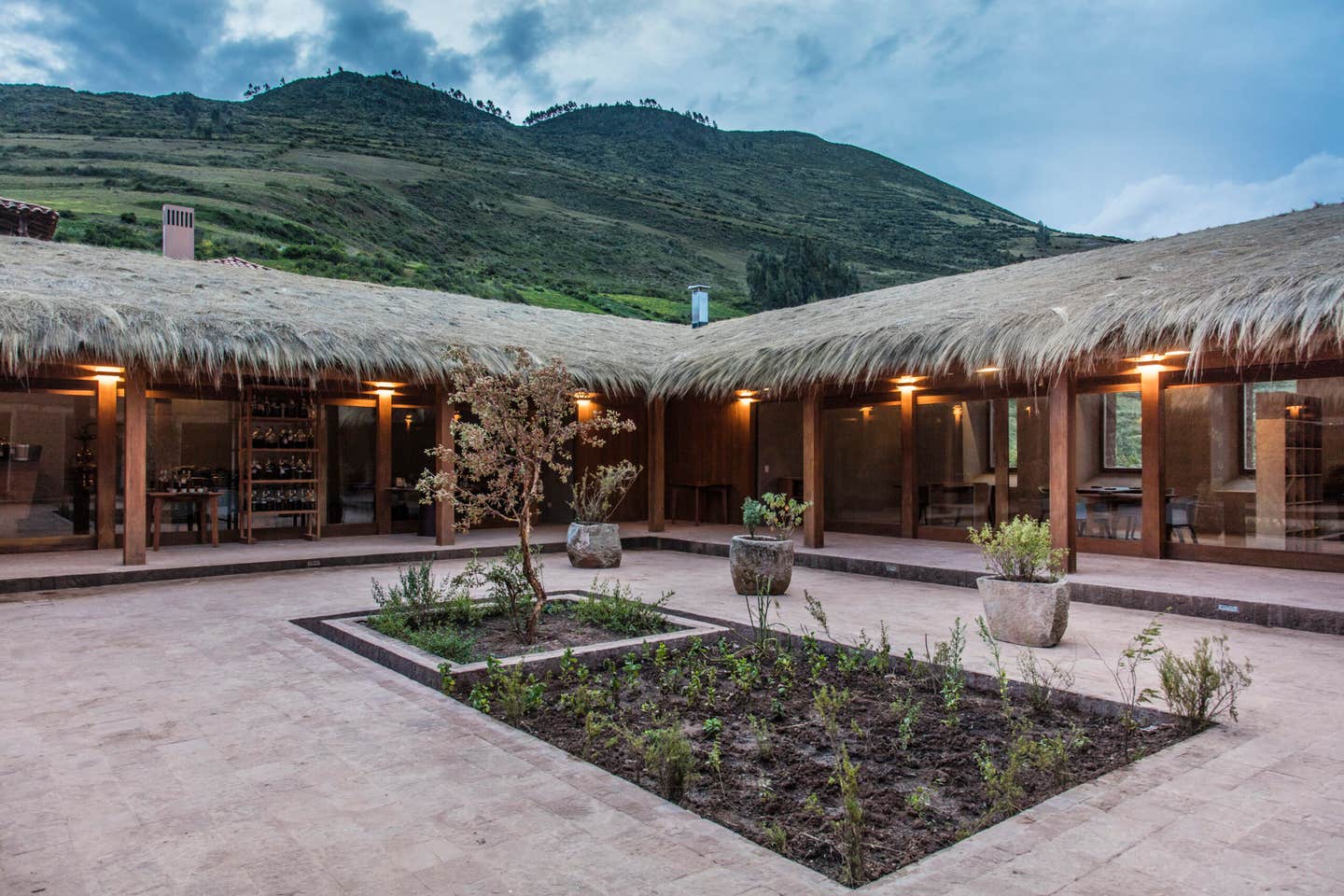
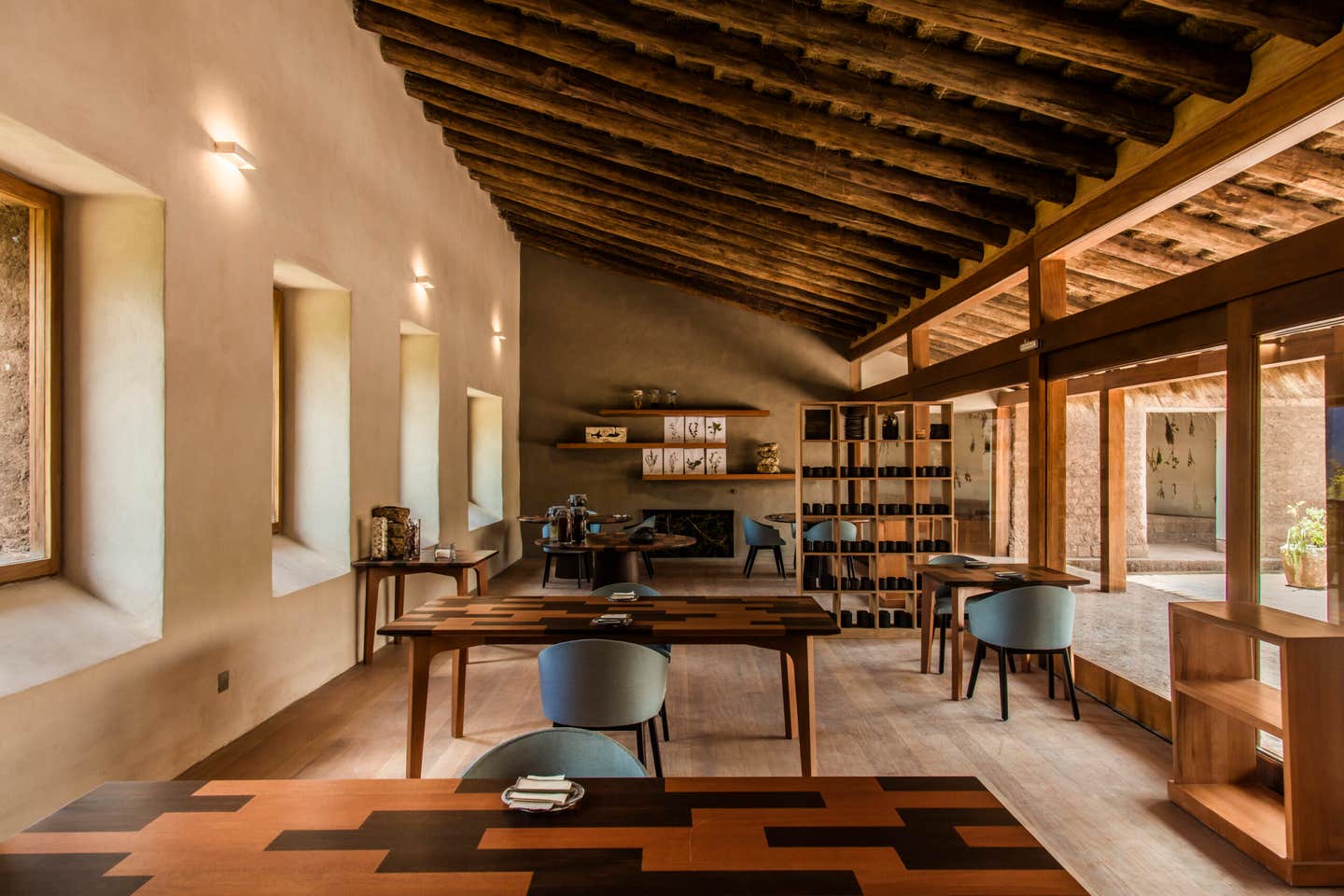
The eight-course menu here is vertical, as at Central: ingredients explored according to altitude. Fine botanical drawings of everything are used by the servers and staff to explain the meal, and also given as gifts to take home.
Martinez was determined not to set Mil down like a UFO on the site, but to involve the communities all around. Working at such a high level involves cooks who come from all over the world learning to deal with the environment, but also the neighboring people learning what he is doing and why.

My primary server was the pastry chef, a young woman from Uruguay who was justly thrilled to be living every chef’s dream. There was a heavenly corn pudding, studded with an array of bright kernels; light-as-air potato crisps with a heady green sauce; and a tiny bowl of succulent and intensely spiced alpaca covered with edible flowers. Her dessert blew me away, every single part of a cacao re-imagined into foams, macerations, and a twisty ribbon of ganache. The finale was an almost floral array of dark chocolate beautifully shaped into delicate leaves.
Martinez, Leon, and Malena Martinez—Martinez’s scientist sister—have created an incredibly emotional story in these restaurants and at their interdisciplinary gastronomic and cultural organization, Mater Iniciativa. It’s a portrait of a country with an astonishing wealth of biodiversity (the very same we’re losing at a rapid clip—between 1970 and 2020 we lost over 70%, according to the Living Planet Index). It’s also a portrait of an indigenous people who’ve long used food to sustain and also to heal, especially as they've often lived in rural remote communities and lacked access to medicine. Conceptual cooking can be a tricky thing—it’s easy to get carried away and let the food be overshadowed by the idea—but course after course was not only delicious, but startling and adventurous.
Virgilio Martinez, Malena Martinez, and Pia Leon’s passion for their country also inspires them to tell their story intersectionally with illustrators, weavers, ceramicists, and other artisans. Everything at Central, Kjolle and Mil is a dialogue; go there and experience three unusual minds.