Kona Village Makes a Spectacular Comeback
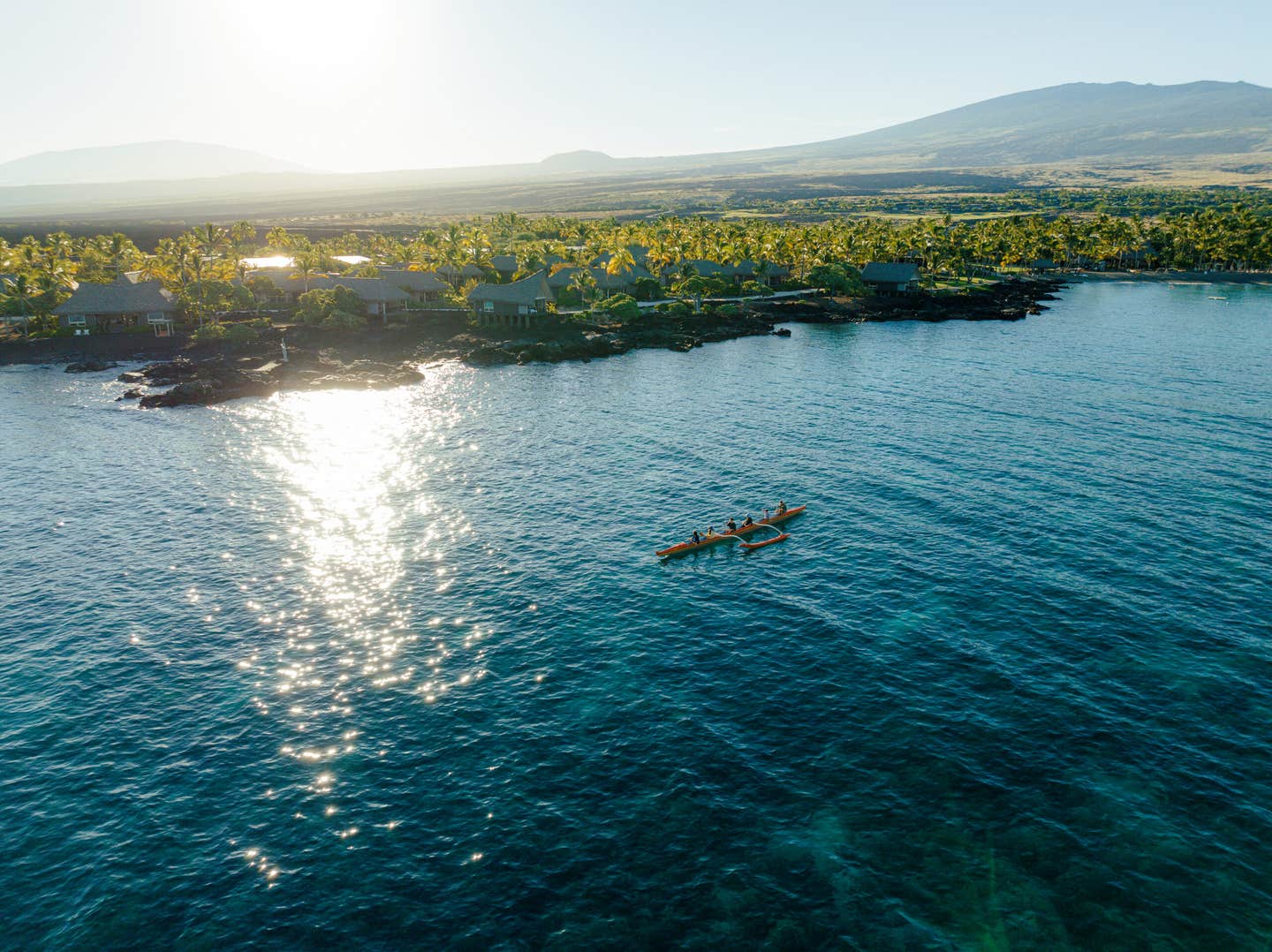
Kona Village is built into the stark black lava that covers the western end of the Big Island of Hawai‘i.
by Lisa Alexander

The first thing you notice about Kona Village, a Rosewood Resort, other than the perfection of that bay, is the bikes. They’re everywhere, jauntily wedged into wooden racks at every turn and in front of the restaurant, the market, the sports shack. Guests are tooling around on their white cruisers on all the white sand paths, and so you are too, exploring the 81-acre property within hours. The black sand inlets. The vast field of 8,400 solar panels. The petroglyph field.
Kona Village is built into the stark black lava that covers the western end of the Big Island of Hawai‘i. It’s a moonscape, baby goats in places jumping from jagged shard to jagged shard, vines growing in and around the rocks, hardy trees sprouting up, and then the property itself, thoughtfully laid out much like Ka‘ūpūlehu, the Polynesian village of 1,500 people that once occupied this land.
They were fishermen, exchanging salt and fish for the beef and vegetables from the mountain villages. Trading triangles, or ahupua‘a (a triangular land division), laid out precise boundaries that prevented competition, ensuring that everyone had what they needed and ate hyper local as well. The village thrived in this beautiful bay until Hualalai volcano exploded in 1801 and wiped out everything; 21 archaeological sites on the property are now carefully tended and preserved.

In the mid 1960s, a man named Johnno Jackson sailed into the bay after exploring most of the South Pacific with his wife and said, “That’s where we’re going to build our resort.” There were no roads to the coast back then, so guests had to fly into Kona and then take a puddle jumper to the property. It felt hidden, a secret place. And it stayed that way, meaning so much to so many, until the unimaginable happened again in 2011. Across the Pacific in Japan, a massive magnitude 9.0 earthquake triggered a tsunami. This single wave traveled 3,900 miles, not tall by the time it reached the west coast of the Big Island but so extremely destructive that it wiped out the resort and many of the towns as well. The faithful gathered within hours on a Save Kona Village Facebook page 8,000 strong (still actively posting to this day). But wasn’t until Kennedy Wilson, an innovative real estate investment company, purchased the property that the rebuild began.
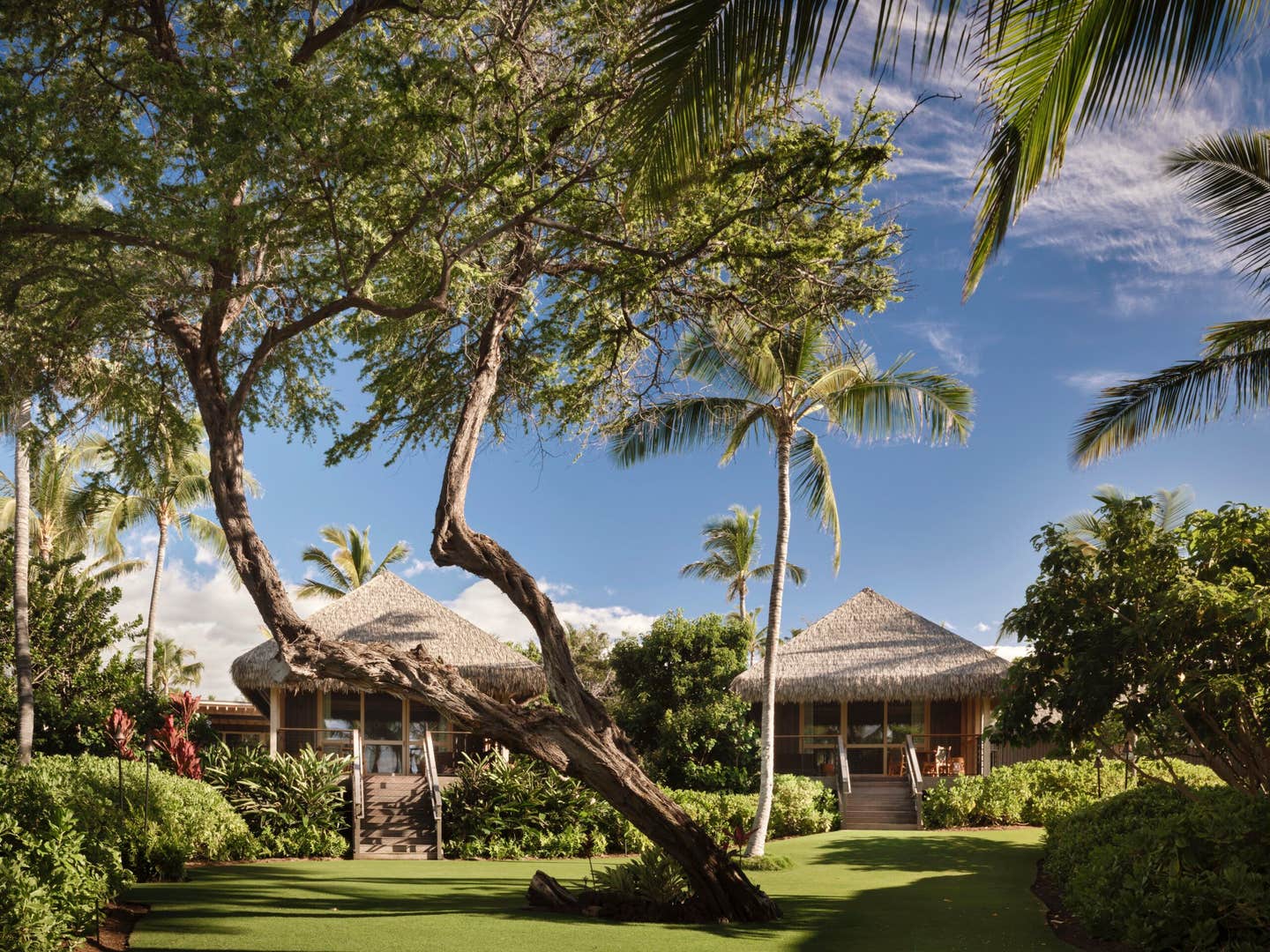
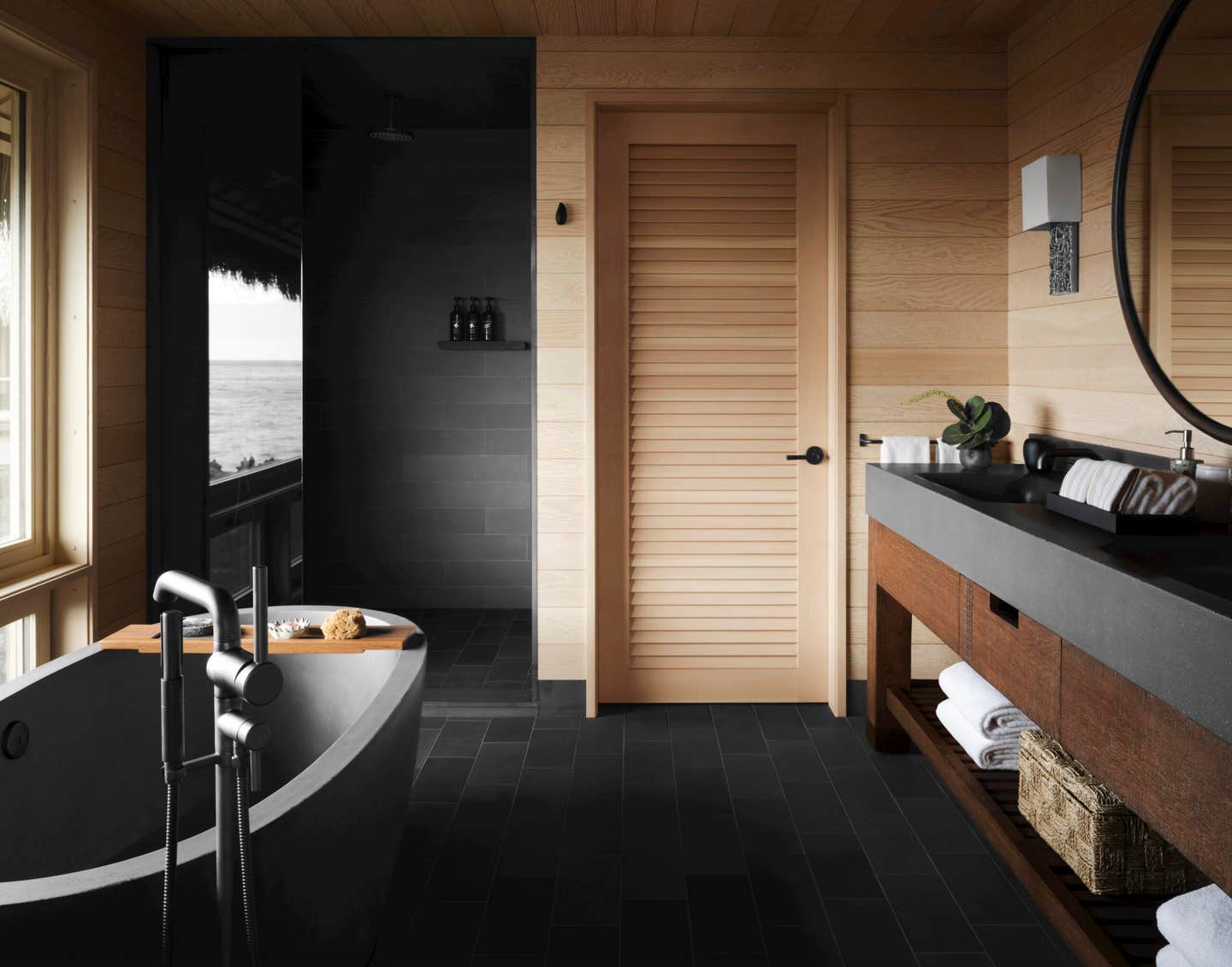
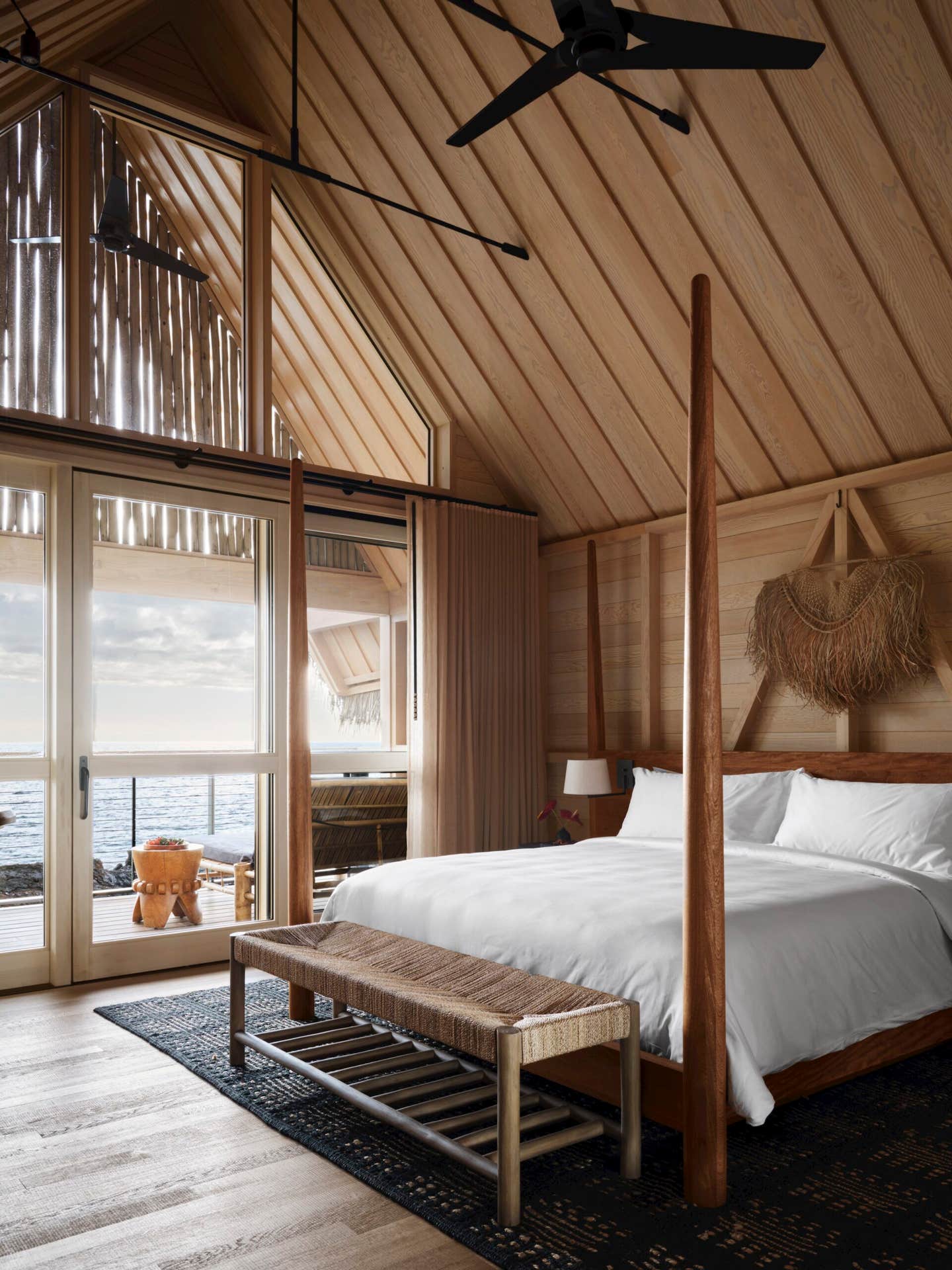
Now the 150 hales (Hawaiian traditional houses) nestle in their coves by the sea. The grass is buzz cut to green carpets. The black sand inlets scallop the coast. It’s a made landscape, but it’s done well and intentionally, centering culture, sustainability, and honoring the legacy of the sacred land surrounding Kahuwai Bay. The interior and exterior design centers ohana (family), journey, and cultural heritage as themes. Lineal descendants of the place were and are consulted and invited to interact and advise. The backside of the property has a reverse osmosis plant for drinking water and to irrigate the tropical vegetation. On a peak sunny day, the place generates 2.5 megawatts of power to run the entire resort off the grid.

Kona Village has a tiny “White Lotus” vibe—what doesn’t, at this cultural moment?—but you also learn quickly about how much care has gone into the resort, and how much respect. It’s also fun to have everything thought of and taken care of. All you have to do at Kona Village is surrender to the ocean and this softer life, because that’s what it feels like: the air is softer; the water is softer; everything just feels a little kinder.
I quickly figured out a routine: Up at 6am (still jetlagged from LA), and hop on my bike. The mornings at Kona Village were cool in May with a steady breeze ruffling the palms. The birds were waking up—red ones and green ones and the protected nene bird. The property was barely stirring, though there was already a barista at work. Stick the cup back in your basket and pedal to your island hale, then sit on the lanai and watch the mesmerizing waves as you plan your day.
There’s lots to do at Kona Village. The bay itself (important because Hawaiian beaches come in all flavors and some of them are hard to get into) is welcoming with a sandy floor. The water is clear and warm and full of fish (check out the huge yellow tangs). There’s sunrise paddles and lots of water sports available, including kayaks and boats—you just have to stop by the sports shack and ask, and they’ll suit you up.
And then, after your shower and maybe your massage (the spa is built into the lava fields with dramatic fire elements and outdoor sculptures), there’s the food.
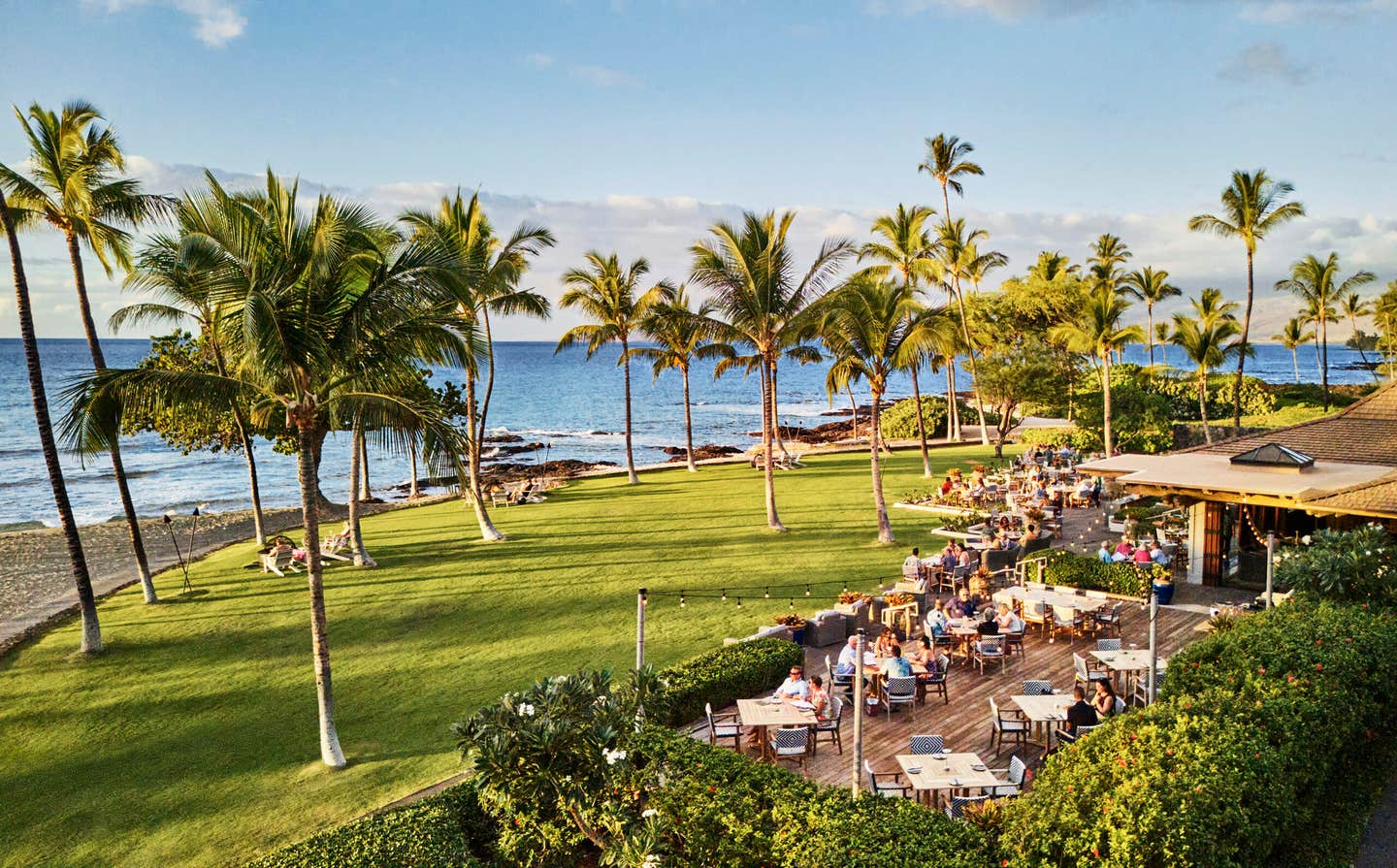
Moana is the fancier restaurant, open to the sea (and the excited birds).
I met Chef Robert Sulatycky in the culinary garden he was tending at the front of the resort. Tomatoes, guava, dragon fruit, dark rows of kale, springy lettuces and tiny carrots, lots of herbs, citrus trees lining a lawn where they host farm-to-table dinners; it felt like the whole place was about to explode into fruit and bloom. I asked him about his vision for the place.
Sulatycky, originally from Napa (he worked with Thomas Keller at French Laundry for 10 years), is all about focusing on the hyper-local gifts of the island and paying “utmost respect to the Hawaiian culinary culture.”
“A prime example was the ceviche we did here the other night,” he said. “The kanpachi came from Blue Ocean Mariculture [a cutting-edge open ocean facility up the coast], and the hearts of palm came from the Hilo side. We added freshly squeezed coconut milk—we have so many coconuts here—and kaffir lime, the actual wrinkly little fruits from the island, along with limes from Maui. Our ginger and mint were also from right here, as well as Kona salt. And we served it with purple potato chips from purple potatoes on the Hilo side.”

Sulatycky’s training is classical-meets-Napa as he also worked his formative years in Joel Robuchon’s Gemma in Paris, as well as Hotel Ritz, and then Le Gavroche in London with Albert Roux.
“I want to install a culture of curiosity, a culture of technical proficiency, a culture of ‘how do we push ourselves?’”
Dinner at Moana that first night was stellar, but what stood out to me most was a perfect green salad from those lettuces I’d seen just that afternoon. It made me remember how Alice Waters packed her suitcase with tender Berkeley lettuces for her first international culinary competition in New York: Her entry was a simple green salad—olive oil, vinegar, lettuces, and salt. Sulatycky’s was right up there.
We also had a flavor-packed miso kanpachi with eggplant purée, ponzu, fennel, and pea shoots. The seared catch of the day, a Hawaiian snapper, swam in coconut lime broth with confit ali’i mushrooms and charred bok choy. A shellfish ramen with Manila clams and Kona shrimp had a startling depth and complexity. For dessert, we tackled the epic (and huge) Hawaiian pineapple upside down cake, macadamia ice cream and all.
The following night we ate at the more casual cookhouse—try the Salad Nicoise—and the last night at Shipwreck Bar at the very end of the beach, which offers sushi nights that show off a spectacular array of fish.
Of course, when the time came, I didn’t want to leave Kona Village. If you go, you’ll end up longing for it too. It’s like they said in the beginning: If you know, you know.