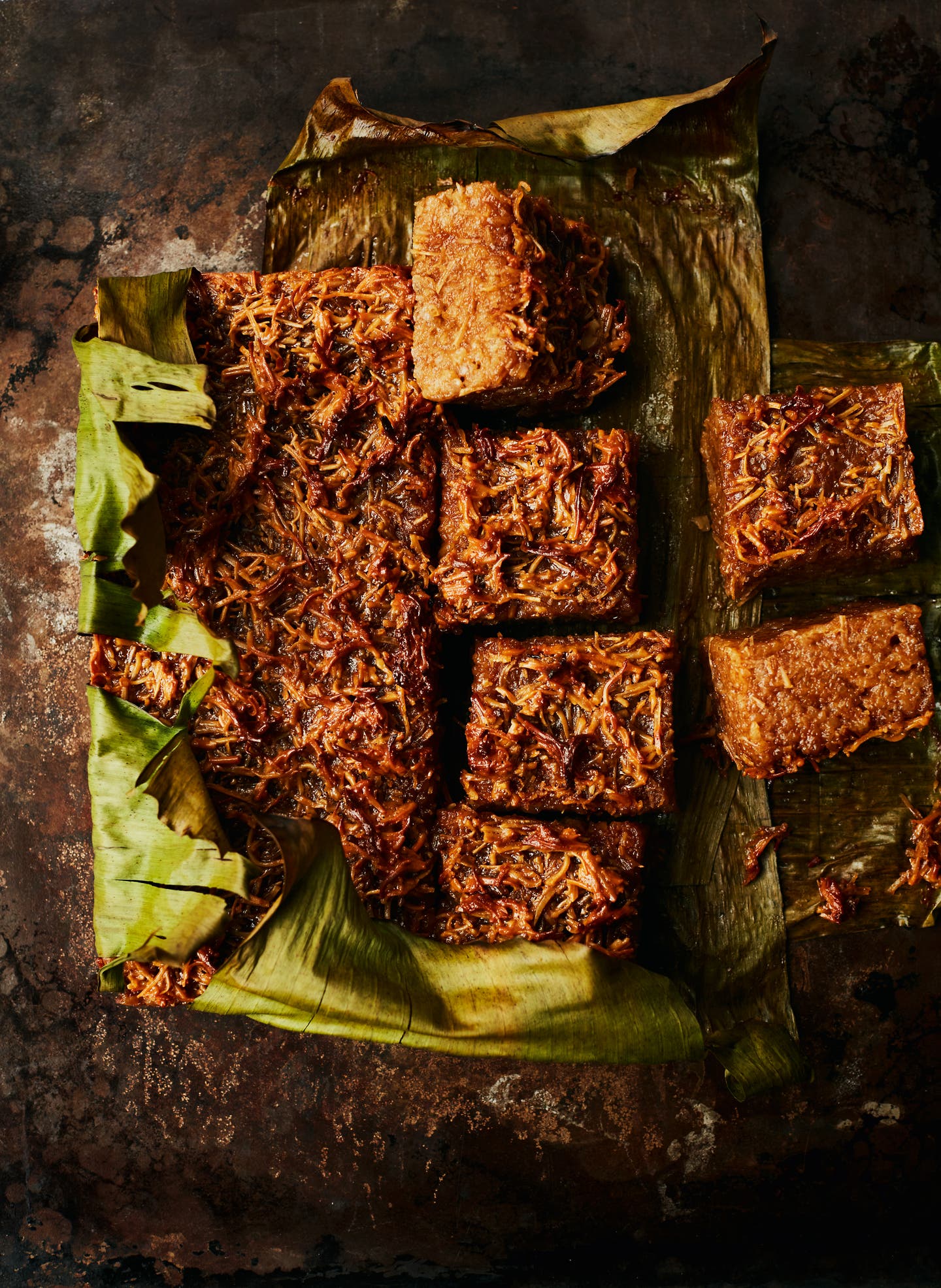
Makes 16 small pieces for snacking or 8 larger pieces for dessert
Elaine, our babysitter, happened to be here one day when I was testing the rice custard pudding (page 83). Tasting it, she said it made her nostalgic for biko, a rice cake from the Philippines, her home country. I had never heard of it, but the flavors she described reminded me of the delectable Malaysian kuehs, except biko is baked, not steamed. I had all the ingredients on hand, and given how much she seemed to miss it, I just had to make it. When my Filipina friend Lulu heard that I had made biko, she came over immediately. I was keen to make the biko because I immediately identified with Elaine’s longing for it. It felt to me that somehow, for both Elaine and Lulu, these hard-working women uprooted from their families and communities, this sweet, squidgy rice cake was a connection to home. And, as I discovered, you don’t need to be a Filipina to enjoy these—they are absolutely delicious.
2 cups (400 g) glutinous (sweet, sticky) rice (see Preparation Tips)
Banana leaves (optional; see Preparation Tip) 2 1/3 cups (550 ml) coconut milk (see Preparation Tip)
Packed 1 cup plus 2 tablespoons (220 g) dark muscovado sugar
2 pandan leaves (see Preparation Tip), tied together in a knot, or ½ vanilla bean
¼ teaspoon fine sea salt
½ cup (50 g) dried, shredded unsweetened coconut or coconut flakes
¼ teaspoon flaky sea salt
- Place the rice in a fine-mesh sieve and rinse under cold running water until the water runs clear. Place the sieve over a large bowl, stirring the rice occasionally to help the water drain away.
- Line the bottom and sides of an 8-inch (20 cm) square cake pan (or another similar-size baking dish) with parchment paper or, better still, banana leaves if you can find them.
- Bring the water to a boil in a medium saucepan (for which you have a lid), then stream in the rice. Bring the water back up to a boil, then give the rice a good stir before decreasing the heat to the lowest setting and covering the pan tightly with the lid. Cook, without lifting the lid, for 20 minutes—the rice should be barely tender and all the water will have been absorbed—then switch off the heat and allow the pan to sit, covered, for the time being.
- While the rice is cooking, combine the coconut milk, muscovado sugar, pandan leaves (or vanilla bean), and fine sea salt in a medium saucepan and place over medium heat. Using a spatula, stir gently in a figure 8 to ensure the sauce is well-combined and doesn’t stick to the bottom of the pan. Simmer for 10 to 15 minutes, until it is slightly reduced and thickened—you should end up with just over 2 cups (550 g).
- Remove about 3/4 cup (150 g) of the caramel from the saucepan and transfer to a medium bowl. Add the coconut to the bowl and stir to combine, then set aside for now.
- Preheat the oven to 375˚F (190˚C).
- Remove the pandan leaves from the remaining caramel in the pan, then add the cooked rice to the caramel. Fold gently with a flexible spatula until all the rice is coated, then scrape into the lined baking pan. Smooth the surface to make sure the rice is evenly distributed and the top is flat and even. Spoon the coconut caramel over the top in an even layer, then bake for about 30 minutes, until the caramel looks set and the coconut is browned and crisp.
- Remove the pan from the oven and sprinkle the top with the flaky sea salt.
- The cake is delicious, but rich. To serve it as a snack, allow the cake to cool to room temperature before cutting it into small squares. If serving it as a dessert, slice into 8 larger pieces and serve it warm and with ice cream (ideally banana flavored).
Preparation Tips
Banana leaf is used both as a practical baking vessel and for its subtle fragrance. If using banana leaf to line the cake pan, wave it over a medium flame on the stovetop to soften it. This makes it more pliable, and releases the fragrance.
Glutinous rice (also known as sticky rice), pandan leaves, and banana leaves are all available from Asian grocers. Leftover pandan leaves can be frozen for another use (for example, the Pandan & Coconut Chiffon Cake on page 185).
I like the Kara, Aroy-D, and Chaokoh brands of coconut milk. Always shake the can or carton before using.
Reprinted with permission from Baking & the Meaning of Life: How to Find Joy in 100 Recipes by Helen Goh, published by Harry N. Abrams, Copyright October, 2025.