Sweet Plantains Recipes That Will Make You Forget Bananas Exist
Master this sweet plantains recipe for caramelized maduros: frying tips, ripening hacks, healthier alternatives, and cultural twists!
Why Sweet Plantains Belong in Every Kitchen
The best sweet plantains recipe starts with one rule: your plantains must be very ripe—we're talking mostly black, soft to the touch, almost past the point where you'd think they're usable. That's exactly when the magic happens.
Quick answer - how to make sweet plantains (maduros):
- Choose plantains with mostly black skin (the darker, the sweeter)
- Peel by cutting off both ends and slicing the skin lengthwise
- Slice diagonally into ½-inch thick pieces
- Fry in neutral oil over medium heat, 2-3 minutes per side
- Drain on a wire rack and season with a pinch of salt
- Serve immediately while the edges are crispy and the center is tender
Total time: about 10-15 minutes. That's it.
Sweet plantains—also called plátanos maduros or maduros—are a staple across the Caribbean, Latin America, and West Africa. They show up at breakfast, lunch, and dinner. They work as a side dish, a snack, and even dessert.
Here in Los Angeles, plantains are everywhere—in Dominican kitchens, Cuban restaurants, Salvadoran homes, and West African food spots. They deserve more attention than they get.
This guide covers everything: the classic fried recipe, baked and air-fried versions, cultural variations, storage tips, and creative serving ideas.
The Science of Ripeness: Choosing Your Plantains
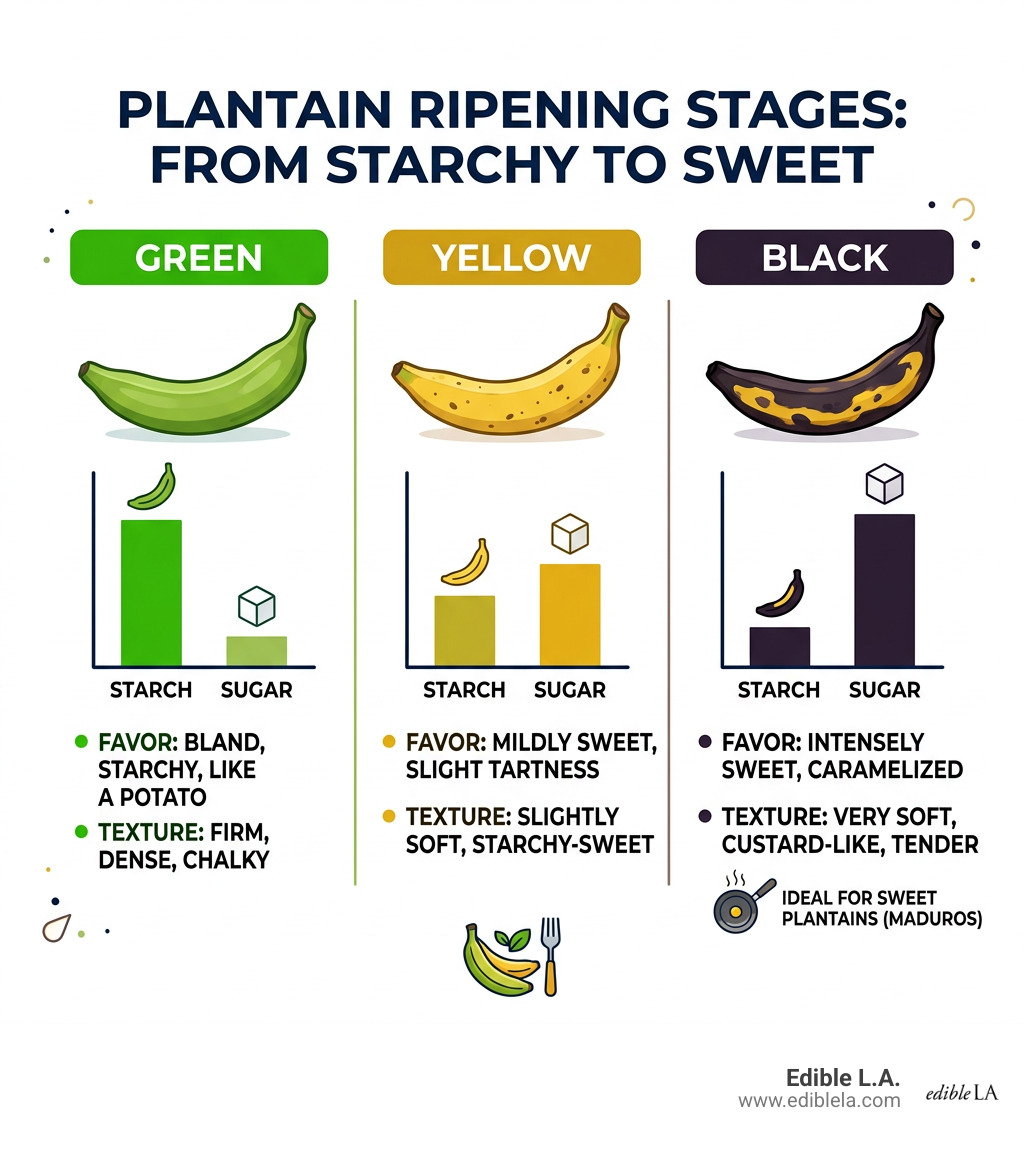
To master any sweet plantains recipe, you first have to understand the fruit itself. While they look like oversized bananas, plantains are quite different. According to banana varieties (genus Musa), plantains have significantly more starch and less sugar than the common Cavendish banana when green. As they ripen, a biological transformation occurs: chlorophyll breaks down, and those complex starches convert into simple sugars.
We often see three stages of plantains at markets in Los Angeles County:
- Green: Firm, starchy, and savory. These are used for tostones (twice-fried green plantains).
- Yellow: Slightly sweet but still firm. These can be fried, but they won't have that signature "melt-in-your-mouth" texture.
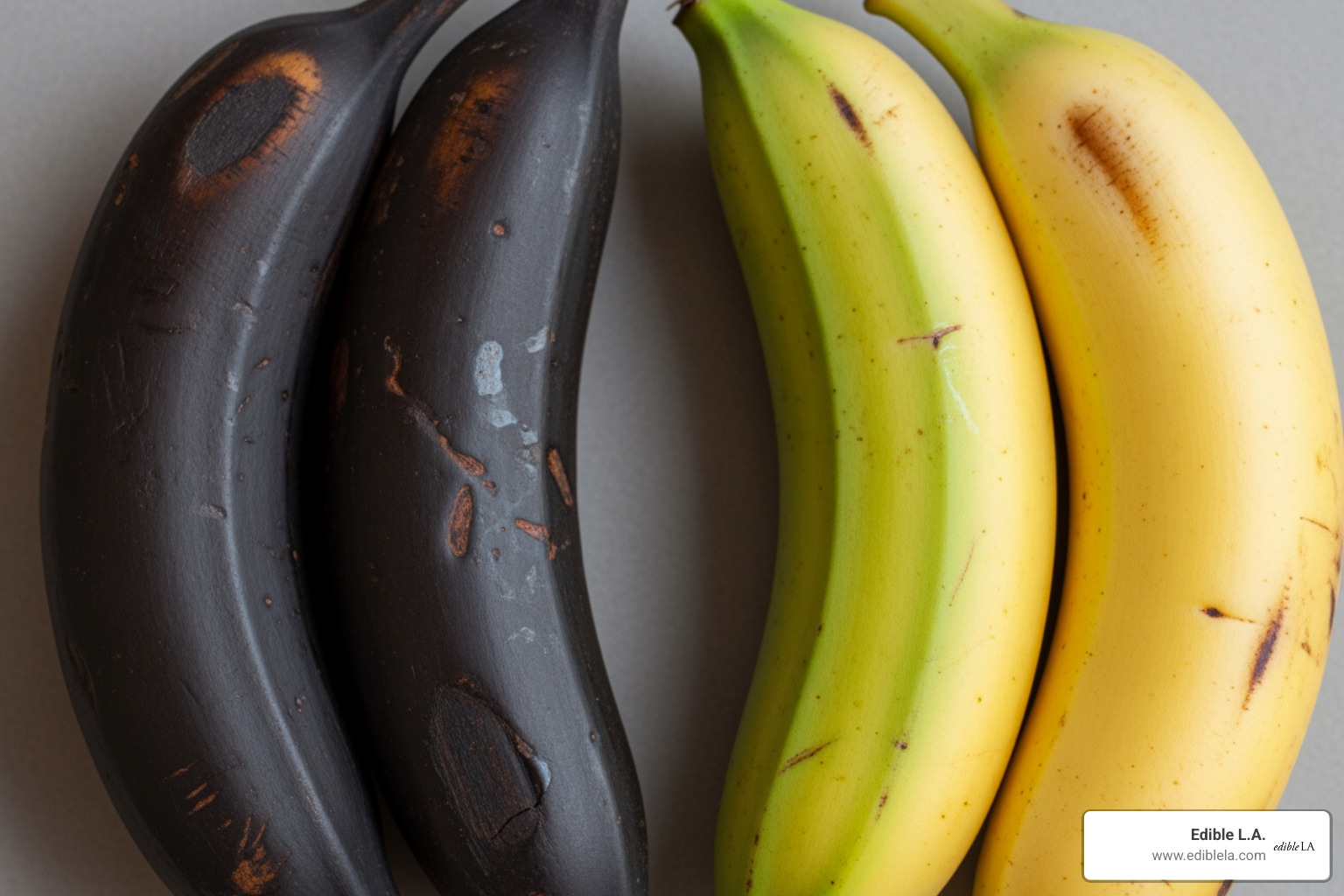
- Black/Dull Yellow: This is the "sweet spot." The skin should be heavily spotted with black or even entirely black. When you press the skin, it should feel soft, similar to a ripe avocado.
How to Ripen Plantains Quickly
If you’ve visited your local market in Silverlake or Echo Park and could only find green ones, don't worry. You can speed up the process at home:
- The Paper Bag Method: Place the plantains in a brown paper bag and roll it shut. This traps the ethylene gas, ripening them in about 5 to 10 days.
- The Rice Hack: Burying plantains in a container of uncooked rice can ripen them in 3 to 5 days.
- The Oven Method: If you need them now, place unpeeled plantains on a baking sheet and bake at 300°F for 20–25 minutes until the skins turn black and the fruit softens.
Once they reach peak ripeness, use a good knife to trim the ends. Because the sugars are so high at this stage, the peel will be thin and come away from the flesh easily with a simple lengthwise slit.
The Essential Sweet Plantains Recipe for Perfect Maduros
The classic way to enjoy maduros is pan-frying. This method allows the natural sugars to caramelize against the hot oil, creating a deep golden crust and a custard-like interior.
For the best results, we recommend using a heavy-bottomed Frying Pan or a 10 Inch Skillet. A non-stick surface is particularly helpful because the high sugar content in ripe plantains makes them prone to sticking as they caramelize.
The Importance of the Diagonal Slice
How you cut the fruit matters. Instead of simple rounds, slice the plantain on a "bias" (diagonally). This increases the surface area of each piece, allowing for more caramelization and a better ratio of crispy edge to soft center. Aim for slices about ½-inch thick.
Comparison of Cooking Methods
| Method | Texture | Health Profile | Time |
|---|---|---|---|
| Pan-Fried | Crispy edges, very tender center | Higher fat, traditional | 10 mins |
| Baked | Soft and jammy, less crispy | Low fat, hands-off | 20-25 mins |
| Air-Fried | Chewy and golden | Minimal oil, fast | 8-10 mins |
Mastering the Sweet Plantains Recipe Technique
When you're ready to cook, heat about ½ inch of neutral oil (canola, vegetable, or grapeseed) over medium-high heat. You want the oil to be hot enough that a slice sizzles immediately, but not so hot that it smokes.
- Avoid Overcrowding: Fry in batches. If you put too many slices in the pan at once, the oil temperature drops, and the plantains will absorb the oil rather than searing, resulting in a greasy texture.
- The Dutch Oven Option: If you are cooking for a large group in Downtown L.A. or Hollywood, a Dutch Oven is excellent for maintaining consistent heat across multiple batches.
- Draining: This is a crucial "pro tip." Many people use paper towels, but the high sugar content can cause the maduros to stick to the paper. Instead, transfer them to a wire rack set over a baking sheet. This allows excess oil to drip away while keeping the edges crisp.
Elevating Your Sweet Plantains Recipe with Spices and Aromatics
While traditional maduros are perfect with just a pinch of salt, you can enhance the flavor profile depending on the meal:
- Sticky Sweet: Toss the raw slices in brown sugar before frying for an extra-caramelized, "sticky" finish.
- Warm Spices: A dusting of cinnamon or a drop of vanilla extract in the oil adds a dessert-like aroma.
- Tropical Notes: Frying in coconut oil instead of vegetable oil adds a subtle, nutty sweetness.
- Gourmet Finish: Drizzle with pure maple syrup and serve with rum-infused whipped cream for a sophisticated West Indian-style dessert.
Cultural Variations and Traditional Serving Suggestions
One of the reasons we love the sweet plantains recipe so much at Edible L.A. is its incredible versatility across different cultures found right here in our city.
- Dominican Republic: Maduros are a "non-negotiable" part of La Bandera (the traditional lunch of rice, beans, and meat). They are also frequently served at breakfast with fried eggs and salami.
- Cuba: In Cuban households, you'll often find maduros served alongside Picadillo (savory ground beef) or Arroz con Pollo. The sweetness of the plantain perfectly balances the salty, briny olives usually found in these dishes.
- Puerto Rico: Beyond simple frying, Puerto Ricans use maduros in Pastelón, a stunning "Latin Lasagna" where sliced sweet plantains replace the pasta sheets, layered with seasoned ground beef and plenty of cheese.
- El Salvador: A local favorite is platanos-fritos-con-frijoles-licuados-from-salvisoul-cookbook. This dish pairs the caramelized fruit with silky, blended black beans and a dollop of crema Salvadoreña.
- West Africa: Known as Dodo in Nigeria, these are often cut into cubes or rounds and served as a side to Jollof rice or spicy stews.
If you're looking for a savory contrast, you can use a tostonera to make savory green tostones to serve alongside your maduros, providing a full spectrum of plantain flavors on one plate.
Healthier Alternatives: Baked and Air-Fried Maduros
If you love the flavor but want to skip the deep-frying, there are excellent modern alternatives.
Baked Sweet Plantains
To bake, preheat your oven to 450°F. Line a baking sheet with parchment paper (this is essential to prevent sticking). Lightly brush your diagonal slices with a tiny bit of oil or leave them oil-free. Bake for 10-15 minutes, flip, and bake for another 5 minutes until golden. The result is a softer, jam-like texture that is incredibly satisfying.
Air-Fried Sweet Plantains
The air fryer is perhaps the best "healthy" compromise. It uses circulating hot air to mimic the crispiness of frying with 90% less oil.
- Lightly spray the basket or use air fryer liners for easy cleanup.
- Arrange slices in a single layer.
- Air fry at 380°F for 8–10 minutes, flipping halfway through.
Once cooled, leftovers can be stored in an airtight container in the refrigerator for up to two days. To reheat, we strongly suggest avoiding the microwave, which can make them rubbery. Instead, pop them back into the air fryer for 2 minutes or toss them in a dry skillet for a moment to revive that crispy exterior.
Frequently Asked Questions About Sweet Plantains
What is the difference between sweet plantains (maduros) and tostones?
The primary difference is the ripeness of the fruit. Maduros use very ripe, black-skinned plantains that have a high sugar content. They are fried once and result in a soft, sweet dish. Tostones use green, unripe plantains that are starchy like a potato. They are fried once, smashed flat with a tostonera, and fried a second time to become crispy and savory.
How do you store and reheat leftover sweet plantains?
Store leftovers in the fridge for up to 48 hours. For the best texture, reheat them in a toaster oven, air fryer, or a skillet over medium heat. This helps maintain the caramelized edges that the microwave would otherwise soften.
Can you freeze cooked sweet plantains?
While you can freeze them, they tend to lose some of their structural integrity and can become mushy upon thawing. If you must freeze them, flash-freeze the slices on a tray first so they don't stick together, then move them to a freezer bag. Reheat directly from frozen in an air fryer for the best results.
Conclusion
At Edible L.A., we believe that the best stories are found in the kitchens of our neighbors, from Santa Monica to Glassell Park. The sweet plantains recipe is more than just a side dish; it’s a culinary bridge that connects Los Angeles to the rich traditions of the Caribbean, Latin America, and beyond. Whether you're frying them for a traditional Sunday dinner or air-frying a quick batch for a healthy snack, maduros bring a unique, caramelized warmth to any table.
By supporting our local markets and farmers, we keep these vibrant food cultures alive. We invite you to grab a bunch of plantains on your next grocery run—just remember to let them turn black!