The Ins and Outs of Bop Meaning
Discover bop meaning: from jazz bops to TikTok slang, teen cyberbullying risks, and BOP prisons. Explore evolution and impacts now!
What "Bop Meaning" Really Is (And Why It Depends on Context)
The bop meaning is not one single thing -- it shifts dramatically depending on who's using it and where.
Here's a quick breakdown:
| Context | What "Bop" Means |
|---|---|
| Traditional English | A light hit or strike (verb); onomatopoeic in origin |
| 1940s Jazz | Short for "bebop" -- a fast, complex style of jazz music |
| Modern Music Slang | A catchy, danceable song ("That track is a total bop") |
| British Informal | A dance event, like a school disco |
| Teen/TikTok Slang (2021-present) | A derogatory label for someone perceived as promiscuous -- often targeting young women |
| BOP (acronym) | The U.S. Bureau of Prisons, a federal law enforcement agency |
So the same three letters can mean anything from a great song to a harmful insult to a federal institution. That range is exactly what makes this word worth understanding.
Language evolves fast -- especially online. A word that once meant "to dance to jazz" in the 1940s now shows up in TikTok call-out videos targeting teenagers. One Reddit user put it simply: "That song is such a bop, I think it might be one of my new favorites!" -- a completely innocent use. But in school hallways and social media comment sections, the same word is being used to shame young women in ways that are anything but innocent.
This guide untangles every layer of the bop meaning -- from its roots in bebop jazz to its role in modern cyberbullying -- so you know exactly what you're dealing with.
Bop meaning definitions:
Defining the Bop Meaning: From Jazz to TikTok
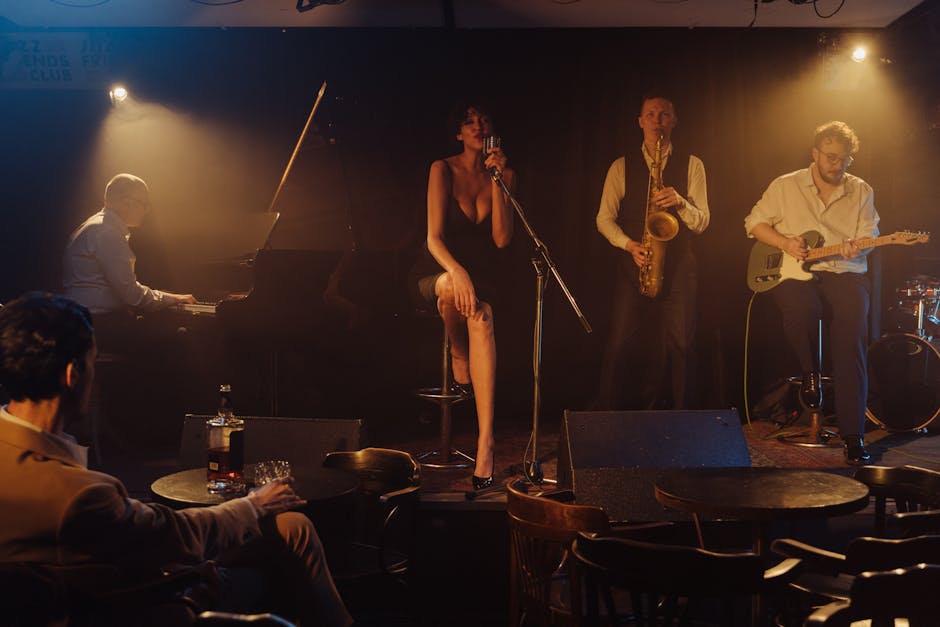
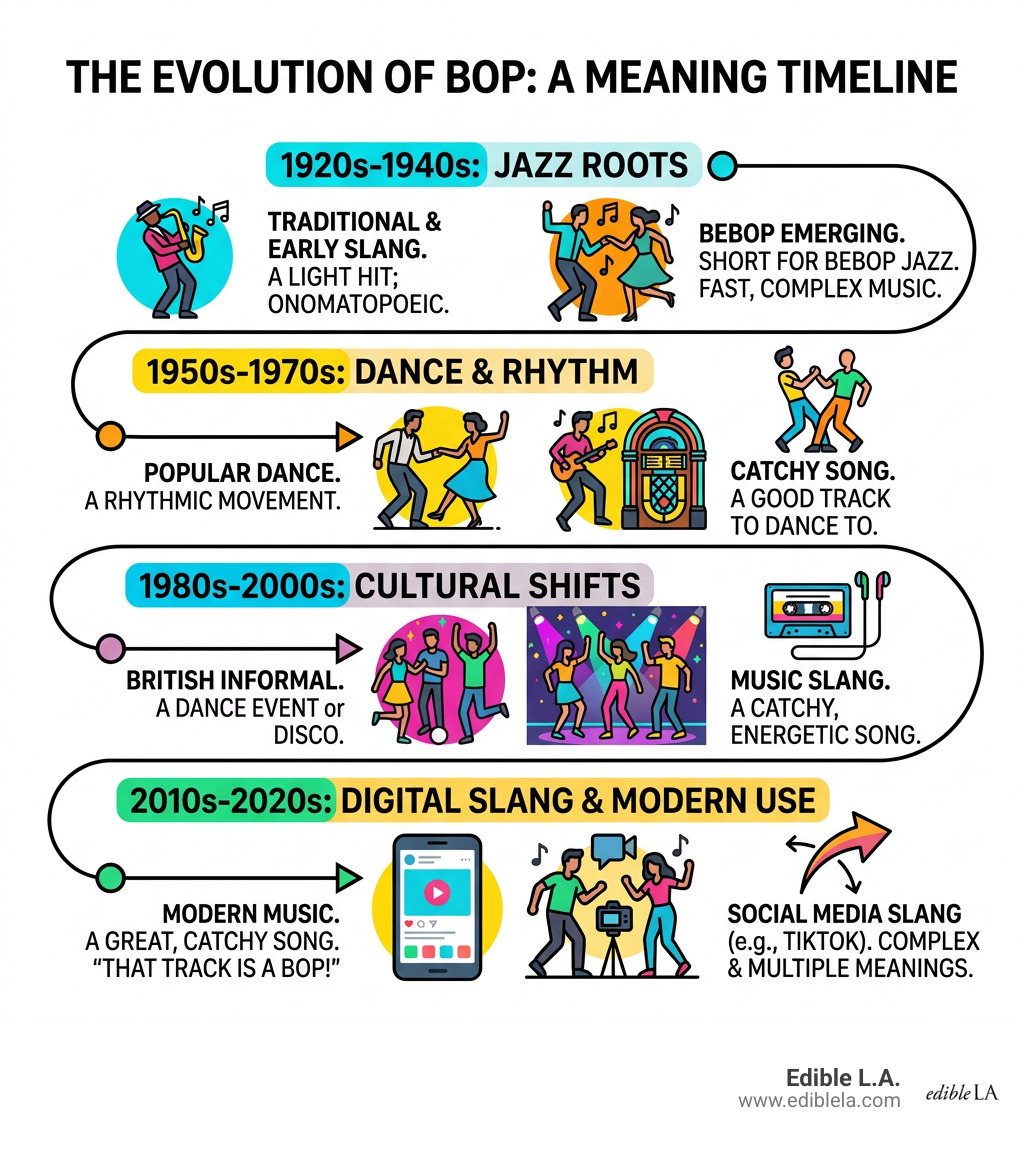
To truly understand the bop meaning, we have to look at its linguistic history. Long before it was a hashtag, "bop" was an onomatopoeia -- a word that sounds like the action it describes. If you "bop" someone on the head, you are hitting them lightly. This usage dates back to the early 20th century, with the Oxford English Dictionary historical usage noting the verb form appearing around 1928 and the noun form by 1932.
By the 1940s, the word took on a rhythmic life of its own. It became the shorthand for "bebop," a style of jazz characterized by fast tempos, virtuosic technique, and complex harmonies. According to Vocabulary.com etymology, the name itself likely came from the nonsense syllables musicians sang while scatting. This era transformed "bop" from a physical action into a cultural movement.
| Usage Type | Part of Speech | Common Definition |
|---|---|---|
| Physical | Verb | To hit or strike lightly/playfully |
| Musical | Noun | A genre of jazz (Bebop) |
| Social | Verb | To move or dance to a beat |
| Modern Slang | Noun | A song that is exceptionally good |
The Evolution of Bop Meaning in Music
In the modern era, the bop meaning has shifted from a specific genre (jazz) to a general seal of approval for any catchy song. When we say "That's a bop," we mean the track has an infectious rhythm that makes you want to move. It is high praise in pop, hip-hop, and R&B.
The Cambridge Dictionary music definitions highlight this dual nature: it can be the act of dancing informally to pop music or the music itself. Whether you are "bopping along" to a radio hit in your car in Echo Park or watching a live set in Downtown L.A., the musical "bop" remains a positive, energetic term. It suggests a song isn't just good; it's danceable and memorable.
Regional Variations in Musical Slang
While we often use "bop" as a noun for a song in the U.S., our friends across the pond in the UK use it slightly differently. In British English, a "bop" is often a social event or a dance, typically held at a school or university (e.g., "There is a bop on in the village hall tonight").
In the U.S., specifically within hip-hop culture, "bopping" can also refer to a specific style of dance or a rhythmic way of walking. You might see someone "bopping" down the street in Hollywood, which usually implies a sense of confidence and style. These variations show how a single word can adapt to the local "flavor" of a community, much like how the food scene in Silverlake differs from the vibe in Venice.
The Rise of "Bop" as Harmful Teen Slang
Unfortunately, language doesn't always evolve for the better. Recently, the bop meaning has taken a dark, derogatory turn in teen circles. Starting around 2021 and exploding on TikTok in 2023, "bop" began being used as a slur to label young women as promiscuous.
According to Understanding 'Bop' Slang in Teen Culture, this specific shift is often traced back to the song "Lala Bop" by rapper Almighty Rexxo. The song's lyrics and the subsequent TikTok trends turned the word into a tool for slut-shaming. What started as a niche musical reference quickly became a widespread way for middle and high schoolers to attack their peers' reputations.
Cyberbullying and the Negative Bop Meaning
The way "bop" is used in cyberbullying is particularly insidious. Teens often create "school bop" videos where they list girls in their school they believe have high "body counts" (a slang term for the number of sexual partners). These videos frequently use fabricated digital proof -- like photoshopped DMs or out-of-context images -- to "expose" someone.
Bark Technologies insights on teen shaming reveal that this trend is often driven by jealousy or a desire for social clout. Because the word sounds "cute" or "innocent" to adults who remember the jazz or pop meanings, the bullying can fly under the radar of parents and teachers. A girl might be called a "Lala Bop" in a comment section, and if the parent isn't hip to the new bop meaning, they might think it is just a silly nickname.
Gender Double Standards and Social Media
There is a glaring double standard in how this slang is applied. While a boy might be called a "homegirl hopper" or even a "bop" playfully, the term is almost exclusively used to degrade and shame young women. It reinforces harmful misogynistic stereotypes that criticize women for their real or perceived sexual behavior.
UCI research on adolescent mental health notes that these labels can have devastating effects. Being labeled the "school bop" can lead to social isolation, anxiety, and a complete breakdown of self-esteem. In the hyper-connected world of L.A. teens -- from Santa Monica to Glassell Park -- an online label can follow a student into every physical space they inhabit.
Psychological Impact and Parental Guidance
The psychological toll of being targeted by this slang is significant. When a teenager is labeled a "bop," they aren't just being called a name; they are being publicly humiliated in a digital space that never forgets. This can lead to severe mental health struggles, including depression and withdrawal from activities they once loved.
Parents need to be aware of the signs that their child might be experiencing this type of harassment. It isn't always obvious, but changes in behavior can be a major red flag.
Signs a teen may be experiencing "bop" shaming or bullying:
- Sudden reluctance to go to school or participate in social groups.
- Becoming secretive about their phone or social media accounts.
- Noticeable drops in mood or self-esteem after spending time online.
- Changes in eating or sleeping patterns.
- Mentioning that they are being "called names" but refusing to specify which ones.
Addressing the Harmful Bop Meaning in Schools
Educators and parents in Los Angeles County have a unique opportunity to turn these trends into teachable moments. Instead of just banning the word, we can use it to discuss digital literacy and the permanence of online actions.
Example of social media bullying show how quickly these videos can spread, but they also offer a chance to talk about consent. If your child sees a "school bop" video, ask them: "Do you think that person consented to having their reputation discussed this way?" Teaching empathy and the importance of reporting harmful content is vital. Schools from Beverly Hills to Culver City are increasingly implementing digital citizenship programs to address these evolving slang terms.
The Institutional Side: Federal Bureau of Prisons (BOP)
While the slang world is debating music and reputation, there is a much more formal bop meaning that impacts thousands of lives daily. In the United States, BOP stands for the Federal Bureau of Prisons. This agency, under the Department of Justice, is responsible for the custody and care of federal inmates.
According to Official Bureau of Prisons data, the agency manages approximately 153,238 inmates. It’s a massive operation with 33,530 employees ensuring security and providing rehabilitative programs. Interestingly, the BOP reports a recidivism rate of around 43%, which they note is lower than many state-level prison studies. For those looking for careers in this sector, the BOP even offers significant sign-on bonuses for roles like psychologists (up to $86,000) and correctional officers (up to $49,000) to help maintain their nationwide system.
Language, Food, and Cultural Identity in Los Angeles
At Edible L.A., we often talk about how food is a language. Just as the bop meaning shifts and evolves, so does the way we describe our culinary heritage. In a city as diverse as Los Angeles -- spanning from the taco trucks of Echo Park to the high-end bistros of Brentwood -- language and food are the primary ways we preserve our culture.
The concept of a "Mother Tongue" is deeply tied to the kitchen. When we use authentic names for dishes instead of anglicizing them, we are performing a small act of cultural preservation. Slang, like "bop," is just another layer of this evolving linguistic landscape. Whether it's the latest teen lingo on TikTok or the traditional Punjabi terms a grandmother uses while cooking in her kitchen, these words shape our identity.
Understanding the nuances of language -- whether it's a catchy "bop" on the radio or the complex history of a federal institution -- helps us navigate the rich, multi-layered society we live in here in Southern California.
Frequently Asked Questions about Bop Meaning
Is "bop" always a bad word?
No! In fact, most of the time, "bop" is a positive term used to describe a great song or a fun dance. It only becomes "bad" when used as derogatory slang to shame someone's character or perceived sexual history. Context is everything.
What does "school bop" mean on TikTok?
"School bop" is a derogatory label used by students to target peers (usually girls) they want to label as promiscuous. It is a form of slut-shaming and cyberbullying that often involves "call-out" videos or lists posted to social media.
How did "bop" transition from jazz to a derogatory term?
The transition wasn't direct. It evolved from "bebop" (jazz) to "bopping" (dancing) to "a bop" (a good song). The shift to a derogatory term is a separate, more recent evolution linked to social media trends and specific songs like "Lala Bop" that repurposed the word as a slur.
Conclusion
The bop meaning is a perfect example of how English is a living, breathing thing. It can be the rhythm of a jazz legend, the hook of a summer hit, the name of a federal agency, or a weapon used in a high school hallway. By staying informed about these shifts, we can better support our community and our youth.
At Edible L.A., we believe that understanding the stories behind our words is just as important as understanding the stories behind our food. From the seasonal harvests in Malibu to the bustling markets of Downtown L.A., we are all part of this ever-changing cultural conversation. To learn more about how we support local culture and sustainable living, check out our More info about seasonal eating and join us in celebrating the diverse flavors of Los Angeles.