The Best Kitchen Never Built
Spend any time with Camilla Marcus and she’ll hook up a friend’s kid with an internship with her auto mechanic (she’s into vintage cars), arrange for that three-foot Ora King salmon to show up on your birthday (it happened to me), and introduce you to all her best friends.
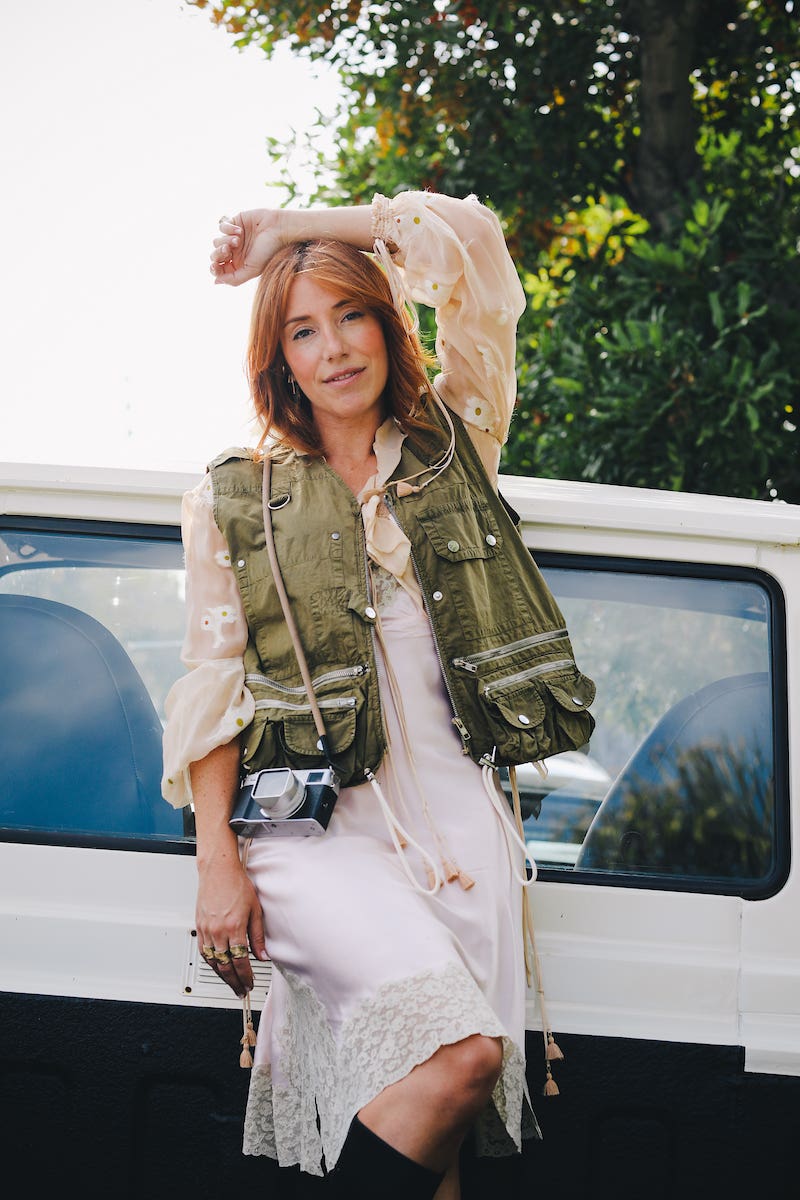
Spend any time with Camilla Marcus and she’ll hook up a friend’s kid with an internship with her auto mechanic (she’s into vintage cars), arrange for that three-foot Ora King salmon to show up on your birthday (it happened to me), and introduce you to all her best friends. She’s formidable, enthusiastic, smart—you can hear her brain’s synapses crackling—intentional and committed to her beautiful food.
She’s also one of those people with a philosophy, a code to live by, a manifesto which, unlike most of us, she embodies with her restaurants, her cooking, her designing, and west~bourne, her avocado oil business.

But where’s all that life force coming from?
Blame it on her mom who said early on, “If you don’t ask, you don’t get,” telling her that they came from a big family—Marcus has two older brothers—and “No one’s going to sit here reading your mind and figuring out what you want.”
“My team used to say to me that I don’t hear no,” Camilla said. “But what is no? No is where you already are, so what have you got to lose?
We’re sitting in her gorgeous Mid-Century rental after she sold the Architectural Digest-featured Mandeville house that she loved and designed. School’s out, so her four kids are running around with crayons and questions, circling the pool, and waiting impatiently for their teacher to show up.
“I love the chaos,” Camilla says with a grin, and then barrels into her thoughts on design. She’s always had a passion for it. “I love to cook, but I also love to draw and paint. I applied to college [U Penn] with an art portfolio to the business school. I studied art history, and every summer was an art camp. To me, everything is about color, texture, plating, but also the experience that you have with it. I think that’s how I found my way to cooking and restaurants.”
For the design of west~bourne, her zero-waste restaurant in New York’s Soho, she reached out to Milo Garcia of Studio Mai, who did the original Gjelina.
“They’re very under-the-radar,” Camilla says. “And selective. I said, ‘Let me buy you a drink anywhere in New York. Five minutes and you don’t like me, you can walk out, no questions asked.’”
Which worked. Marcus ended up being deeply involved in the design choices for the restaurant. After closing it during Covid lockdowns, she pivoted to private cheffing and scaling her consumer package goods company, returning to LA in large part because she loves live fire cooking and being outdoors. That led to her thinking more deeply about outdoor cooking.

“Cooking on farms (as I do) is so different from what you see in homes in Los Angeles in a backyard, right?” Camilla says. “When I grew up, it was a gas grill, marble counters and refrigeration, all the bells and whistles that felt like popping a house kitchen outside, totally opposite to the experience of actually cooking in nature. Even with refrigeration, you’re supposed to grill something at room temperature. You can take it out of your fridge in your house that’s five yards away.”
So, what is the perfect outdoor kitchen? Or even what makes a kitchen?
“If you can prepare food in any location, that’s a kitchen,” she says.
Camilla is, by her own admission, not only wildly curious and design-obsessed, but queen of the cold DM. She’d been a longtime fan of Molly Sedlacek of ORCA Design when she finally reached out.
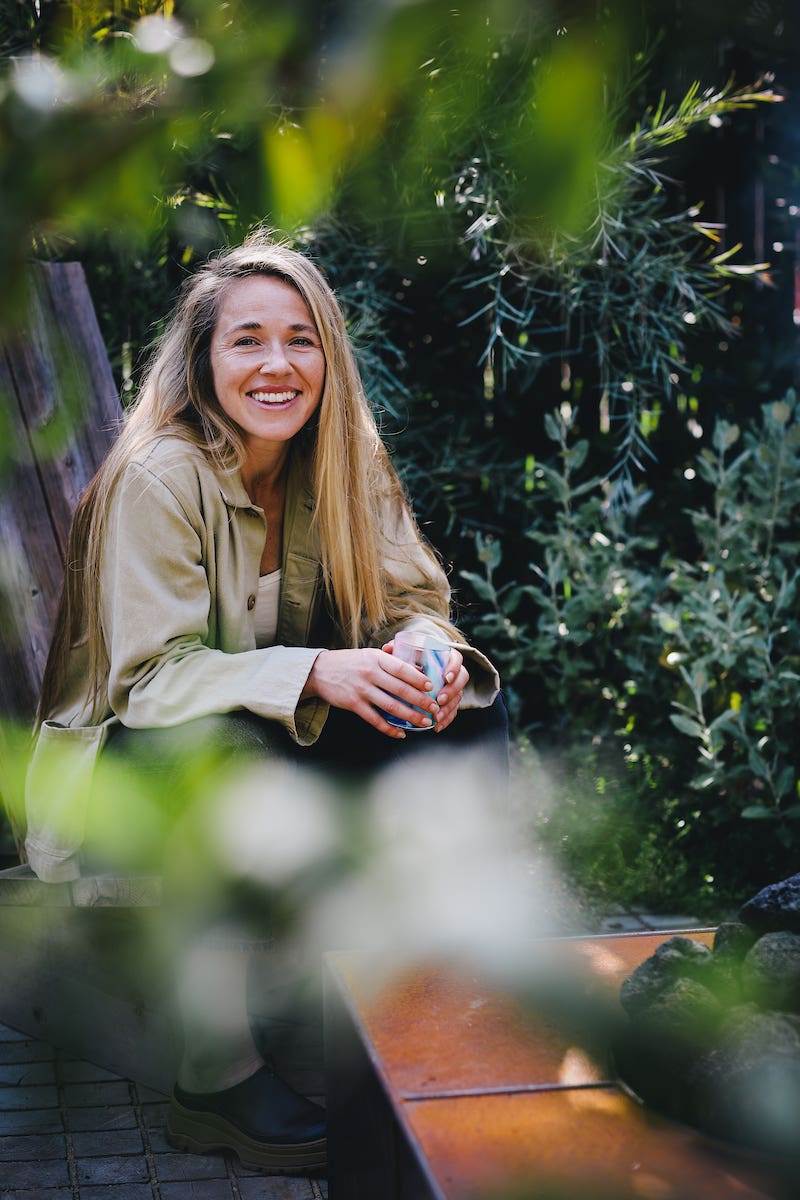
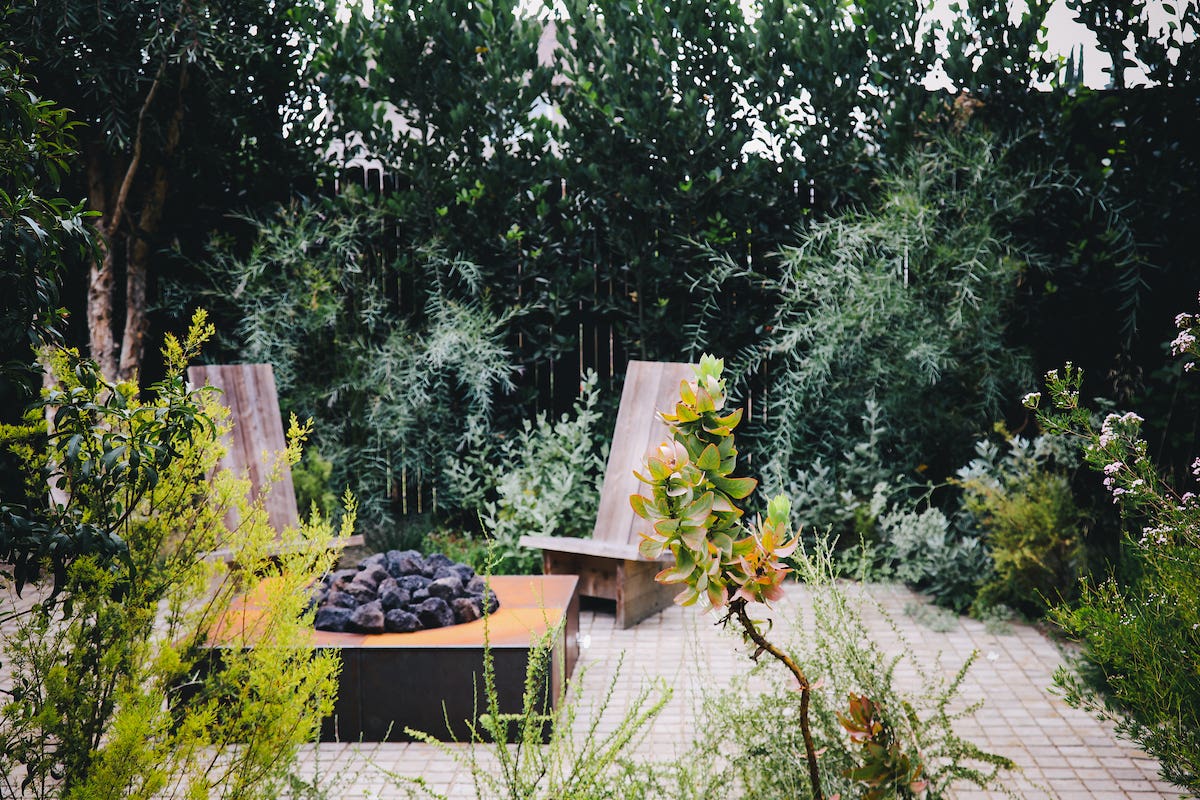
“Molly’s entire passion is around sustainable—sustainable materiality, thinking about products that really live with the land, native planting, and how we restore the land to the way it used to be,” Camilla says. “We got on like a house on fire, and she was so excited to show me her fire pit. I said, ‘Great, let me put a cast-iron pan on it’. And she looked at me like I had 20 heads. ‘You do realize, I said, that you have fire here. Man cooks on fire, right?’ It’s like Francis Mallmann, going back to the primal.”
Their collaboration was deeply rooted in the concept that it all had to come from the natural shape of the land, the existing stones, and the best way to distill it to its essential. “Things should speak for themselves; it all has to fit into the context of how it’s meant to be, without imposing on it.”
“Camilla’s approach to cooking is very inspiring to me,” Molly says, “because she always works in harmony with nature.” She cites the ingredients Camilla sources as well as the preparation of the food itself. “I’ve had the pleasure of watching her in multiple landscapes as she hand-gathers produce directly from the farm and uses open fire to cook every dish from start to finish, even a miso bread pudding in cast iron. She truly celebrates the beauty of analog preparation while cultivating community.”
Together they worked a retaining wall and seating into the massive roots of a tree that needed support. They went back and forth on the need for a sink at all. “If you have the outdoor grill, you’ve probably got table and counter space, but that’s really it, right?” Electricity and plumbing aren’t necessary if the outdoor kitchen is tied to the primary one inside, so they ultimately landed on a “kind of industrial pipe.” As Camilla says, “It was the best kitchen that was never built.”

“Molly is a second-generation landscaper,” she adds. “She’s a badass expert, in my personal opinion. We share a mind for preservation, for true sustainability, for what it means to live circular, and what it means to work with less as more.”
Molly agrees. “ORCA’s approach to outdoor cooking (and design in general) favors fewer gadgets, aiming to be as analog as possible by using what nature provides. Our three go-to elements in an outdoor kitchen are water, fire, and surface area. We always recommend a big sink zone that can be used for washing vegetables, rinsing hands, or filled with ice to hold beverages. Then comes the fire: We love a big grate and wood for those who enjoy the process. We also use Gozney pizza ovens in our kitchens because [many of their models] run on both gas and wood. Lastly, and most importantly, is surface area. We leave space for a large counter surface (think 5 to 8 feet) that can hold dishes, serve as prep space, and house a couple of artful vessels with plants. We like the kitchen running adjacent to a dining space so it can serve as a backdrop when not in use. Our goal is to never hide the kitchen. Instead, make it feel like it grew with the garden and is integrated with the landscape.
With the Mandeville house, Camilla wanted the outside to be the hero. A one-story post-and-beam, she brought it down to the studs and minimized everything else in a neutral palette. She also collects artisans and objects as she goes, bringing the light fixtures from her restaurant with her from New York.

“When I go out,” she says, “I’m like Sherlock Holmes. I notice the tile, the grout, the nail they’re using. What’s the hardware? These things take over in a chef’s mind in a way that I don’t think gets written about often.” As with her friend, Chef Ari Kolender of Found Oyster and Queen St. Raw Bar & Grill, who’s also into design and vintage cars.
In June of 2020, Camilla found a 1966 Dodge A100 pickup truck that she had driven here from Arizona. “It was red with a canopy and inside it was in terrible shape,” she says. “I called a bunch of mechanic shops to find one that would paint it in Wimbledon White, one of the original Dodge colors. We ended up doing that, took off the canopy, and the auto body shop said, ‘If you’re interested, we have an extra roll of 1960s Mercedes leather in a cross between sage and forest green,’ which was perfect because that’s always been one of west~bourne’s signature colors. So, the interior is something super special too.”
Camilla believes, as I do, that chefs are the great connectors. Give a chef a five-foot fish with a three-foot oven, and they’ll build another oven.
“When you’re in a creative community, you’re collaborating with so many makers,” Camilla says. “And we put a lot of them on the market. Architects. Designers. Ceramicists. Landscape architects. Lighting engineers. Chefs in restaurants are the ultimate culture carriers. It takes a tremendous band of creatives and risk takers and a huge collective to even just have one dish at your table. And I have a very chef mindset: Every day is a new service; every day is a new chance to do something magical.”