Fall in Love with February’s Best Produce
Discover what veggies are in season in February! Savor frost-sweetened roots, cruciferous stars & recipes for peak flavor.
February's Farmers Market Basket: What's Actually Fresh Right Now
What veggies are in season in February might surprise you — winter's best produce is more abundant and delicious than most people expect.
Quick answer: February's top seasonal vegetables include:
| Category | Vegetables |
|---|---|
| Cruciferous | Broccoli, Brussels sprouts, cabbage, cauliflower, kale, collard greens |
| Root Vegetables | Carrots, beets, parsnips, celery root, rutabaga, turnips |
| Alliums & Greens | Leeks, onions, spinach, bok choy |
| Other | Winter squash, sweet potatoes, radishes, mushrooms |
Note: Availability varies by region. Southern California farmers markets often carry an even wider selection thanks to the mild climate.
February can feel like winter has overstayed its welcome. But look closer at your local farmers market and you'll find something worth getting excited about.
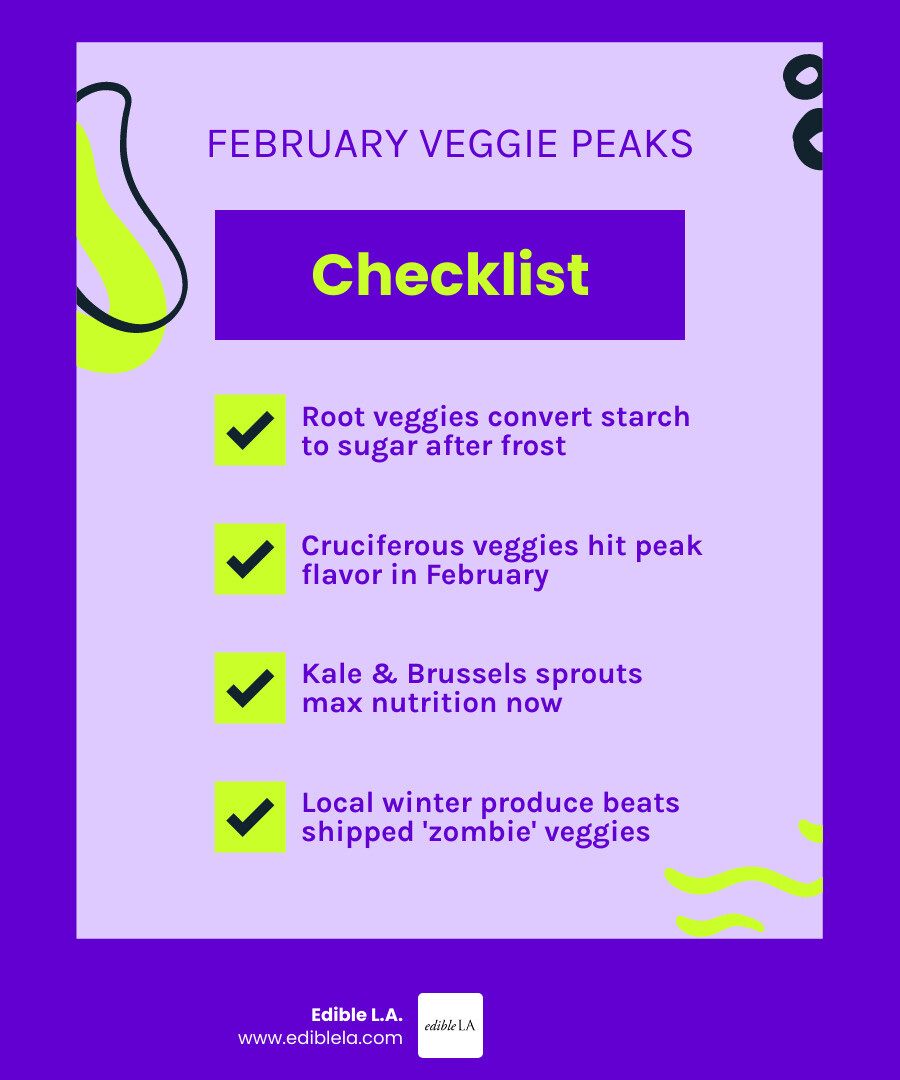
Root vegetables convert starch into sugar after frost exposure, making them genuinely sweeter this time of year. Cruciferous vegetables like kale and Brussels sprouts hit their flavor peak. And citrus — while technically a fruit — is at its absolute best right now, ready to brighten every winter dish you make.
This is the season that rewards people who shop local and cook with what's actually fresh.
Why Eating Seasonal February Vegetables Matters
In Los Angeles, we are spoiled. From Santa Monica to Silver Lake, our farmers markets often look lush year-round. However, understanding what veggies are in season in February specifically allows us to tap into the peak of flavor and nutrition that "zombie produce" (shipped from thousands of miles away) simply cannot match.
Taste and the Magic of Frost
Have you ever noticed that a February carrot tastes remarkably like candy compared to one bought in July? There is a scientific reason for this. Many winter crops, particularly root vegetables and brassicas, undergo a starch-to-sugar conversion when temperatures drop. To protect their cells from freezing, these plants convert starches into glucose, acting as a natural antifreeze. This "frost-sweetening" makes vegetables like parsnips, Brussels sprouts, and kale taste their absolute best right now.
A Nutritional Powerhouse
Eating seasonally in February isn't just about the palate; it's about your health. Cruciferous vegetables and cancer risk have been studied extensively, with research suggesting that the glucosinolates found in broccoli, cabbage, and cauliflower peak during these cooler months. These compounds help protect cells from DNA damage and provide a massive boost to your immune system during the tail end of flu season.
Cost and Sustainability
When you buy what is naturally abundant, you save money. Farmers are looking to move crops that are currently at their harvest peak. Furthermore, supporting local food culture in L.A. County—from the historic stalls in Downtown L.A. to the coastal markets in Malibu—reduces the carbon footprint associated with long-distance hauling. Sustainable shopping in February means choosing the hardy, earth-bound treasures that thrive in our Mediterranean climate.
The Ultimate List: What Veggies Are in Season in February?
While much of the country is buried under snow, Southern California is entering a unique transitional phase. We are still deeply ensconced in winter's "storage" crops, but the first whispers of spring are beginning to appear.
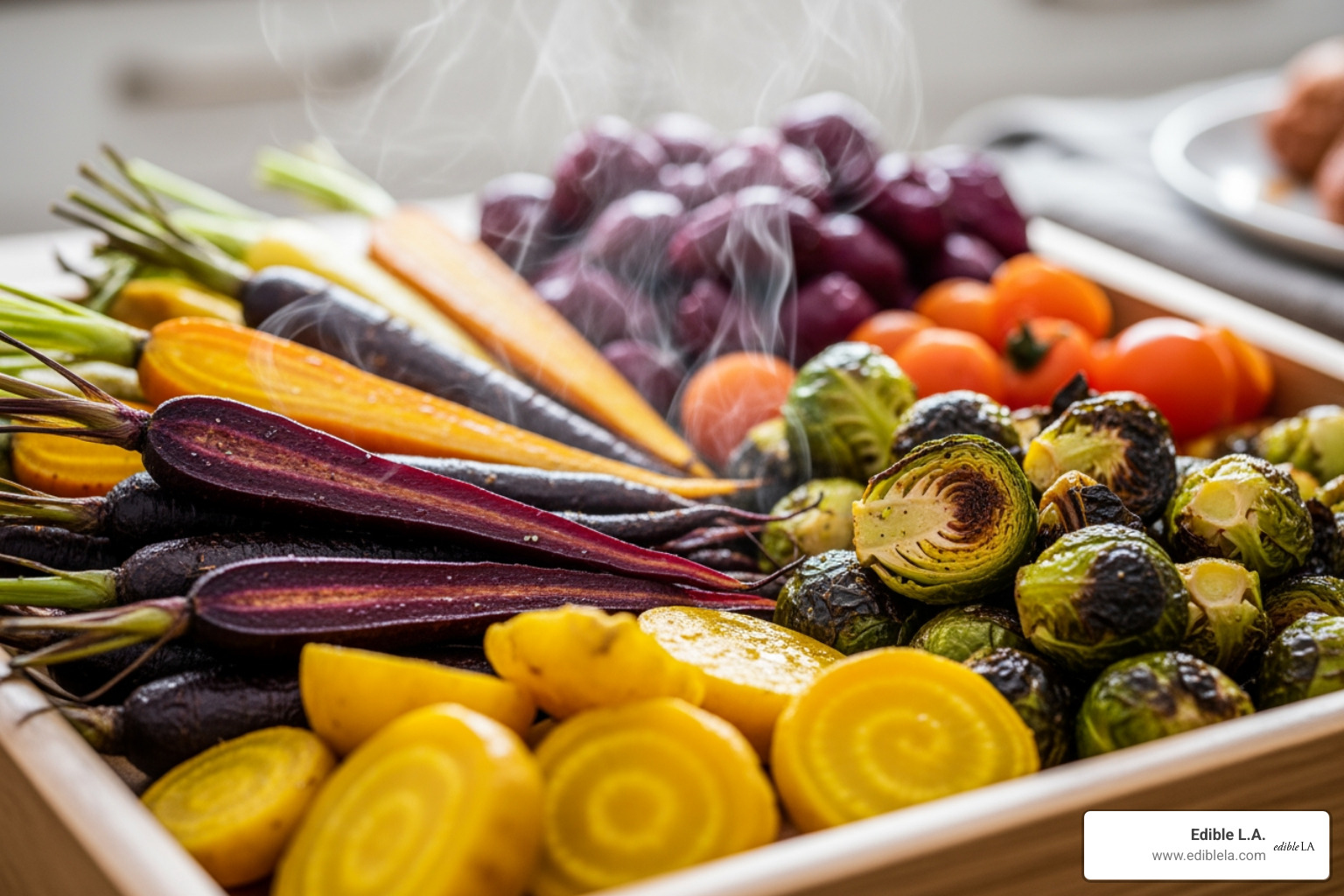
When wondering what veggies are in season in February, look for these heavy hitters at your local stand:
- Brussels Sprouts: Look for them on the stalk if possible; they stay fresh longer that way.
- Kale: From Lacinato (Dino) to curly, kale is at its most tender and least bitter.
- Radishes: Winter radishes like the Watermelon or Black Spanish variety offer a spicy crunch. Try them in a radish avocado salad for a bright, refreshing lunch.
- Leeks: These alliums are much milder and sweeter than onions, perfect for creamy bases.
- Bok Choy: This Chinese cabbage thrives in our cool coastal nights.
Peak February Veggies in Southern California
| Vegetable | Peak Season Window | Best Prep Method |
|---|---|---|
| Asparagus | Late Feb – May | Grilled with lemon zest |
| Bok Choy | Nov – March | Sautéed with ginger and soy |
| Spinach | Oct – April | Fresh in salads or lightly wilted |
| Collard Greens | Jan – April | Braised with smoked salt |
| Broccoli | Oct – May | Roasted at high heat |
Root Vegetables: The Hearty Stars of February
Root vegetables are the unsung heroes of the winter kitchen. In February, they provide the density and warmth we crave. Carrots and beets are available year-round in L.A., but their flavor intensity is highest now.
If you're looking to warm your belly with lemony lentil stew, February's carrots and parsnips are the perfect foundation. Don't overlook the "homely" roots like rutabaga and celery root (celeriac). Celery root, when peeled, reveals a creamy, ivory interior with a sophisticated celery-parsley flavor. It can even be sliced thin and used as a low-carb alternative to tortillas or lasagna noodles.
Cruciferous Heroes: What Veggies Are in Season in February for Health?
The brassica family truly shines in the cold. Cabbage, in particular, is having a major moment. In fact, it's predicted to be Pinterest's 2026 Vegetable of the Year. Whether it’s a tight head of Green cabbage, the crinkly leaves of Savoy, or the vibrant Purple variety, cabbage is incredibly versatile and budget-friendly.
Broccoli and cauliflower are also February staples. For those looking to lighten up their meals, a Cauliflower Rice guide can help you transform this cruciferous head into a grain-free base for stir-fries. Keep an eye out for specialty varieties like Romanesco, with its lime-green fractal patterns, or purple sprouting broccoli, which offers a more delicate, asparagus-like texture.
From Garden to Table: Cooking and Growing February Produce
Cooking in February is all about balance: the earthiness of roots paired with the acidity of winter citrus.
In the Kitchen
A traditional leek soup is a February rite of passage. The key is to clean the leeks thoroughly, as dirt often hides between the tight layers. Slice them and submerge them in cold water, agitated well, before sautéing in butter.
For a lighter approach, pair your seasonal greens with fruit. A robert hall poached pear and champagne vinaigrette spinach salad utilizes the crisp spinach available right now in L.A. and pairs it with the last of the season's pears.
In the Garden
For our L.A. gardeners in Brentwood or Culver City, February is a month of preparation. While it's still a bit early to put tomatoes in the ground, it is the perfect time for:
- Indoor Sowing: Start your peppers and eggplants indoors or in a greenhouse to get a head start on spring.
- Microgreens: If you don't have a yard, grow microgreens on a sunny windowsill in Venice or Glassell Park. They provide an instant hit of nutrients and "spring" flavor.
- Seed Ordering: Now is the time to browse catalogs and order heirloom seeds for your summer harvest.
Versatile Ways to Use What Veggies Are in Season in February
One of our favorite winter treats is the Honeynut squash. It’s like a butternut squash but smaller, sweeter, and more concentrated. We highly recommend making roasted honeynut squash with brown butter and hazelnuts for a side dish that feels truly decadent.
Cabbage also deserves a spot in your weekly rotation. Beyond the standard slaw, try an Ethiopian Atakilt Wat—a hearty vegan dish of cabbage, carrots, and potatoes spiced with turmeric. It’s a wonderful way to use February staples in a way that feels fresh and global.
Smart Shopping: Organic Choices and Storage Tips
When shopping for what veggies are in season in February, it's helpful to know when to spring for organic. According to the "Organic Meter" logic, some vegetables are more prone to pesticide retention than others.
- Buy Organic: Kale and potatoes. Kale often tests high for pesticide residues, and potatoes, especially Russets, can absorb chemicals from the soil.
- Inorganic is Often Fine: Broccoli, cabbage, and onions. These plants have natural defenses or outer layers that are peeled away, making them lower-risk choices if organic isn't available.
Storage Hacks for Longevity
Don't let your beautiful February haul go to waste.
- Ethylene Gas Awareness: Keep your onions and potatoes separate! Onions emit ethylene gas which can cause potatoes to sprout prematurely.
- The Crisper Drawer: Wrap leafy greens like spinach or kale in a dry paper towel before placing them in a reusable bag. This absorbs excess moisture and prevents slime.
- Freezing Greens: If you have a glut of kale or collards, blanch them for two minutes, shock in ice water, and freeze in clumps. They are perfect for future smoothies or stews.
- Root Cellaring (L.A. Style): We don't have basements here, but a cool, dark cupboard works wonders for winter squash and sweet potatoes.
Frequently Asked Questions about February Vegetables
How does February produce differ from January or March?
February is the "bridge" month. January is dominated by heavy storage crops and deep winter roots. By March, we start seeing the very first peas and more consistent asparagus. February is unique because it’s the peak of "forced" crops like forced rhubarb (grown in darkness for a sweeter stalk) and the absolute sweet spot for frost-kissed brassicas. It is the month where the flavor of winter produce is most concentrated before the plants begin to focus on spring growth.
Which February vegetables are best for indoor growing?
If you're limited on space in Downtown L.A. or Hollywood, focus on microgreens, pea shoots, and windowsill herbs like chives or parsley. Lettuce can also be grown in shallow containers near a bright window. These "indoor crops" provide the fresh, chlorophyll-rich hit that balances out the heavier roasted roots of the season.
Are there any year-round vegetables that peak in February?
Yes! Carrots, beets, broccoli, and cauliflower are technically available year-round in California. However, their "peak" occurs in February. The winter hardiness of these plants leads to a higher sugar content and a denser nutrient profile than the quickly-grown versions you see in the heat of summer. In February, these staples aren't just filler—they are the stars of the show.
Conclusion
At Edible L.A., we believe that every season has a story to tell, and February's story is one of hidden sweetness and resilience. By choosing what veggies are in season in February, you aren't just making a better salad; you are supporting the local growers who work through the chilly (for us!) L.A. nights to bring fresh food to our tables.
Whether you're shopping at the Hollywood Farmers Market or picking up a CSA box in Santa Monica, embrace the roots, the rinds, and the robust greens of late winter. For more tips on navigating the L.A. food scene, check out our seasonal-produce-guide.