Fresh and In-Season: Your Summer Produce Checklist
Discover what are summer fruits and vegetables! Get tips on picking, storing, and recipes for peak-season produce.
Summer's Best: What to Eat Right Now in L.A.
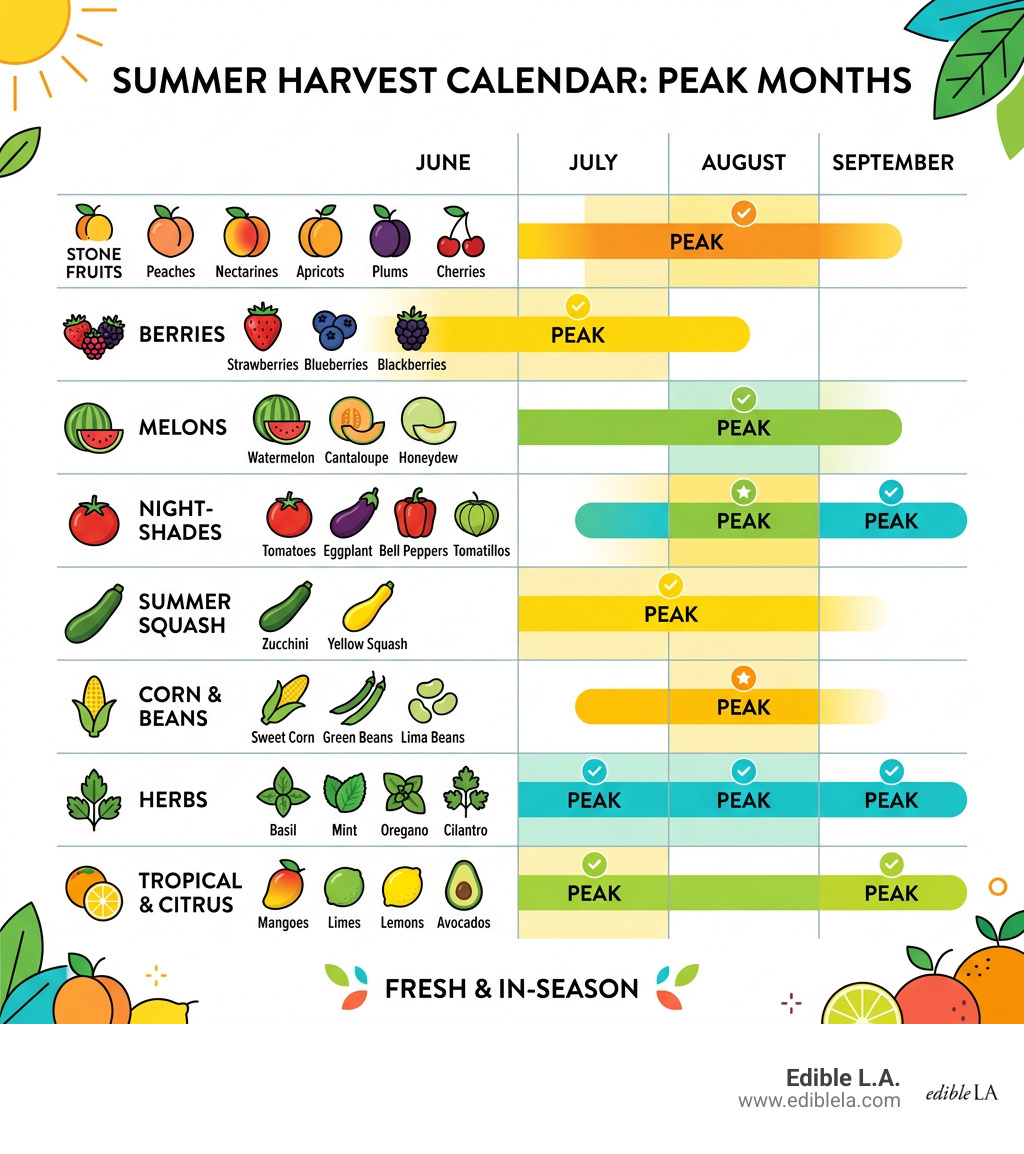
What are summer fruits and vegetables? Here's a quick answer:
| Category | Examples |
|---|---|
| Stone Fruits | Peaches, nectarines, apricots, plums, cherries |
| Berries | Strawberries, blueberries, raspberries, blackberries |
| Melons | Watermelon, cantaloupe, honeydew |
| Nightshades | Tomatoes, eggplant, bell peppers, tomatillos |
| Summer Squash | Zucchini, yellow squash |
| Corn & Beans | Sweet corn, green beans, lima beans |
| Herbs | Basil, mint, oregano, thyme, cilantro |
| Tropical & Citrus | Mangoes, limes, lemons, avocados |
Summer is one of the most abundant times of year for fresh produce. From late June through mid-September, farmers markets across Los Angeles overflow with color, fragrance, and flavor that no other season can match.
And it's not just about taste. Fruits and vegetables picked at peak ripeness tend to deliver more nutrients than those harvested early and shipped across the country. Seasonal eating is better for your plate, your wallet, and your community.
Whether you're a regular at the Hollywood Farmers Market or just starting to explore what's local and in season, this guide covers everything you need to know — what to buy, how to pick it, how to store it, and how to enjoy it.
What Are Summer Fruits and Vegetables?
When we talk about what are summer fruits and vegetables, we are looking at a bounty that spans over 40 different varieties. In Southern California, our Mediterranean climate gives us a slightly longer runway for some of these items, but the heat of July and August is when the "superstars" truly shine.
The summer lineup is dominated by four major groups:
- Stone Fruits: These are the jewels of the season. Peaches, nectarines, apricots, plums, and cherries all feature a "stone" or pit in the center. In our local L.A. markets, you’ll often find superior varieties like pluots (a plum-apricot hybrid) and white peaches that are far sweeter than anything found in a standard grocery aisle.
- Berries: While strawberries start in the spring, they peak in early summer. As the heat rises, we see blackberries, blueberries, and raspberries take center stage.
- Melons: From the classic watermelon to the incredibly sweet honeydew, melons are the hydration heroes of the season.
- Nightshades and Summer Squash: This group includes the heavy hitters of savory summer cooking: tomatoes, bell peppers, eggplants, and zucchini.
For a deeper dive into the specifics of Southern California's unique growing cycles, you can explore our seasonal-produce-guide. To keep your plate exciting, experts suggest mouth-watering summer fruits and vegetables to fill your plate by aiming for at least five servings of produce daily.
Identifying What Are Summer Fruits and Vegetables at Peak Ripeness
Buying seasonal produce is only half the battle; the real magic happens when you catch it at the exact moment of peak ripeness. Here is what we look for when we’re strolling through the stalls in Santa Monica or Brentwood:
- The Smell Test: This is non-negotiable for stone fruits and melons. A ripe peach or cantaloupe should smell exactly like you want it to taste—fragrant, floral, and sweet. If it has no scent, it’s not ready.
- The Weight: Pick it up! Whether it’s a tomato, a lemon, or a watermelon, it should feel heavy for its size. This indicates a high water content, meaning the fruit is juicy and fresh.
- Visual Cues: Look for vibrant colors. For blueberries, look for a dull, matte finish (called the "bloom") which indicates freshness. For corn, look for bright green husks and silks that feel slightly damp, not dried out and brown.
- The "Give": Gently press the fruit. An avocado or a plum should yield slightly to pressure. If it’s rock hard, it needs more time on your counter.
One of our favorite late-summer treats is the blackberry. Did you know that a single cup of blackberries provides about 8 grams of fiber? That’s a significant chunk of the recommended 25-38 grams we need daily! As the season winds down, don't miss out on Septembers sweetest harvest where the last of the stone fruits meet the first of the fall apples.
Nutritional Powerhouses: What Are Summer Fruits and Vegetables Good For?
Eating with the sun isn't just a culinary choice; it’s a wellness strategy. Summer produce is specifically designed by nature to help our bodies handle the heat.
Hydration Many summer favorites are nearly all water. Cucumbers, for instance, are about 96% water by weight. Watermelon and celery aren't far behind. Consuming these "water-rich" foods helps maintain hydration levels during those scorching Valley afternoons.
Antioxidants and Phytonutrients The vibrant colors of summer produce—the deep blues of berries, the bright reds of tomatoes, the dark greens of zucchini—are signs of high antioxidant levels. These compounds help protect our cells from damage.
Lycopene and Heart Health Tomatoes, especially the grape and heirloom varieties found in L.A., are rich in lycopene. Research on lycopene and vascular health suggests this antioxidant may help regulate blood pressure and provide protection against certain types of cancer.
Furthermore, summer fruits like cherries and bananas are excellent sources of potassium, a mineral essential for normal cell function and keeping our hearts beating strong.
Why You Should Eat Seasonally in the Summer
Why go through the effort of checking a checklist when you can buy strawberries in December? The difference lies in the "Three Qs": Quality, Quotas, and Quiet impact.
| Feature | Seasonal Produce (Summer) | Out-of-Season Produce (Winter) |
|---|---|---|
| Flavor | Intense, sweet, and aromatic | Often bland or watery |
| Nutrients | Peak vitamin and antioxidant levels | Nutrients degrade during long shipping |
| Price | Usually cheaper due to local abundance | Higher prices due to import costs |
| Texture | Crisp or perfectly soft | Can be mealy or rubbery |
When we choose to eat what is currently growing in our region, we support the local food culture of Los Angeles. Instead of fruit that has been gassed to ripen in the back of a semi-truck, we get produce that was likely still on the vine yesterday. This local support keeps our farmers in business and reduces the carbon footprint associated with long-distance food transport. For more guidance on eating with the calendar, check out this summer produce guide from USDA.
Expert Tips for Selecting and Storing Summer Produce

You’ve made it home from the market with a haul of beautiful produce—now what? Improper storage is the quickest way to turn a $20 farmers market run into a compost pile.
The Great Tomato Debate
Never, ever put your unripe tomatoes in the refrigerator. Cold temperatures (below 55°F) break down the cell membranes in tomatoes, resulting in a mealy texture and a loss of that signature summer flavor. Keep them on the countertop, stem-side down, to keep them fresh for up to a week.
Stone Fruit and Ethylene Gas
Peaches, nectarines, and plums are "climacteric" fruits, meaning they continue to ripen after they are picked. If your peaches are a bit firm, tuck them into a brown paper bag on the counter. The bag traps ethylene gas, which the fruit naturally emits, speeding up the ripening process. Once they are soft and fragrant, you can move them to the fridge to slow things down.
Berry Best Practices
Berries are fragile. Moisture is their enemy. Store them unwashed in their original container or a ventilated glass jar. Only wash them right before you are ready to pop them in your mouth. If you see one moldy berry in the bunch, remove it immediately, as mold spreads faster than a rumor in Beverly Hills.
For more professional advice, Harvard experts offer great tips on purchasing and storing peak produce.
Maximizing Shelf Life
If you’ve overbought (we’ve all been there when the corn looks that good), preservation is your friend.
- Freezing: Most summer berries can be frozen on a baking sheet and then transferred to a bag. They’ll last for 12 months—perfect for winter smoothies.
- Blanching: For vegetables like green beans or corn, a quick 2-minute dip in boiling water followed by an ice bath (blanching) stops the enzymes that cause loss of flavor and color. You can then freeze them for a taste of summer in December.
- Herb Preservation: Have too much basil? Blend it with a little olive oil and freeze it in ice cube trays. It’s an instant flavor bomb for future pastas.
Refreshing Ways to Use Your Summer Harvest
Summer cooking should be about two things: high flavor and low heat. No one wants to turn on the oven when it’s 95 degrees in Echo Park.
The No-Cook King: Salads
Summer produce is so flavorful it barely needs dressing. We love a summer fruit salad with arugula and marcona almonds for a mix of sweet, peppery, and salty. For a twist on a classic, try a nectarine caprese salad, substituting those juicy stone fruits for the traditional tomatoes.
Fire Up the Grill
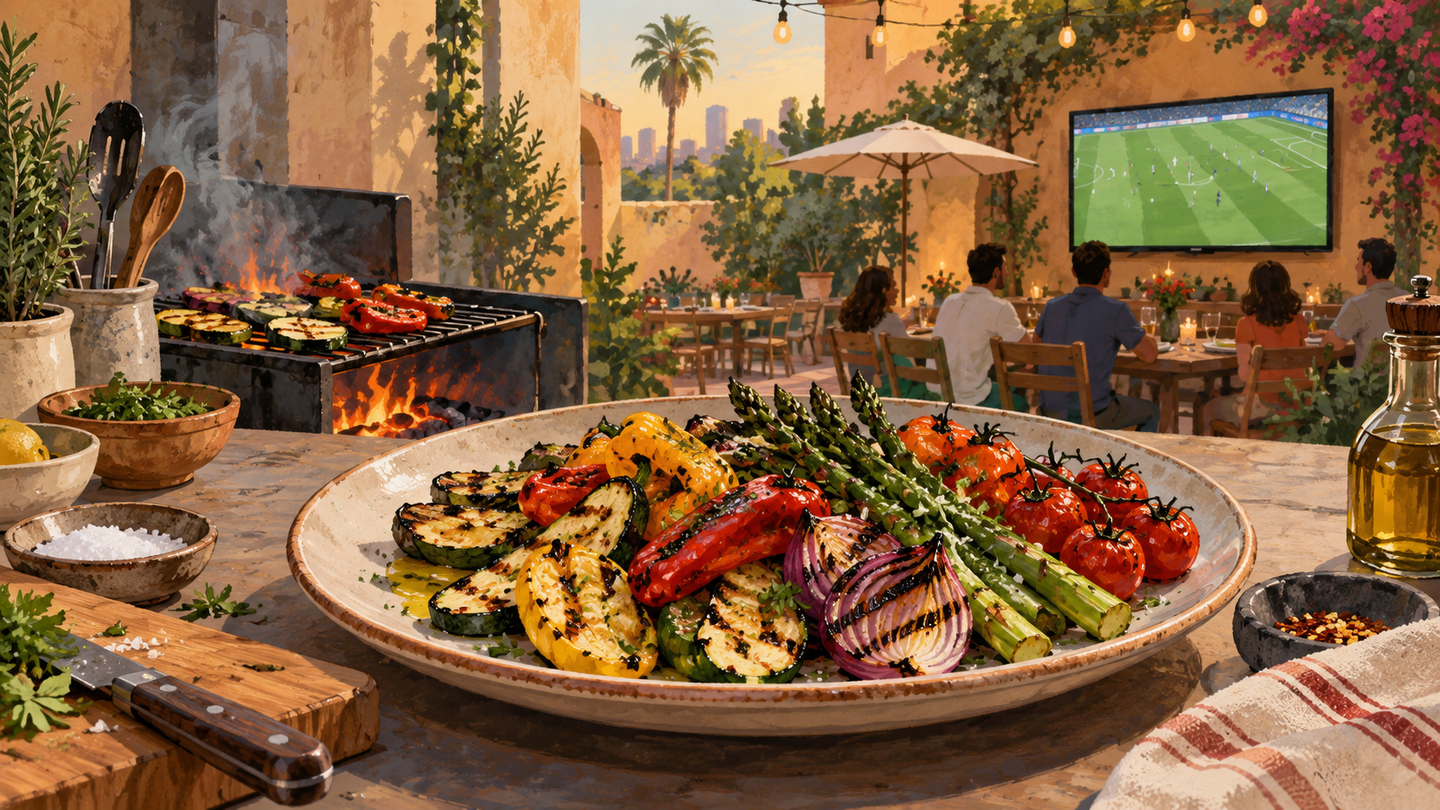
Grilling isn't just for burgers. Thick slices of eggplant, zucchini, and even watermelon take on a smoky, savory dimension over an open flame. Grilled peaches topped with a dollop of mascarpone are a dessert that will have your guests talking for weeks.
Summer Sips and Salads
Hydration doesn't have to be boring. We like to infuse our water with cucumber slices, mint, and lime for a refreshing spa-like experience at home. If you're hosting an outdoor dinner in Silverlake, consider mixing up some summers bounty cocktails using fresh smashed berries or herbal syrups.
For a main course that feels light but satisfying, we highly recommend a high summer salad with coconut dressing or a vibrant watermelon berry salad featuring a spicy chile dressing.
Frequently Asked Questions about Summer Produce
How does seasonal availability vary by region?
While "summer" is a general term, the harvest calendar in Southern California is unique. Because our winters are mild, our "spring" produce often overlaps with summer. However, in hotter inland areas like the San Fernando Valley, crops might peak earlier than in coastal spots like Malibu. The key is to watch your local farmers market—they are the true "boots on the ground" for what is peaking right now in our specific climate.
What are the best high-hydration summer fruits?
If you're looking to eat your water, focus on the "Big Three": Watermelon, Cucumbers, and Strawberries. Watermelon is over 90% water and contains electrolytes like potassium, making it nature’s version of a sports drink. You can learn more about the hydration benefits of summer produce through USDA resources.
Can you freeze summer vegetables for later use?
Absolutely! Zucchini can be shredded and frozen for use in muffins later in the year. Corn is another great candidate; you can freeze it right on the cob (after blanching) or cut the kernels off for easy storage. Just remember that freezing changes the texture of high-water vegetables, so they are best used in cooked dishes rather than raw salads after they thaw.
Conclusion
At Edible LA, we believe that the story of our city is told through its food. Understanding what are summer fruits and vegetables is the first step in connecting with the local farmers who work the land from Ventura to Riverside. By choosing to eat seasonally, you aren't just getting a better-tasting tomato; you are participating in a sustainable food culture that celebrates the natural rhythm of Southern California.
Next time you’re in Santa Monica, Venice, or Downtown L.A., stop by a farmers market and use this checklist to find the season's best. Your palate—and your health—will thank you. For more tips on eating with the seasons, check out our seasonal produce guide.