Grow Your Own Summer Fruit Salad
Discover what fruit grow in summer: grow berries, stone fruits & melons. Gardening tips, recipes & seasonal guide for your sweetest harvest!
The Best Fruits That Grow in Summer (And How to Grow Them Yourself)
What fruit grow in summer is one of the most searched gardening questions once the warm months hit — and for good reason. Here's a quick answer:
Common fruits that grow in summer:
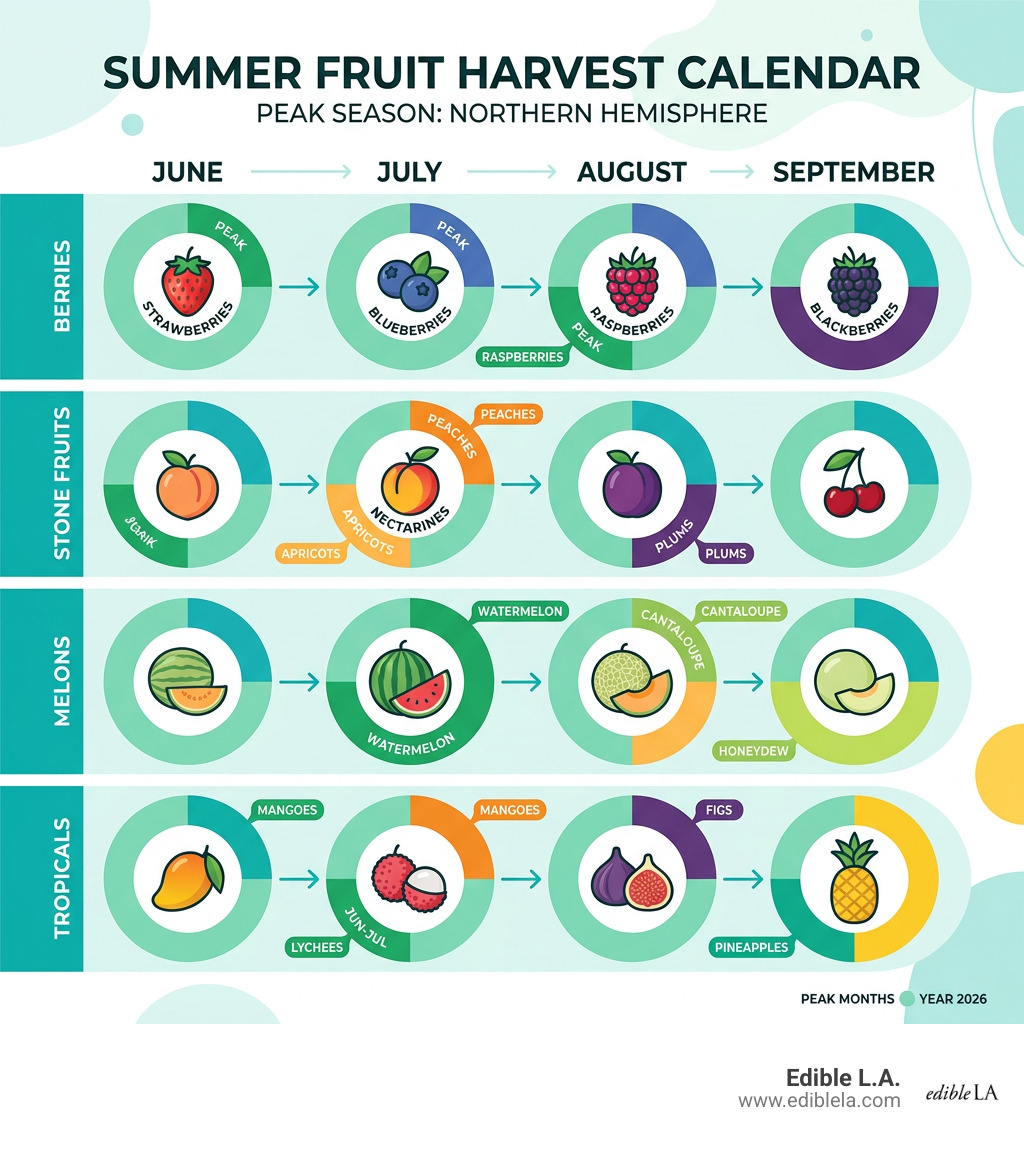
- Berries: Strawberries, blueberries, raspberries, blackberries
- Stone fruits: Peaches, nectarines, apricots, plums, cherries
- Melons: Watermelon, cantaloupe, honeydew
- Tropical varieties: Mangoes, figs, lychees, pineapples, passionfruit
Peak season in the Northern Hemisphere runs roughly June through August, though some fruits like strawberries start as early as April and grapes stretch into October.
Summer is the richest season for fresh fruit — full stop. The heat builds natural sugars in ways that no cold-storage or imported version can replicate. If you've ever bitten into a peach from a Southern California farmers market in July, you already know this.
But here's what makes summer fruit even better: you can grow much of it yourself. Even a small backyard, patio, or container garden in the Los Angeles area can yield strawberries, figs, and more with the right approach.
This guide walks you through which fruits thrive in summer, how to grow them at home, how to pick them at peak ripeness, and what to do with them once you have an abundance on your hands.
What Fruit Grow in Summer: A Seasonal Guide

In the unique Mediterranean climate of Southern California, "summer" is a generous term. While the Northern Hemisphere generally defines the season as June through August, our local harvest often begins with a "strawberry spring" in April and carries the heat of stone fruits well into September. Understanding what fruit grow in summer in Los Angeles requires looking at our specific microclimates—from the coastal breezes of Santa Monica to the inland heat of Hollywood and the valley.
Choosing to eat and grow locally isn't just about the flavor (though the flavor is undeniably superior). It’s also a powerful environmental choice. Research shows that food systems produce 20-30% of the world’s greenhouse gas emissions. However, the production of fruits, vegetables, nuts, and grains has the least impact on the climate—especially when you choose items that are in season and grown nearby. Consuming seasonal produce ensures fresher and more nutritious options because the fruit spends less time in transport and more time developing vitamins on the vine.
When we source fruit from our own backyards in Venice or Silverlake, or visit a farmers market in Brentwood, we are reducing the carbon footprint associated with long-distance shipping and artificial refrigeration.
The Best Berries and Stone Fruits that Grow in Summer
The "jewels" of the summer garden are undoubtedly berries and stone fruits. In Los Angeles County, we are lucky to have access to some of the best varieties in the world.
Strawberries are the early birds. While they peak in late spring, they continue to produce through the early summer months. They have a fascinating history in our region; you can dive deeper into their journey in our food-history-strawberry feature. In our gardens, varieties like 'Albion' are favorites because they produce consistent, dark red fruit all season long.
Raspberries, Blueberries, and Blackberries follow close behind. Blueberries, in particular, have become a summer staple, with July being National Blueberry Month. While many think they need cold weather, several "Southern Highbush" varieties thrive in our warmer zones. Blackberries and their cousins, like boysenberries (a California original!), typically peak in June and July.
Stone Fruits—so named because of the large pits at their center—are the true heavyweights of July and August. This category includes peaches, nectarines, apricots, plums, and cherries. In Southern California, we look for "low-chill" varieties that don't require freezing winters to produce fruit.
| Fruit | Typical SoCal Harvest Window | Best Ripeness Indicator |
|---|---|---|
| Apricots | May - July | Soft to touch, orange-gold color |
| Cherries | May - August | Plump, shiny, stems attached |
| Peaches | June - September | Strong aroma, slight give at the stem |
| Plums | May - October | Deep color, heavy for their size |
| Blueberries | May - October | Dusty blue "bloom" on the skin |
Tropical and Exotic Varieties that Grow in Summer
Because Los Angeles is a semi-arid paradise, we can grow several tropical and exotic fruits that would struggle elsewhere.
Watermelon is the undisputed champion of the heat. Not only is it incredibly hydrating (92% water), but the Agricultural Research Service has also identified more than 1,500 phytochemicals in watermelon that may provide health benefits. It loves the long, hot days of a San Fernando Valley summer.
Mangoes and Pineapples are more challenging but possible in the right frost-free pockets of Malibu or Beverly Hills. Tropical pineapples deliver a flavor burst that blends both sweet and tart elements, making them a sought-after addition to summer beverages.
Figs are perhaps the easiest "exotic" fruit for an Angeleno to grow. Many fig trees actually provide two harvests: a small "breba" crop in early summer and a main, sweeter crop in late summer or early fall. They are incredibly drought-tolerant once established, making them perfect for our climate.
Gardening Tips for Your Summer Fruit Salad
Growing your own fruit in the city is a rewarding way to connect with the seasons. Before you plant, it is vital to consult the USDA Plant Hardiness Zone Map. Most of Los Angeles falls into zones 9-11, which means our "winters" are mild, and our summers are long and hot.
To succeed, follow these core principles:
- Full Sun: Most summer fruits need at least 6 to 8 hours of direct sunlight to develop sugars.
- Deep Watering: Instead of a light sprinkle every day, give your fruit trees and bushes a deep soak 2-3 times a week. This encourages roots to grow deep into the cooler soil.
- Mulching: This is our secret weapon. A thick layer of organic mulch around the base of your plants (keeping it a few inches away from the trunk) helps retain moisture and cools the roots during a July heatwave.
- Soil Preparation: Our soil can be heavy clay or very sandy. Mixing in high-quality compost before planting gives your fruits the nutrients they need to thrive.
For a deeper dive into specific techniques, our Summer Fruit Gardening Guide for Your Sweet Summer Favorites offers excellent step-by-step advice.
Easy Starter Fruits for Beginners
If you are new to gardening or living in an apartment in Culver City or Downtown LA with limited space, don't worry! You don't need an orchard to enjoy home-grown fruit.
Strawberries are the perfect starter fruit. They thrive in pots, hanging baskets, or window boxes. They propagate via "runners"—long stems that grow out and start new baby plants. If you want bigger berries, pinch those runners off so the plant focuses its energy on the fruit. Once you have a harvest, you can even try making your own moon-juice-strawberry-rose-geranium-jam for a sophisticated local treat.
Blueberries are also great for containers, but they have a specific requirement: acidic soil. Use a potting mix designed for azaleas or camellias, and you'll be picking berries by July.
Figs are nearly indestructible. They can be grown in large pots on a sunny balcony in Echo Park and will still produce delicious, jammy fruit within a year or two.
Managing Melons and Larger Vines
Melons like watermelon, cantaloupe, and honeydew are the heavy lifters of the garden. They require more space because their vines love to roam. If you have a small yard in Glassell Park, try a trellis system. You can grow smaller melon varieties vertically, using "slings" made of old t-shirts or netting to support the fruit as it grows heavy.
For the best flavor, reduce your watering slightly as the melons reach their full size. This "stresses" the plant just enough to concentrate the sugars, ensuring that every bite is as sweet as possible.
Selecting and Storing Your Harvest
Whether you are picking from your own tree or shopping at a market in Santa Monica, knowing how to spot quality is key.
- Aroma: This is the most reliable test for stone fruits and melons. If a peach doesn't smell like a peach, it won't taste like one.
- Weight: Pick up the fruit. It should feel heavy for its size, which indicates high water content and juiciness.
- Color: Look for vibrant, consistent colors. For strawberries, ensure they are red all the way to the top—they don't ripen further once picked!
- Sound: For watermelons, give them a gentle tap. A deep, hollow "thunk" usually means it’s full of water and ripe.
Eating these fruits is a great way to support overall health Packed with healthy natural contents, they are agreat way to support overall health. According to the National Institutes of Health Office of Dietary Supplements, fruits are excellent sources of Vitamin C, which is essential for immune function and skin health—especially important when we're spending more time in the California sun.
Avoiding Common Storage Mistakes
One of the biggest mistakes we see is washing fruit too early. Never wash berries until you are ready to eat them. Moisture is the enemy of shelf life; it encourages mold to grow almost overnight. Store your unwashed berries in a single layer on a paper towel in a breathable container.
Most stone fruits, like peaches and plums, should stay on the counter at room temperature until they reach peak softness. Once they are ripe, you can move them to the fridge to extend their life for another 3-5 days. If you find yourself with too much fruit, freezing is a great option. Freeze berries individually on a baking sheet before moving them to a bag; this prevents them from turning into a giant frozen fruit brick!
For a creative way to use those fresh strawberries before they go soft, try our strawberry-radicchio-salad-with-hazelnuts for a perfect balance of sweet and bitter.
Creative Ways to Prepare Summer Fruits
While eating a ripe plum over the sink is a quintessential summer experience, these fruits are incredibly versatile in the kitchen.
Grilling is a fantastic way to enjoy stone fruits. The heat caramelizes the natural sugars, adding a smoky depth to peaches, nectarines, and even pineapple. Try a nectarine-caprese-salad by swapping out tomatoes for grilled nectarine slices—the pairing with fresh mozzarella and basil is life-changing.
Savory pairings are where summer fruits really shine. Watermelon isn't just for dessert; its crisp texture makes it a perfect partner for salty feta cheese and fresh mint. We love a watermelon-berry-salad-with-chile-dressing-and-lots-of-herbs for a refreshing side dish that brings a little heat to a backyard BBQ.
Don't forget about smoothies and jams. If your fruit is looking a little bruised, it’s still perfect for blending into a morning drink or simmering down into a quick refrigerator jam.
Frequently Asked Questions about Summer Fruit
What is the easiest fruit to grow in a small summer garden?
Strawberries are widely considered the easiest for beginners. They are perfectly happy in containers, require minimal maintenance beyond regular watering and sun, and they produce fruit quickly. Figs are a close second for Los Angeles gardeners because they are so well-adapted to our heat and soil.
How can I tell if a watermelon is perfectly ripe?
Look for the "field spot"—the place where the melon rested on the ground. It should be a creamy, buttery yellow, not white. The skin should be dull rather than shiny, and it should feel very heavy for its size. Finally, the "thump" test: a hollow, drum-like sound is what you're listening for.
Why does local summer fruit taste better than imported fruit?
Imported fruit is often picked before it is fully ripe so that it can survive the journey across oceans or continents. Because it isn't attached to the parent plant, it cannot continue to develop its full sugar profile. Local fruit is allowed to ripen on the vine or tree until the last possible moment, maximizing both flavor and nutrition.
Conclusion
At Edible L.A., we believe that the story of our city is told through its food. By choosing to grow and eat what fruit grow in summer right here in Los Angeles County, you are supporting a vibrant local food culture and a more sustainable planet. Seasonal fruit consumption Often overlooked, the practice of eating fruits in their respective seasons carries numerous health benefits, along with support for local sourcing.Seasonal fruit consumptionmaximizes the nutritional value you get, as they contain peak quantities of vitamins, minerals, and antioxidants during their ...
Whether you’re harvesting from a balcony in Hollywood or visiting a farm in the valley, we hope you take the time to savor the sun-ripened bounty of the season. For more tips on what to look for at the market this month, Explore our seasonal produce guide. Happy eating!