How to Cook Hard Boiled Eggs
Master hard boiled eggs: Perfect creamy yolks, easy peeling tips, science-backed methods & recipes for deviled eggs & more!
The Simple Joy (and Hidden Tricks) of a Perfect Hard Boiled Egg
Hard boiled eggs are one of the most useful things you can cook — but they're surprisingly easy to get wrong.
Quick answer: How to make hard boiled eggs
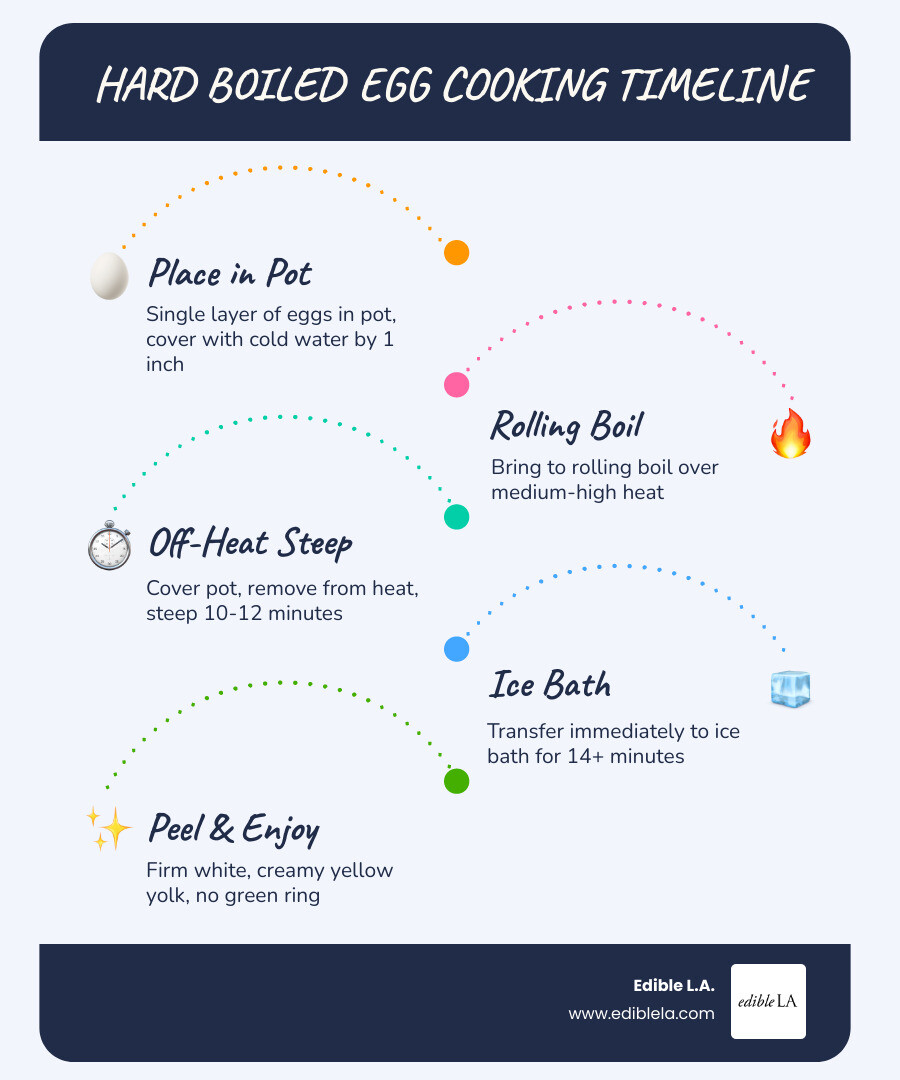
- Place eggs in a single layer in a pot and cover with cold water by 1 inch
- Bring to a rolling boil over medium-high heat
- Cover, remove from heat, and let sit for 10–12 minutes
- Transfer immediately to an ice bath for at least 14 minutes
- Peel and enjoy, or refrigerate unpeeled for up to 5 days
A perfectly cooked hard boiled egg has a firm but tender white and a creamy, bright yellow yolk — no rubbery texture, no gray-green ring. And yes, that green ring is avoidable.
The frustrating truth? A great hard boiled egg and a bad one are made the same way. The difference is in a few small details — timing, water temperature, egg age, and cooling method. Get those right and you'll nail it every time.
In this guide, we break down every variable: the best cooking methods, why older eggs peel easier, how to store them, and creative ways to use them with ingredients you'll find right here at L.A.'s farmers markets.
Know your hard boiled eggs terms:
The Science of the Perfect Hard Boiled Egg
Cooking hard boiled eggs might seem like a simple task of heat meets shell, but it is actually a delicate dance of chemistry. When we heat an egg, the proteins in the whites and the yolks begin to unfold and then bond together, a process known as protein coagulation. If we heat them too quickly or for too long, those bonds become too tight, squeezing out moisture and leaving us with rubbery whites and chalky yolks.
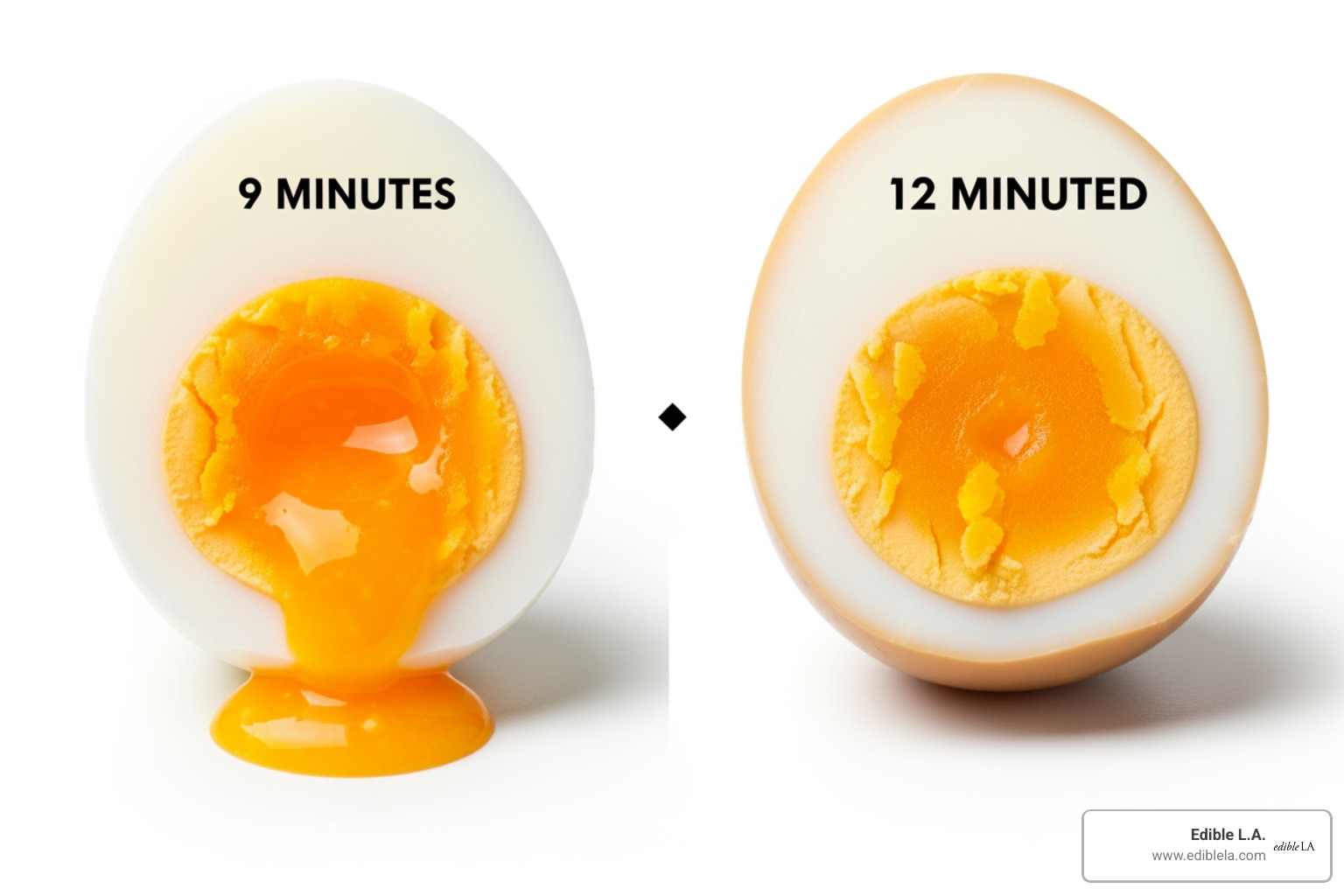
The visual difference between a 9-minute and a 12-minute egg is striking. At 9 minutes of off-heat steeping, the yolk is often "jammy" or vibrant and custard-like. By 12 minutes, the yolk is fully set, opaque, and pale yellow. Beyond 12 to 15 minutes, you risk the dreaded sulfur reaction.
Why Older Eggs are Better for Boiling
If you have ever struggled to peel a farm-fresh egg from the Hollywood or Santa Monica farmers markets, you’ve experienced the "membrane adhesion" frustration. The reason Large eggs from the grocery store often peel better than fresh ones comes down to pH levels and carbon dioxide.
As an egg ages, it loses carbon dioxide through the tiny pores in its shell. This causes the pH of the egg white to rise, which weakens the bond between the inner shell membrane and the egg white. In a very fresh egg, the white sticks to that membrane like glue. For the best hard boiled eggs, we recommend buying your eggs one to two weeks in advance. If you are planning an Easter celebration in Beverly Hills or Brentwood, pick up your cartons early and let them "age" in the fridge.
Avoiding the Dreaded Green Ring
Nothing ruins a beautiful deviled egg quite like a dingy gray-green ring around the yolk. This isn't a sign of a bad egg; it's a sign of a chemist's error. This ring is a result of a reaction between the sulfur in the egg white and the iron in the egg yolk, forming iron sulfide.
This reaction happens primarily due to overcooking or cooking at a temperature that is too high for too long. To avoid it, we use the "off-heat" method. By bringing the water to a boil and then turning the heat off, we ensure the eggs never reach a temperature that triggers that unappealing green discoloration. Immediate cooling in an ice bath is the final essential step to "lock in" that sunshine-yellow center.
Top Methods for Cooking Hard Boiled Eggs
While there are dozens of ways to cook an egg, three methods stand out for consistency and ease. We’ve compared them to help you decide which fits your kitchen flow.
| Method | Ease of Use | Peelability | Total Time | Result |
|---|---|---|---|---|
| Stovetop Boiling | High | Good | 25 Mins | Classic, reliable |
| Steaming | Medium | Excellent | 20 Mins | Most tender whites |
| Instant Pot | High | Excellent | 25 Mins | Set-it-and-forget-it |
For the classic stovetop method, we recommend using a Medium Pot. Place eggs in a medium pot and cover with cold water by 1 inch. Bring to a rolling boil, then cover the pot and turn off the heat. Let the eggs cook, covered, for 9 to 12 minutes, depending on your desired done-ness.
The Stovetop Steaming Technique
Many chefs swear by steaming as the superior method for hard boiled eggs. Because steam is more gentle than boiling water, the eggs don't bounce around, which preserves shell integrity and prevents cracking.
To steam, fill a pot with about an inch of water and insert a steamer basket. Bring the water to a boil, then carefully place your eggs in the basket. Cover and steam for 12 minutes. This method provides incredibly consistent results because the temperature of steam is constant, unlike a pot of water which can fluctuate depending on how many cold eggs you add at once.
Modern Appliance Alternatives
If you live in a part of Los Angeles like Culver City or Downtown L.A., you might prefer the "5-5-5" method in an Instant Pot: 5 minutes at high pressure, 5 minutes of natural release, and 5 minutes in an ice bath. This method is famous for making eggs that practically leap out of their shells.
Air fryers are another option, though they can be finicky. Cooking eggs at 250°F for about 15 minutes works, but be wary of "hot spots" in your machine that can lead to rubbery spots on the whites. For those who make hard boiled eggs daily, electric egg cookers are a foolproof investment that take the guesswork out of timing.
Foolproof Peeling and Storage Tips
The "thermal shock" of moving an egg from boiling heat to an ice bath is the most important factor in easy peeling. This sudden temperature drop causes the egg to shrink slightly inside the shell, pulling away from the membrane.
The Secret to Easy-to-Peel Hard Boiled Eggs
Beyond the ice bath, there are a few physical tricks to master. Transfer the eggs to a bowl of ice water and chill for 14 minutes. This makes the eggs easier to peel. Peel and enjoy! We suggest using Glass Bowls for your ice bath as they retain the cold temperature well.
The Pro Peeling Technique:
- The Tap: Gently tap the egg on a hard surface to crack the shell all over.
- The Roll: Roll the egg gently under your palm to create a web of tiny fractures.
- The Water Hack: Peel the egg under a stream of cool running water or submerged in a bowl of water. The water helps get under the membrane and lubricates the shell as it slides off.
- The Vinegar Trick: Some cooks add a splash of vinegar to the boiling water. The acid helps dissolve some of the calcium carbonate in the shell, making it slightly more fragile and easier to crack.
How to Store Hard Boiled Eggs Safely
Safety first: per CDC guidelines, hard boiled eggs should not sit out at room temperature for more than two hours. In the refrigerator, unpeeled eggs will last for up to one week. If you have already peeled them, they are best consumed within 24 hours, though some keep them for up to 3 days if stored in a bowl of cold water (changed daily).
Always store your eggs in an airtight container to prevent them from absorbing odors from other foods in your fridge. For a sophisticated brunch idea, try using your perfectly cooked eggs in a latke-benedict.
Creative Ways to Use Your Eggs
Once you have mastered the art of the hard boiled eggs, the culinary possibilities in Los Angeles are endless. Visit your local farmers market in Silverlake or Echo Park to find fresh herbs and seasonal radishes to pair with your eggs.
- Deviled Eggs: A classic for a reason. Mix yolks with mayo, Dijon mustard, and a dash of hot sauce.
- Egg Salad: Chop your eggs and mix with celery, red onion, and fresh dill. Serve it on toasted sourdough from a Venice bakery.
- The "Hangtown" Twist: For a hearty L.A. breakfast, check out our hangtown-egg-foo-young-recipe.
- Soy Pickled Eggs: Soak peeled eggs in a mixture of soy sauce, ginger, and garlic for 24 hours for a salty, umami-packed snack.
- Everything Eggs: Halve your eggs and sprinkle generously with everything bagel seasoning and a drizzle of olive oil.
Frequently Asked Questions about Boiled Eggs
How long should eggs boil for a creamy yolk?
For a yolk that is set but still creamy and "sunshine" yellow, 10 minutes of off-heat steeping is the "sweet spot." If you prefer a slightly softer, "jammy" yolk, try 8 to 9 minutes.
Why do my hard-boiled eggs have a green ring?
The green ring is caused by overcooking. The iron in the yolk reacts with the sulfur in the white at high temperatures. To prevent this, use the off-heat method and plunge the eggs into an ice bath immediately after the timer goes off.
Is it better to start eggs in cold or boiling water?
Starting eggs in cold water allows them to heat up gradually, which helps prevent the shells from cracking. However, some "boiling water start" advocates argue that the sudden heat makes the eggs easier to peel. At Edible L.A., we find the cold-start, off-heat method provides the best balance of easy peeling and perfect texture.
Conclusion
Mastering hard boiled eggs is a rite of passage for any home cook looking to support our local L.A. food culture. Whether you are prepping a high-protein snack for a hike in Malibu or crafting the perfect Cobb salad for a dinner party in Glassell Park, these small details make all the difference. By choosing older eggs, controlling your heat, and never skipping the ice bath, you ensure that every egg you crack open is a masterpiece of creamy, golden perfection.
For more tips on using the best of what Southern California has to offer, Discover more in our Seasonal Produce Guide.