How to Access Gimkit at Home, Even if You’ve Never Tried it Before
Discover gimkit home: Join games with codes, master async learning, track progress, and boost engagement effortlessly from anywhere!
What Is Gimkit Home and Why Are Students Obsessed With It?
Gimkit Home is the at-home version of the Gimkit learning platform — a game-based study tool where students answer quiz questions, earn virtual cash, and spend it on power-ups to outsmart their classmates.
Here's the quick version of what you need to know:
- What it is: A gamified quiz platform playable from any device, at home or in class
- Who it's for: Students (K-12), teachers, and homeschool parents
- How to access it: Go to gimkit.com and sign up or join a game with a code
- Cost: Free for up to 5 students; Pro plan starts at $14.99/month
- Key difference from Kahoot: Students play at their own pace — no need to be live in a classroom
Gimkit was built by a high school student named Josh Feinsilber, who wanted to recreate the energy of classroom games in a format that actually helped him learn. That origin story matters — the platform was designed from a student's perspective, which shows in how intuitive and genuinely fun it is to use.
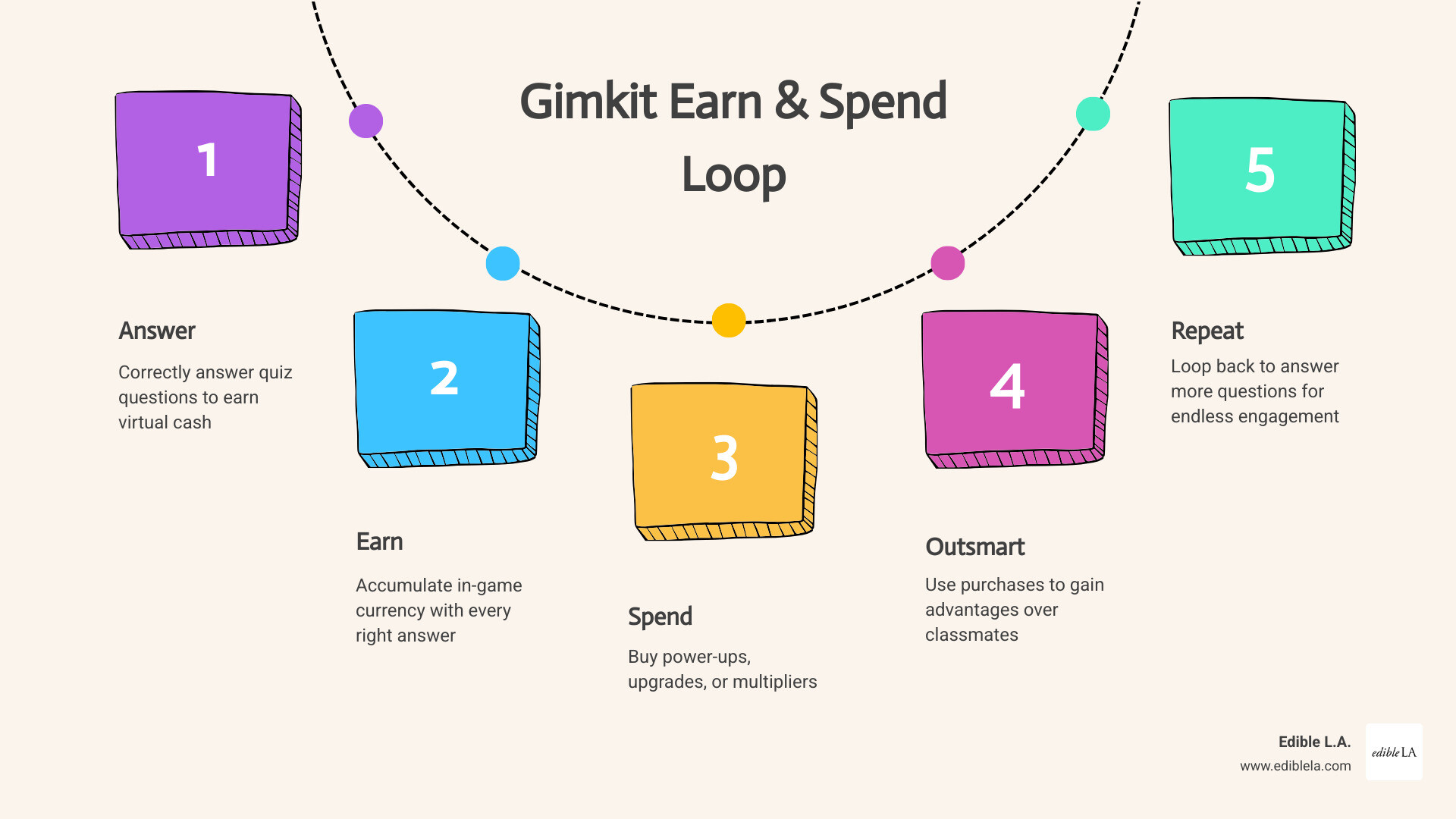
Unlike a standard quiz app, Gimkit keeps students coming back. Every correct answer earns in-game currency. That currency buys upgrades. Those upgrades change how the game plays out. It's a simple loop — but it works.
Understanding the Gimkit Home Experience
When we talk about gimkit home, we are referring to the versatility of the Gimkit official platform to move beyond the four walls of a classroom. In a traditional school setting, games are often played "live," with the teacher projecting a leaderboard on a screen while students compete in real-time. However, the "Home" experience leverages asynchronous learning.
Asynchronous learning means that students don't have to be logged in at the exact same time as their teacher or peers. Through "Homework Mode," educators can assign a "Kit" (a set of questions) with a specific deadline. Students log in from their own living rooms in Santa Monica or home offices in Silverlake and work through the material at their own speed.
This is a game-changer for remote education and homeschooling. Because the platform utilizes mastery learning, students encounter the same questions multiple times within a single session. This repetition ensures that they aren't just guessing; they are actually retaining the information. Whether it’s practicing multiplication tables or studying the history of Downtown Los Angeles, the student-led pacing allows for a deeper connection to the material without the anxiety of a ticking clock.
Getting Started with Gimkit Home
For those of us looking to set this up for the first time, the process is remarkably straightforward. Teachers or parents acting as educators can start by visiting the Gimkit website. The sign-up process is secure and often integrated with Google or Microsoft accounts for easy access.
Once you have an account, the "Home Page" acts as your command center. From here, you can:
- Import Rosters: If you are a teacher in the Los Angeles Unified School District, you can often sync your student lists directly to save time.
- Create Kits: You can build your own quiz from scratch, import questions from a CSV file, or even pull in existing sets from other flashcard sites.
- Manage Assignments: This is where you transform a live game into a homework assignment. You set the "goal" (like reaching $50,000 in-game cash) and the deadline.
For more detailed strategies on setup, you can explore resources on how to use Gimkit for teaching, which covers the nuances of account management and kit creation.
How to Join a Game on Gimkit Home
If you are a student or a parent helping a child join a session, the process is even simpler. You don't necessarily need a full account to play a game hosted by someone else.
- Navigate to gimkit.com/join.
- Enter the Join Code: This is a unique six-digit code provided by the teacher or host.
- Choose a Display Name: Pick a fun nickname (keeping it classroom-appropriate, of course!).
- Enter the Lobby: Once the code is verified, you’ll be in the virtual waiting room until the host starts the game, or you'll dive straight into your homework assignment.
The student view is optimized for any browser, making it accessible on laptops, Chromebooks, or even desktop computers in a home study nook in Hollywood.
Engaging Game Modes and Rewards
What truly sets gimkit home apart from other educational tools is the sheer variety of game modes. Josh and the team at Gimkit are constantly updating the platform with new "seasons" and modes that feel like actual video games.
- Fishtopia: A fan favorite where students answer questions to earn bait, go fishing, and sell their catch to earn cash. It’s a peaceful yet competitive environment that rewards both knowledge and strategy.
- Trust No One: Inspired by popular social deduction games, this mode requires students to figure out who the "imposters" are while still answering curriculum-based questions.
- Humans vs. Zombies: A high-energy team mode where students must work together to survive an outbreak.
- The Floor is Lava: A collaborative mode where the entire class (or group) must work together to keep their structure above the rising lava by answering questions correctly.
The "Earn and Spend" mechanic is the heart of the experience. Correct answers provide in-game cash, which can be spent in the "Shop" for power-ups. These include "Multipliers" (to earn more per question), "Insurance" (to lose less money on wrong answers), or even "Iced" (to temporarily freeze a classmate's screen).
Live Mode vs. Homework Mode Comparison
| Feature | Live Mode | Homework (Home) Mode |
|---|---|---|
| Pacing | Competitive, real-time | Student-led, self-paced |
| Location | Best for classrooms | Perfect for home/remote |
| Interaction | Instant social feedback | Independent focus |
| Goal | Time-based or cash-based | Deadline-driven assignments |
| Analytics | Real-time leaderboard | Detailed post-game reports |
Beyond the cash, students can collect Gims (character avatars) and Rare Items. These cosmetics don't necessarily change the gameplay, but they offer a massive boost to motivation. Students love showing off a rare "Truck-A-Tron" or a seasonal "Geckasaurus" during their sessions.
Maximizing Engagement with the Gimkit Home iOS App
For learners on the go—perhaps while riding through Beverly Hills or heading to a weekend event in Malibu—the Gimkit Home experience extends to mobile devices. While the platform works perfectly in a mobile web browser, the iOS app provides a dedicated interface for iPhones and iPads.
The app supports the same touch interface students are used to from other mobile games. This makes "learning on the go" a reality. Whether a student is finishing up a math assignment or practicing vocabulary, the portable nature of the tablet support ensures that study time can happen anywhere, at any time.
Tracking Progress and Subscription Options
One of the most powerful features for parents and teachers using gimkit home is the "Gimkit Dash." This dashboard provides real-time insights and auto-generated reports. Instead of just seeing a final score, you get a breakdown of:
- Accuracy Tracking: Which questions did the student miss most often?
- Formative Data: Is the student struggling with a specific concept (like fractions or sentence structure)?
- Earnings and Effort: How much time did they spend in the "Shop" versus answering questions?
This data allows for targeted feedback. If you notice a student has a low accuracy rate despite high earnings, they might be "guessing and clicking" too fast. You can then encourage them to slow down and focus on the 80% accuracy rule.
Pricing and Accessibility
Gimkit offers a tiered pricing model to fit different needs:
- Free Tier: This is a great way to test the waters. It allows for basic kit creation and hosting, though it is currently limited to 5 students per game for certain modes.
- Gimkit Pro: For $14.99 monthly or $59.98 annually, you unlock all game modes, unlimited students, and the ability to upload your own images and audio.
- School/Department Pricing: Many schools in areas like Culver City or Brentwood opt for the $1,000/year whole-school plan or the $650/year department plan (for up to 20 teachers).
Tips for Effective Learning at Home
To get the most out of gimkit home, we recommend using a few "Pro Tips" gathered from successful educators:
- KitCollab: Use this feature to let students submit their own questions to the Kit. It gives them a sense of ownership over the material.
- Pre-tests: Run a quick 5-minute game before starting a new unit to see what students already know.
- The 80% Accuracy Rule: Encourage students to aim for at least 80% accuracy before they start spending their cash on "fun" power-ups. This ensures the learning comes first.
- Repetition Strategy: Assign the same Kit multiple times over a month. Statistics from school report cards often show that reading and math proficiency levels (which can be as low as 19% and 12% respectively in some districts) improve significantly when students engage with the same material through different game modes.
- Group Challenges: Even at home, you can set up "Class Goals." For example, "If the whole group earns $1,000,000 collectively by Friday, we’ll do a special live session!"
Frequently Asked Questions about Gimkit
How do students join a Gimkit game from home?
Students simply go to gimkit.com/join and enter the six-digit code provided by their teacher. No account is required for students to join a game, though having one allows them to save their Gims and cosmetics.
Is there a limit to how many students can play for free?
The free version of Gimkit is currently limited to 5 students per game for most featured modes. To host a full class or a large homeschooling group, a Gimkit Pro subscription is required.
What are Gims and how do they motivate students?
Gims are the in-game characters or avatars that students use to represent themselves. They can be purchased or earned through gameplay. Much like skins in popular video games, they serve as a status symbol and a fun way to personalize the learning experience, which keeps students engaged for longer periods.
Conclusion
At Edible L.A., we believe learning - much like cooking and enjoying seasonal produce - should be rich, engaging, and local. Whether you are a parent in Venice or a teacher in Echo Park, tools like gimkit home can help make at-home study feel less like a chore and more like a daily practice students actually return to.
That said, Gimkit is an education platform - not something we cover as a core part of our food journalism. If you landed here because you are a caregiver or educator in Los Angeles trying to support a student, we hope this guide helped you understand how to access Gimkit from home and use it effectively.
For more of what we do at Edible L.A. - telling the story of L.A. food, season by season - explore our seasonal produce guides to keep your kitchen (and your curiosity) fueled.