Ramen Noodles Survival Guide
Discover ramen noodles history, anatomy, regional styles, and pro tips to master homemade bowls from instant to gourmet.
What Are Ramen Noodles? A Quick Guide to Japan's Most Iconic Bowl
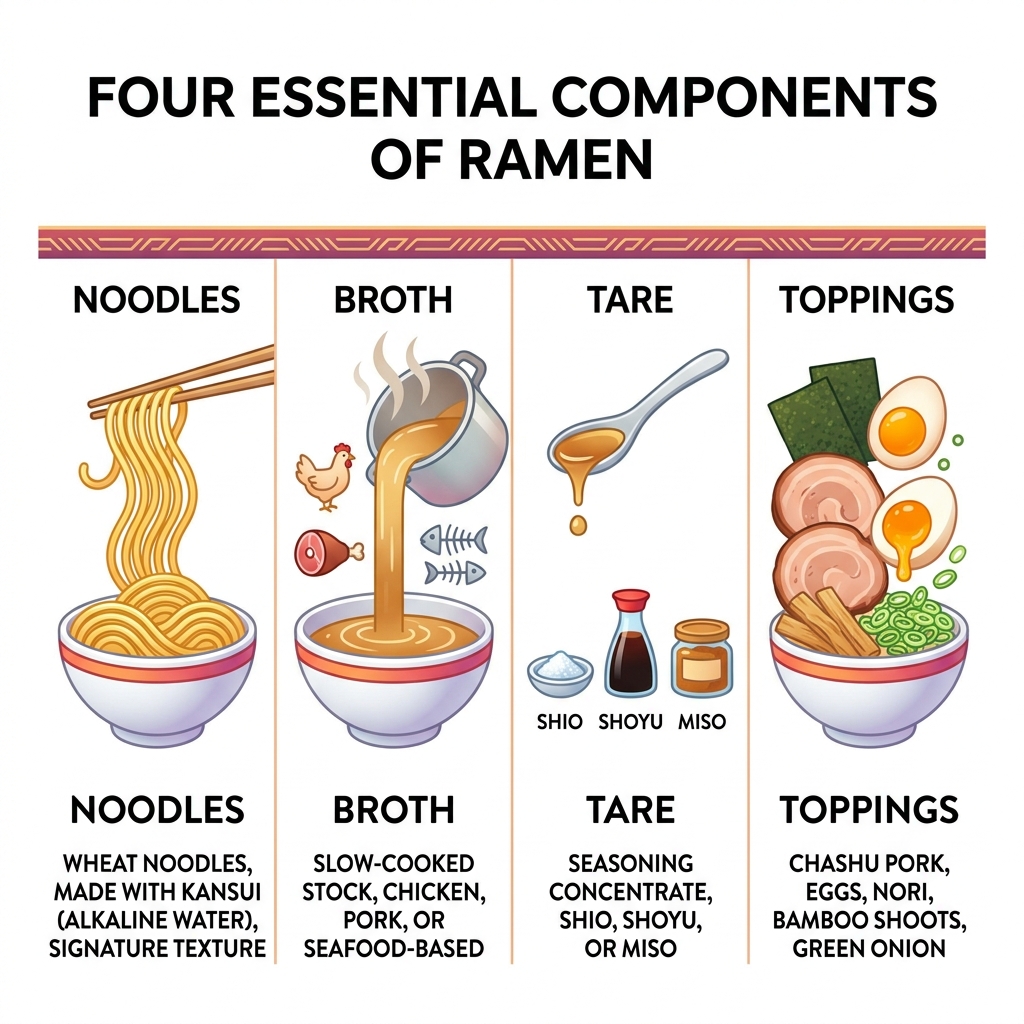
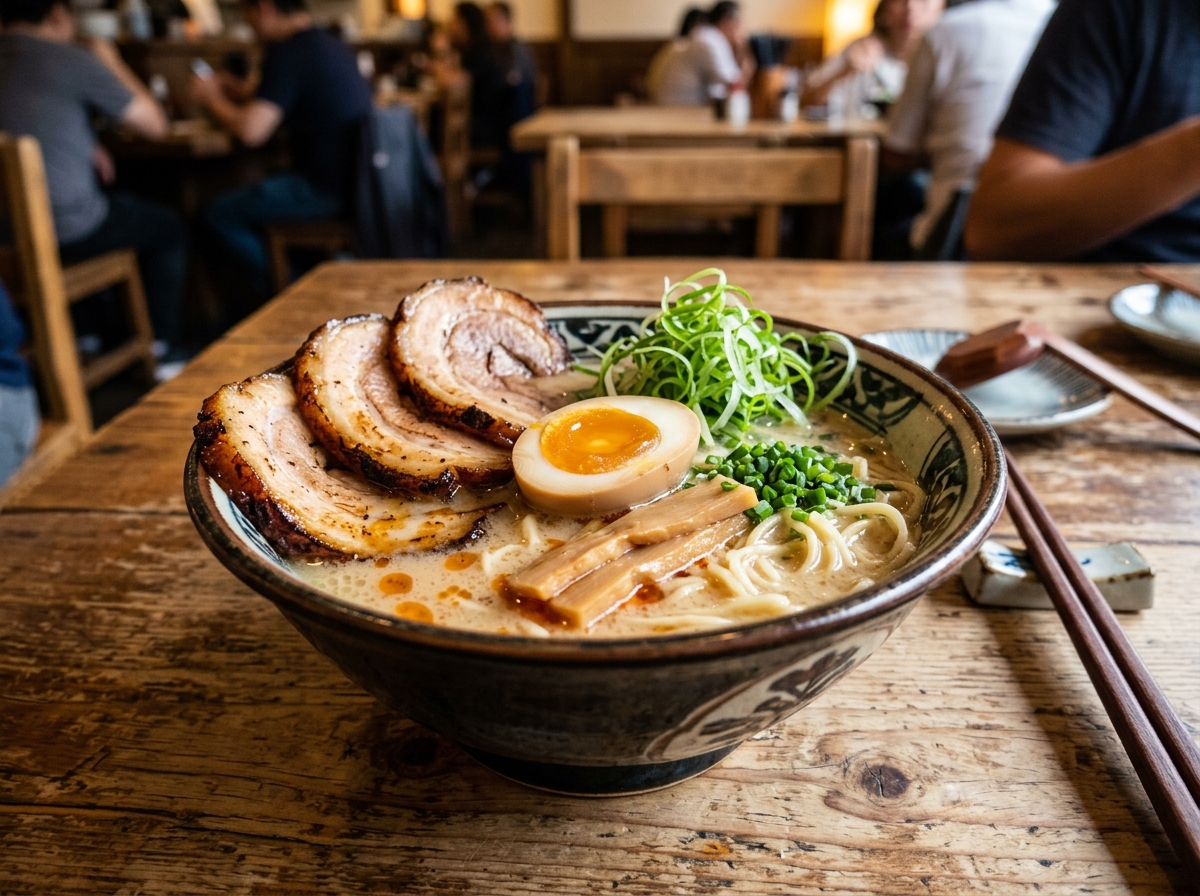
Ramen noodles are wheat-based noodles made with an alkaline mineral water called kansui, which gives them their signature springy texture and slightly yellow color. They are served in a flavored broth and topped with ingredients like chashu pork, soft-boiled eggs, and bamboo shoots.
Here's a quick overview of what ramen noodles are all about:
| Element | What It Is |
|---|---|
| Noodles | Wheat noodles made with kansui (alkaline water) |
| Broth | Slow-cooked stock — chicken, pork, or seafood-based |
| Tare | Seasoning concentrate — shio, shoyu, or miso |
| Toppings | Chashu pork, eggs, nori, bamboo shoots, green onion |
Few dishes have traveled as far — or transformed as much — as ramen. What began as a humble Chinese noodle soup adapted by Japanese cooks in the late 1800s is now a global obsession. Japan alone has over 24,000 ramen shops, with roughly 5,000 in Tokyo. And that's before you count the billions of instant packets consumed worldwide every year.
Ramen is not just one dish. It's a whole system of flavors, techniques, and regional identities. A bowl from Sapporo tastes nothing like one from Hakata. And a careful bowl made at home from scratch is a world apart from a three-minute packet — though both have their place.
This guide covers everything: the history, the anatomy of a proper bowl, regional styles, where to buy quality noodles in and around L.A., and how to build a genuinely great bowl at home.
Easy ramen noodles glossary:
The Evolution of Ramen: From Chinese Roots to Japanese Icon
To understand the ramen noodles we love today, we have to look back at their immigrant roots. Ramen is actually a Japanese adaptation of Chinese wheat noodles. In the late 19th century, Chinese immigrants in Yokohama’s Chinatown introduced a dish known as Nankin soba (Nanjing noodles). At the time, "soba" was a catch-all term for noodles, even though these were made of wheat rather than buckwheat.
The linguistic journey of the dish is fascinating and reflects Japan's complex history. Before the modern term "ramen" became standard, the dish was often called shina soba. However, after World War II, the word shina acquired a pejorative connotation. As a result, it was largely replaced by chūka, meaning "Chinese-style." You will still see "Chūka soba" on many traditional shop signs today.
A major milestone occurred in 1910 when Kan'ichi Ozaki opened Rairaiken in Tokyo's Asakusa district. He hired Cantonese cooks and adapted the flavors to suit Japanese palates, creating what many consider the first true ramen shop. Following WWII, food shortages and a surge in U.S. wheat imports led to the rise of yatai (mobile food stalls). These stalls, often run by Japanese soldiers returning from China, served affordable, filling bowls of noodles to a hungry population.
The Ministry of Agriculture, Forestry and Fisheries highlights ramen as one of the 10 Great Tastes of Japan, cementing its status as a national dish. But the biggest revolution came in 1958. Momofuku Ando, founder of Nissin Foods, invented the world's first instant ramen noodles in his backyard shed in Osaka. Inspired by watching his wife cook tempura, he developed a flash-frying method that made the noodles shelf-stable and quick to prepare. This invention was so significant that it was voted the greatest Japanese invention of the 20th century in a national poll and even has its own dedicated museum in Yokohama.
Anatomy of an Authentic Bowl: Broth, Tare, and Toppings
What separates ramen noodles from a standard bowl of chicken noodle soup? It all comes down to the chemistry of the noodle and the layering of the broth.
The secret ingredient in the noodles is kansui, an alkaline mineral water (typically sodium carbonate and potassium carbonate). This alkali reacts with the wheat flour to develop a specific yellow hue and a firm, springy texture that doesn't turn to mush in hot soup. Without kansui, you just have a bowl of pasta.
An authentic bowl is built in layers:
- The Broth (Dashi): The soul of the dish. It can be chintan (clear) or paitan (cloudy/creamy).
- The Seasoning (Tare): This is the concentrated salt or flavor base added to the bowl before the broth.
- The Fat (Koyu): Often infused with garlic or scallions to add richness.
- The Noodles: Carefully timed for the perfect chew.
- The Toppings: The finishing touches that provide texture and contrast.
When customizing ramen toppings, common choices include chashu (braised pork belly), ajitsuke tamago (marinated soft-boiled egg), menma (fermented bamboo shoots), and nori (dried seaweed).
| Tare Type | Description | Flavor Profile |
|---|---|---|
| Shio | Salt-based | Light, clear, and highlights the quality of the broth. |
| Shoyu | Soy sauce-based | Savory, tangy, and the most traditional Tokyo style. |
| Miso | Fermented soybean paste | Bold, nutty, and hearty; perfect for cold weather. |
| Tonkotsu | Pork bone-based | Technically a broth type, but results in a creamy, milky texture. |
Regional Variations and Global Adaptations
In Japan, ramen is fiercely regional. If you travel to the northern island of Hokkaido, you’ll find Sapporo Miso Ramen, a thick and warming bowl often topped with butter and corn to combat the freezing winters. Head south to Kyushu, and you’ll encounter Hakata Tonkotsu, famous for its milky-white pork bone broth and thin, hard noodles.
Interestingly, the city of Kitakata has the highest per-capita number of ramen establishments in Japan, known for its flat, hand-crinkled noodles. Not all ramen is soup, either; Yaki ramen is a popular stir-fried version typically prepared on an iron griddle.
The global spread of ramen noodles has led to incredible adaptations. In South Korea, ramyeon is a cultural staple. The brand Shin Ramyun alone has sold over 28 billion units since 1986. It’s known for its spicy beef broth, inspired by traditional Korean stews.
Here in Los Angeles County, we are spoiled for choice. From the tonkotsu mecca of Sawtelle to the artisanal shops in Little Tokyo and Downtown L.A., our local scene rivals that of Japan. Whether you are in Santa Monica or Hollywood, you can find more info about L.A.'s best ramen through our local guides, featuring everything from Michelin-starred bowls to late-night yatai-style spots in Silverlake and Echo Park.
Master the Art of Cooking Ramen Noodles at Home
Cooking ramen noodles at home can be as simple or as complex as you want it to be. The most important rule? Respect the noodle. In Japan, there is a concept called the art of the slurp. Slurping isn't just about speed; it draws air into your mouth, cooling the noodles while aerating the broth to enhance the flavor.
To get started, we recommend trying a Make Your Own Shoyu Ramen recipe. It allows you to control the salt levels and experiment with different dashi bases. If you’re short on time, professional chefs often use a pressure cooker to speed up the broth-making process. While a traditional chintan (clear broth) might simmer for six hours, a pressure cooker can achieve similar depth in about 90 minutes.
The science of the perfect noodle involves understanding gluten and alkali. The alkaline salts strengthen the gluten structure, which is why ramen has that specific "snap" when you bite into it.
Sourcing Quality Ramen Noodles
While instant packets are convenient, using fresh or high-quality dried ramen noodles makes a world of difference.
- Fresh Noodles: Look for these in the refrigerated section of Asian supermarkets in Gardena or Little Tokyo. They usually cook in just 60 to 90 seconds.
- Dried Artisanal Noodles: Brands like Hakubaku offer authentic, preservative-free noodles that provide a restaurant-quality experience at home.
- The Classics: Knowing the Nissin Chikin Ramen history helps you appreciate the original pre-seasoned block, which is still a favorite for its nostalgic flavor.
Elevating Instant Ramen Noodles into a Gourmet Meal
You don't need to spend 48 hours boiling bones to have a great meal. You can easily upgrade a standard packet of ramen noodles with a few "hacks":
- Ditch the Packet: Use half the seasoning packet to manage sodium, and supplement with fresh miso paste or a splash of high-quality soy sauce.
- Add Protein: Sear some chicken breast or pork belly. For a quick fix, a Spicy Miso Butter Ramen with a dollop of peanut butter or tahini adds incredible creaminess.
- The Perfect Egg: A six-minute soft-boiled egg is the gold standard. Cool it immediately in an ice bath to keep the yolk jammy.
- Fresh Veggies: Toss in some baby bok choy, spinach, or enoki mushrooms during the last minute of cooking.
Frequently Asked Questions about Ramen
What makes ramen noodles different from other wheat noodles?
The defining difference is the use of kansui (alkaline water). This changes the pH of the dough, giving ramen noodles their springiness, yellow color, and ability to withstand hot broth without becoming mushy. Standard wheat noodles like udon or Italian pasta lack this alkaline component.
Is it true that instant ramen was once a luxury item?
Yes! When Nissin Chikin Ramen was first introduced in 1958, it was priced at 35 yen. At the time, this was roughly six times more expensive than a bowl of fresh noodles from a local stall. It was marketed as a high-tech, convenient luxury for the modern Japanese household.
How do I achieve the perfect "al dente" texture at home?
Noodles continue to cook in the hot broth after you serve them. To ensure the perfect texture, cook your noodles for 30 seconds less than the package instructions. This is known as "barikata" (very hard) in some shops, ensuring they reach the perfect chew by the time you sit down to eat.
Conclusion
At Edible L.A., we believe that the best food stories are the ones that connect us to our local community and the seasons. Whether you are sourcing fresh ingredients from a farmers market in Santa Monica or enjoying a bowl of artisanal ramen noodles in a hidden gem in Glassell Park, ramen represents the beautiful intersection of tradition and innovation.
By using seasonal ingredients and supporting local L.A. makers, you can turn a simple bowl of soup into a celebration of our city’s vibrant food culture. We encourage you to explore more seasonal recipes on our site to keep your kitchen inspired all year long. Happy slurping!