The Best Pasta Recipes for Beginners
Discover beginner pasta recipes, master homemade pasta, explore shapes, history, nutrition, and global favorites!
Why Pasta Belongs in Every Beginner's Kitchen
Pasta is one of the most versatile, affordable, and beloved foods in the world — and it's the perfect starting point for anyone learning to cook.
Here's a quick overview of what you need to know:
| Topic | Quick Answer |
|---|---|
| What is pasta? | A dough made from wheat flour and water or eggs, shaped and cooked by boiling or baking |
| Main types | Fresh vs. dried; long, short, stuffed, and specialty shapes |
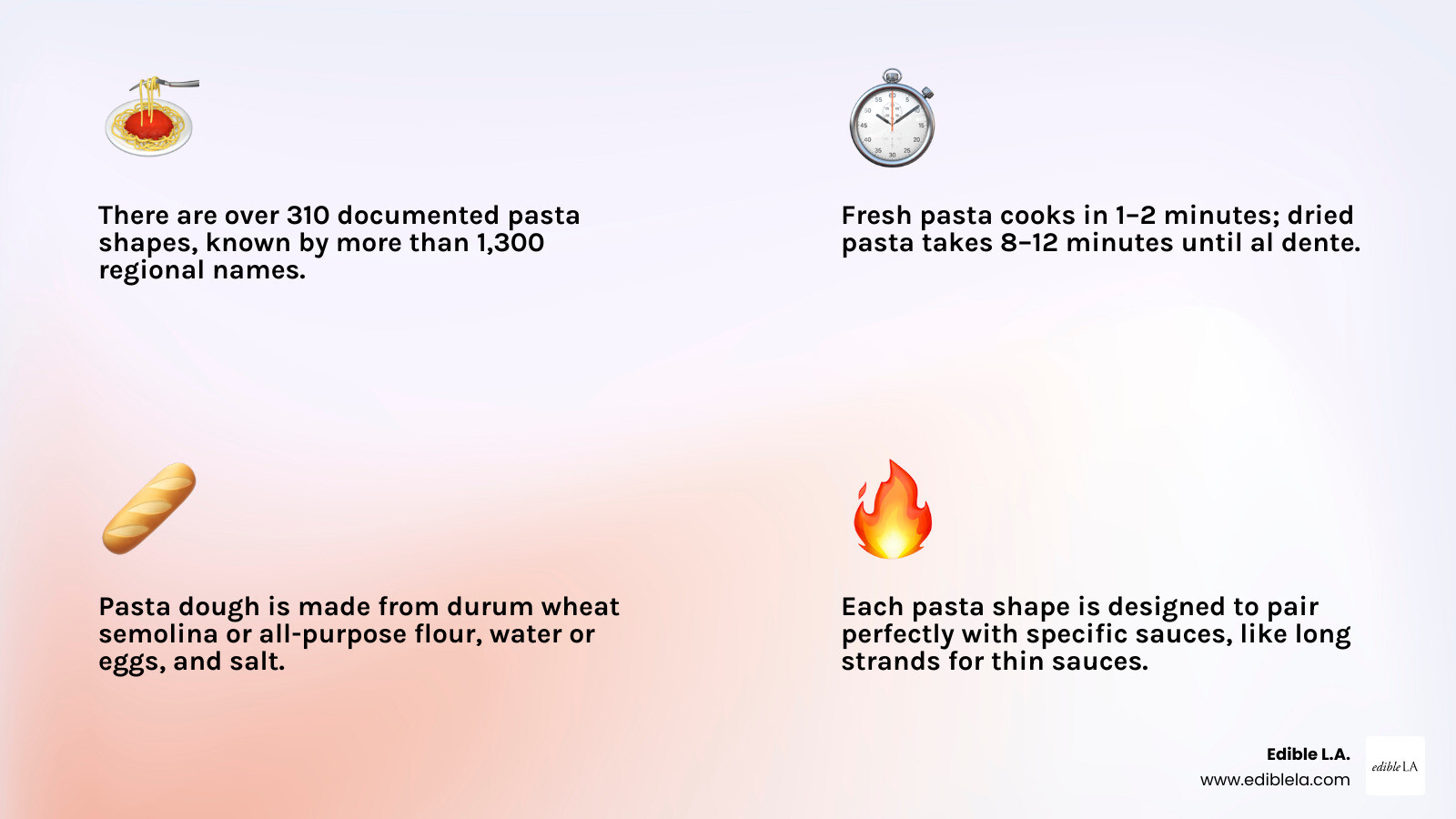
| Basic ingredients | Flour (semolina or all-purpose), water or eggs, salt, optional olive oil |
| How to cook it | Boil in well-salted water until al dente (firm to the bite), 1–2 min for fresh, 8–12 min for dried |
| Best beginner dishes | Aglio e olio, cacio e pepe, simple marinara, carbonara |
| Nutrition | ~160 calories per 100g cooked; good source of carbohydrates and some protein |
There are over 310 documented pasta shapes — known by more than 1,300 different names depending on the region. From delicate angel hair to hearty rigatoni, each shape was designed with a purpose: to carry a specific sauce in the best way possible.
Whether you're picking up a box at your local market or rolling dough by hand for the first time, pasta rewards curiosity. It's comforting, quick, budget-friendly, and endlessly adaptable to seasonal, local ingredients — exactly the kind of cooking Edible L.A. celebrates.
Easy pasta word list:
The History and Basic Ingredients of Pasta
To truly understand pasta, we have to look past the myths. While many of us grew up hearing that Marco Polo brought noodles back from China in the 13th century, that story is actually a 20th-century advertising invention. In reality, The saucy history of pasta is far more ancient and rooted in the Mediterranean.
Evidence of pasta-like foods appears as far back as 400 BCE with the Etruscans, and by the 8th century, Arab conquerors in Sicily were likely responsible for introducing the dry, durable forms we recognize today. By 1154, massive shipments of itriyya (a long, dry noodle) were being exported from Norman Sicily to the rest of the Italian peninsula.
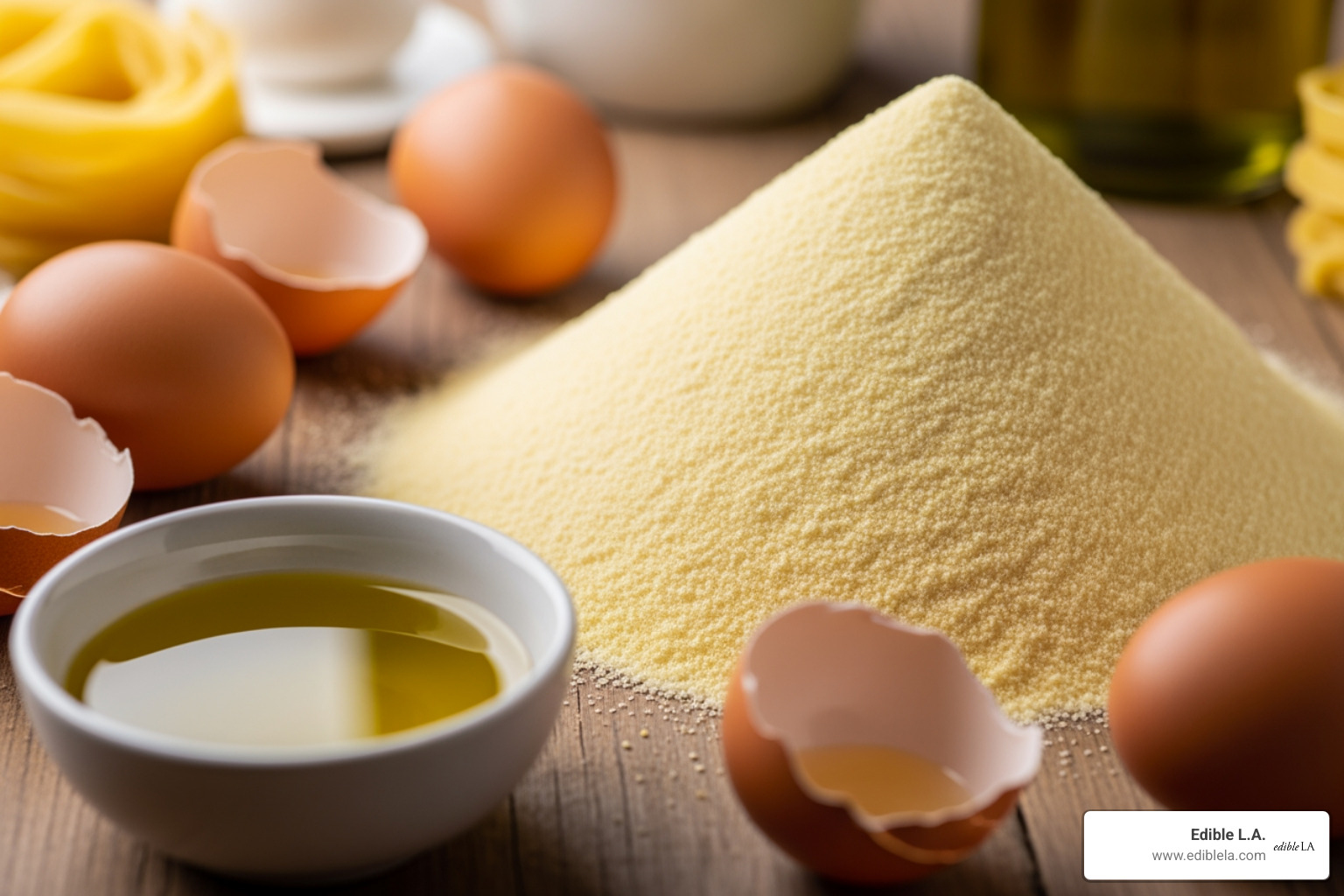
At its core, pasta is a beautifully simple "cooked dough" food. The basic ingredients haven't changed much in centuries:
- Durum Wheat/Semolina: This hard wheat is the gold standard for dried pasta. It’s high in protein and gluten, which gives the noodles their essential structure and "bite."
- Water: Used primarily in dried, Southern Italian-style pasta.
- Eggs: Common in Northern Italy and for fresh pasta, eggs provide a rich flavor and a tender, silky texture.
- Salt and Olive Oil: Often added to the dough for flavor and elasticity.
In Los Angeles, we are lucky to have access to incredible farmers' markets from Santa Monica to Hollywood where we can find high-quality, local eggs and even stone-ground flours that make these basic ingredients shine.
Exploring the Main Types of Pasta
When we walk down the aisles of a market in Downtown L.A. or Culver City, the sheer variety of pasta can be overwhelming. To keep it simple for beginners, we categorize them by their moisture content and their shape.
Fresh vs. Dried Pasta
The debate between fresh and dried isn't about which is "better"—it's about which is right for your sauce.
| Feature | Fresh Pasta | Dried Pasta |
|---|---|---|
| Ingredients | Usually eggs and all-purpose or "00" flour | Durum wheat semolina and water |
| Texture | Tender, silky, and delicate | Firm, chewy, and "al dente" |
| Cooking Time | 1 to 3 minutes | 8 to 12 minutes |
| Best Pairings | Cream, butter, or light vegetable sauces | Hearty ragus, oil-based, or chunky sauces |
| Shelf Life | 2–3 days (refrigerated) | Up to 1 year (pantry) |
Shapes and Varieties
With 310 forms and over 1,300 names, the shape of the pasta is designed to be a functional tool.
- Long Strands (Cords): Think spaghetti, linguine, and capellini. These are best for smooth, liquid-based sauces like olive oil or light tomato.
- Short Shapes: Penne, fusilli, and farfalle (bow-ties) have nooks and crannies that capture chunky sauces, peas, or bits of meat.
- Stuffed Varieties: Ravioli and tortellini are little pillows of flavor, often filled with ricotta, spinach, or braised meats.
- Ribbons: Tagliatelle and pappardelle are wide and flat, perfect for heavy, rich meat sauces like a Bolognese.
How to Make Homemade Pasta: A Step-by-Step Guide
Making pasta at home is one of the most rewarding culinary projects we can undertake. It’s a bit of a workout, a bit of an art, and entirely delicious.
The Essential Tools for Making Pasta
While you can go old-school with a rolling pin (or mattarello), a few modern tools make the process much easier for beginners:
- The Mixer: A KitchenAid Stand Mixer with a Pasta Roller Attachment is a game-changer for getting uniform sheets of dough.
- The Bench Scraper: Essential for mixing the flour and eggs on your counter without making a mess.
- Baking Sheets: To dust with flour and hold your finished shapes.
Step-by-Step Instructions
- The Flour Nest: Sift 2 cups of all-purpose flour onto a clean surface. Make a wide well in the center.
- The Eggs: Crack 3 large eggs into the well. Add a pinch of sea salt and a half-tablespoon of extra-virgin olive oil.
- The Mix: Use a fork to gently beat the eggs, gradually pulling flour from the inner walls of the nest. Keep the "walls" intact as long as possible!
- The Knead: Once a shaggy dough forms, start kneading by hand. This is where the magic happens. Knead for 8 to 10 minutes until the dough is smooth and elastic. If it’s too sticky, add a dusting of flour; if too dry, spray a little water on your hands.
- The Rest: Wrap the dough in plastic and let it rest at room temperature for at least 30 minutes. This relaxes the gluten, making it possible to roll out.
- The Roll: Divide the dough into four pieces. Run it through your pasta roller, starting at the widest setting (Level 1) and working your way up to Level 6.
- The Cut: Use a cutter attachment or a knife to create your desired shape—like carrot-juice-cavatelli or simple ribbons.
Classic Italian Pasta Dishes
Once you have your pasta, it's time to sauce it. For beginners in L.A., we recommend starting with high-impact, low-effort classics:
- Aglio e Olio: The ultimate "pantry" meal. Just garlic, olive oil, red pepper flakes, and parsley.
- Cacio e Pepe: A Roman masterpiece using only Pecorino Romano cheese and plenty of toasted black pepper. The secret is using the starchy pasta water to create a creamy emulsion without any actual cream.
- Sugo Finto: Known as "fake sauce", this is a brilliant recipe for vegetarians. You mince carrots, celery, and onions so finely that when they are slow-cooked in tomatoes, they mimic the texture of a meat ragu.
- Drunken Cacio e Pepe: A fun twist where the pasta is finished in red wine. Check out our recipe for drunken-cacio-e-pepe-from-more-is-more-cookbook.
We also love how pasta has been adapted internationally. In East Africa, Somali pasta uses a blend of spices like cumin and turmeric, while in Ethiopia, it's not uncommon to see spaghetti served alongside traditional injera. These global flavors are a testament to how this Italian staple has become a universal comfort food.
Production, Nutrition, and Global Regulations
While we love the handmade approach, commercial pasta production is a fascinating feat of engineering. Factory-made dried pasta is produced through a process called extrusion. The dough is forced through bronze dies (which give the pasta a rough surface to hold sauce better) and then dried carefully. The moisture is reduced from about 31% to 12% to ensure it stays shelf-stable for a year or more.
Nutritional Facts
According to the USDA, a 100-gram portion of cooked, unenriched pasta provides:
- Calories: 160 kcal
- Carbohydrates: 31% (mostly starch)
- Protein: 6%
- Fat: 1%
For those with dietary restrictions, there are excellent modern alternatives. Banza Chickpea Pasta is a popular choice in L.A. kitchens because it is high in protein and CleanScan Certified (tested for over 400 pesticides). Other options include paccheri-tuna-ellies-table or gluten-free varieties made from rice or corn flour.
Regulations and Standards
Did you know that in Italy, pasta is governed by law? Italian regulations for "Pasta di semola di grano duro" mandate that it must be made exclusively from durum wheat semolina and water. In the United States, the FDA also sets strict standards of identity for 15 types of macaroni products, including specific rules for enrichment with B vitamins and iron.
Frequently Asked Questions about Pasta
What is the difference between "al dente" and fully cooked?
"Al dente" literally means "to the tooth." It refers to pasta that is cooked until it is tender but still offers a firm, resilient bite in the center. In Italy, this is the standard. We often pull our pasta out of the water a minute early to finish cooking it directly in the sauce, which allows the noodles to absorb the flavors without becoming mushy.
How many types of pasta shapes actually exist?
As mentioned, there are roughly 310 specific forms known by over 1,300 names. Some are incredibly rare, like the "Threads of God" (su filindeu) from Sardinia, which is only made by a handful of women. Others, like the lidey-heucks-spaghetti-with-sweet-corn-pesto, use familiar shapes in creative new ways.
Is pasta a healthy part of a balanced diet?
Absolutely. Pasta is a complex carbohydrate that provides steady energy. The key is portion size and what you put on top. In Italy, the average person eats about 23.5 kg of pasta per year, yet they maintain a healthy lifestyle by pairing it with fresh vegetables, lean proteins, and healthy fats like olive oil. For a lighter seasonal option, try our fennel-and-pumpkin-caponata-with-mozzarella-from-recipes-for-a-lifetime-of-beautiful-cooking.
Conclusion
At Edible L.A., we believe that every meal is an opportunity to support our local food culture. Whether you are buying fresh eggs from a vendor in Silverlake or picking up a bag of artisanal dried noodles in Echo Park, choosing high-quality ingredients makes a world of difference in your pasta dishes.
We encourage you to experiment with seasonal produce—like adding spring peas to your carbonara or roasting summer tomatoes for a simple marinara. By supporting local food systems and sustainable sourcing, we ensure that our vibrant L.A. food scene continues to thrive.
For more recipes and stories about our local food artisans, from Glassell Park to Venice, explore our farms and gardens section. Happy cooking, and may your pasta always be perfectly al dente!