Spring into Freshness with March Produce
Discover what veggies are in season in March: asparagus, artichokes, greens & roots. Get recipes, tips & guides!
March Is a Turning Point for Fresh, Local Produce
What veggies are in season in March is one of the most useful questions you can ask as the calendar shifts toward spring. Here's a quick answer:
Vegetables in season in March:
| Category | Vegetables |
|---|---|
| Early Spring Arrivals | Asparagus, artichokes, green garlic, spring onions |
| Leafy Greens | Spinach, kale, bok choy, arugula, watercress, collard greens |
| Root Vegetables | Carrots, beets, radishes, parsnips, turnips, potatoes |
| Brassicas | Broccoli, cauliflower, Brussels sprouts, cabbage, kale |
| Other | Leeks, fennel, mushrooms, Swiss chard, sugar snap peas |
March is a genuinely tricky month for seasonal cooking. The tail end of winter is still holding on, but the first real signs of spring are starting to push through. At L.A.-area farmers markets, you might see a sparse table one week and a burst of fresh asparagus the next — sometimes in the same week.
The good news? March is actually rich with produce if you know where to look. Winter roots like carrots, parsnips, and beets are still at their best. And if the weather cooperates, early California asparagus and artichokes start showing up mid-month — fresher, sweeter, and far more affordable than anything shipped in from out of state.
This guide walks you through exactly what's hitting local markets right now, how to pick and store it, and the simplest ways to cook it well.
Why Eating Seasonally in March Matters
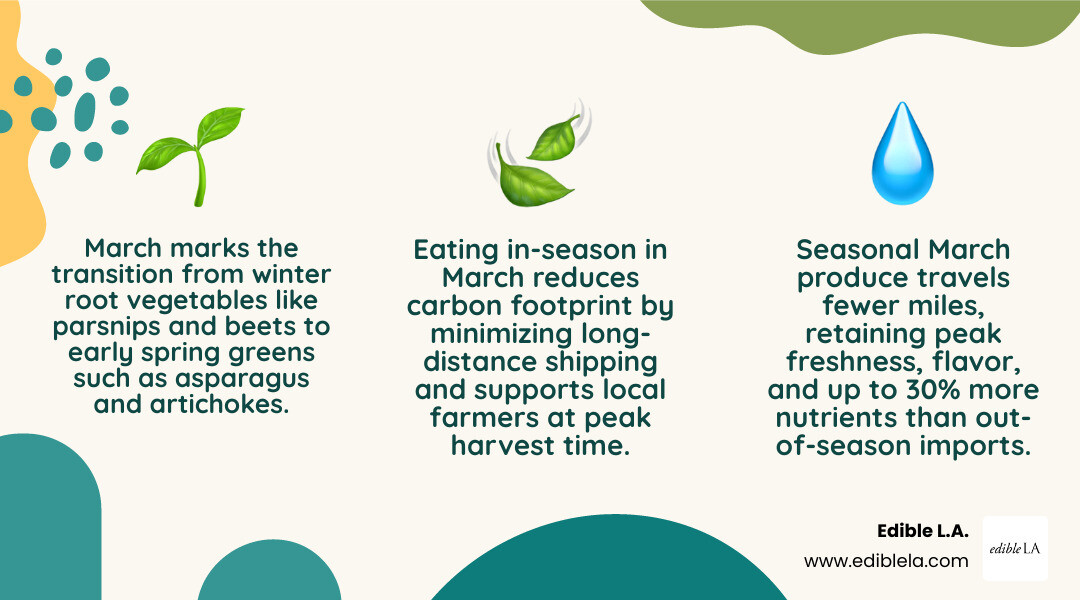
In our corner of Southern California, we are blessed with a climate that keeps our markets humming year-round. However, March is the month where the philosophy of seasonal eating truly proves its worth. When we choose produce that is naturally reaching its peak, we aren't just following a trend; we are participating in a local food culture that supports our health and our community.
First, let's talk about the flavor profile. Have you ever tried a winter peach? It’s often mealy and flavorless because it was picked unripe and shipped thousands of miles. In contrast, March vegetables like asparagus and snap peas are harvested at the height of their sugar development. Because they are grown closer to home in places like Ventura or Monterey County, they don't spend weeks in a shipping container.
Nutrient density is another major factor. Research shows that produce is most dense in nutrients when it is allowed to ripen on the plant. By the time out-of-season veggies reach the supermarket shelf, they’ve often lost a significant portion of their Vitamin C and antioxidants. Eating what is local to L.A. in March means you’re getting the maximum hit of vitamins your body craves during this transition from cold to warm weather.
Then there is the cost efficiency. Take asparagus as a prime example: in the off-season, it can cost upwards of $4 per pound. When it becomes plentiful in the spring, that price can drop to closer to $1 per pound. By following a Seasonal Produce Guide, you’re effectively letting the earth tell you what’s on sale.
Finally, there’s the environmental impact and the joy of supporting local farmers. When we shop at markets in Hollywood, Santa Monica, or Downtown L.A., we reduce the carbon footprint of our dinner. We are ensuring that our local agricultural heritage remains vibrant, allowing small-scale growers to continue providing us with the diverse varieties that big-box stores ignore.
The Stars of the Show: What Veggies are in Season in March?

When we ask what veggies are in season in March, two heavy hitters immediately come to mind: asparagus and artichokes. These are the "celebrity" vegetables of the month, signaling that the vernal equinox is upon us.
Asparagus
Asparagus is one of the first true signs of spring. While it generally peaks in April, California’s warmer pockets start sending spears to market in mid-March. This early-season asparagus is often prized for its higher sugar content and tender texture.
If you are lucky, you might even spot white asparagus. Interestingly, white and green asparagus are the same plant! The difference is entirely in the growing method; white asparagus is covered with soil to prevent sun exposure, which stops chlorophyll production. To choose the best asparagus, look for firm stems and tight, purple-tinged tips. If the tips are starting to flower or the stalks feel limp, leave them behind.
Artichokes
Did you know that the artichoke is California’s official state vegetable? Over 65% of all domestic artichokes are grown in Castroville, just up the coast in Monterey County. March kicks off their primary spring season. These "edible thistles" are nutritional powerhouses, acting as an excellent source of fiber (about 5 grams per serving) and folate.
When they are in peak ripeness, artichokes should feel heavy for their size. We recommend the "squeak test"—give the leaves a gentle squeeze; if they make a high-pitched squeaking sound, you know they are fresh and hydrated.
Top Leafy Greens: What Veggies are in Season in March?
March is a sea of green at our local stands. While some of these are available year-round in California, they thrive in the cool, damp mornings of early spring.
- Spinach: March 26 is National Spinach Day, and for good reason. This cool-season veggie is a health powerhouse, rich in Vitamins A, C, and K.
- Kale: Whether you prefer Lacinato (Dino) or Curly, kale is an excellent source of Vitamin A and manganese.
- Bok Choy: This subspecies of Brassica rapa has been cultivated for centuries. It’s perfect for quick sautés when you want a crunch that holds up to high heat.
- Collard Greens: These become sweeter after a winter frost, making the March harvest particularly delicious. They are one of the oldest members of the cabbage family, cultivated for at least 2,000 years.
- Watercress and Arugula: These peppery greens add a sophisticated bite to spring salads. Arugula, in particular, starts to flourish as the days get longer.
Root Holdovers: What Veggies are in Season in March?
Don't be fooled by the excitement of the new greens; the root cellar is still providing some of our most comforting flavors. These vegetables have been developing their sugars all winter and are now at their peak sweetness.
- Parsnips and Carrots: These "main character" vegetables deserve center stage. While we often think of them as winter staples, their flavor is incredibly concentrated in March. For more on the sweeter side of the harvest, check out our guide to Septembers Sweetest Harvest A Guide to In-Season Fruits.
- Radishes: These are the speed-demons of the garden. In March, they are crisp and spicy. Look for "Easter Egg" varieties for a pop of color in your salads.
- Potatoes: A staple crop for the Incas over 1,800 years ago, potatoes are far from "empty calories." A baked potato is a great source of potassium and Vitamin B6.
- Beets and Turnips: These roots are excellent for roasting. Don't throw away the beet greens! They are packed with nutrition and can be sautéed just like spinach.
Regional Availability: From California to France
While we focus on our local bounty in Los Angeles, it’s fascinating to see how March produce varies across the globe. Our Mediterranean-like climate gives us a head start on many spring favorites that are still weeks away in colder regions.
| Vegetable | California (L.A. Area) | UK / Northern Europe | France (Paris Region) |
|---|---|---|---|
| Asparagus | Peak season begins | Very early (mostly forced) | Emerging in late March |
| Artichokes | Plentiful (Castroville) | Rare / Imported | Available in southern markets |
| Purple Sprouting Broccoli | Available | Iconic early spring treat | Common in March |
| Root Veggies | Year-round availability | Late winter holdovers | Staple of the "Marché" |
| Citrus | Peak Season (Meyer Lemons) | Imported | Peak (Corsican varieties) |
In Paris, the farmers' markets (or marchés) are the beating heart of the city's food culture. If you find yourself traveling, the Mairie de Paris's guide is essential for finding market days in each arrondissement. While we are enjoying our local avocados and citrus, the French are celebrating the end of the leek and cabbage season with sophisticated gratins.
Back home in Southern California, we benefit from the "microclimates" of our region. A farm in Glassell Park might be a week ahead of a farm in the cooler coastal air of Malibu. This diversity ensures that even in the "sparse" month of March, there is always something fresh to find.
Selection and Storage Tips for Peak Freshness
Buying the right produce is only half the battle; keeping it fresh is where the magic happens. Here is how we ensure our March haul lasts until the final bite.
The Squeak Test for Artichokes: As mentioned, a fresh artichoke should squeak when squeezed. Look for compact heads with leaves that haven't spread too far apart. If the leaves are open, the artichoke is overripe and will likely be tough and bitter.
The Flower Shop Method for Asparagus: Asparagus is incredibly thirsty. To extend its life, trim an inch off the bottom of the stalks and stand them upright in a glass with about an inch of water, just like a bouquet of flowers. Cover the tops loosely with a plastic bag and store them in the fridge. If the water gets cloudy, change it! Another method is to wrap the bottoms in a wet paper towel before bagging them.
Managing Ethylene Sensitivity: Some fruits and vegetables produce ethylene gas as they ripen, which can cause other produce to spoil prematurely. For example, keep your March apples away from your delicate leafy greens. Bananas and plantains are also highly ethylene-sensitive; store them at room temperature away from direct sunlight until they reach your desired ripeness.
Storage Cheat Sheet:
- Potatoes: Cool, dry, dark place (not the fridge, which turns their starch to sugar).
- Leafy Greens: Wash only when ready to use; store in a breathable bag with a dry paper towel to absorb excess moisture.
- Radishes: Remove the green tops immediately (they draw moisture from the root) and store the bulbs in a zip-top bag.
Simple and Delicious March Vegetable Recipes
When the produce is this fresh, you don't need complicated techniques. March is about letting the natural sweetness of the transition shine.
Roasted Baby Artichokes with Parsley and Mint: Baby artichokes are wonderful because they haven't developed the fuzzy "choke" in the center, meaning you can eat almost the whole thing. Slice them in half, toss with olive oil and lemon, and roast at 400°F until the edges are crispy. Toss with fresh herbs just before serving.
The Ultimate Spring Vegetable Sauté: This is our go-to for a quick weeknight side. Combine sliced asparagus, sugar snap peas, and spring onions in a pan with a little butter or olive oil. Sauté for only 3-4 minutes—you want that vibrant green color and a "snap" in every bite. This Spring Vegetable Sauté approach is infinitely adaptable.
Lemony Collard Greens Pasta: Forget the long-simmered southern style for a moment. Try slicing your collards into very thin ribbons (chiffonade) and sautéing them quickly with garlic and red pepper flakes. Toss with al dente pasta, a heavy squeeze of lemon juice, and plenty of Parmesan cheese. It’s a bright, spring-inspired way to use a winter staple.
Reinventing Winter Roots: If you’re tired of roasted carrots, try a raw carrot and radish slaw. Use a vegetable peeler to make long ribbons of carrots and thinly slice radishes. Toss with a vinaigrette made from Meyer lemon juice and honey. It’s a refreshing bridge between the seasons.
Frequently Asked Questions about March Vegetables
What new vegetables appear specifically in March?
March is the debut month for "green garlic" and "spring onions." Green garlic looks like a thick scallion and is actually immature garlic harvested before the bulb forms. It has a mild, nutty garlic flavor that is spectacular in risottos or scrambled eggs. We also see the first sugar snap peas and the very beginning of the asparagus harvest.
How do I know if an artichoke is fresh?
Beyond the "squeak test," look at the stem. It should not look shriveled or dry. The leaves should be a deep, vibrant green (though some winter-kissed artichokes may have slight brown streaks, which actually indicates better flavor due to the cold). The head should feel heavy and solid, not hollow.
Is asparagus cheaper when it is in season during March?
Absolutely. Asparagus is a seasonal crop that requires specific conditions to thrive. During its peak in March and April, the supply from California farms increases dramatically, leading to significant price drops at local markets. Buying it now is both a culinary and financial win.
Conclusion
Embracing the shift of the seasons is about more than just knowing what veggies are in season in March; it’s about reconnecting with the rhythm of the land right here in Los Angeles County. From the crunchy snap of the first asparagus in Venice to the earthy sweetness of a parsnip found in a Hollywood market, March offers a unique palette for the home cook.
By choosing to eat seasonally, you are nourishing your body with nutrient-dense food, saving money, and directly supporting the local food journalism and agricultural community that makes L.A. such a world-class food destination. We invite you to head to your local market this weekend, grab a bunch of whatever looks most vibrant, and taste the difference for yourself.
For more tips on navigating the year's bounty, be sure to bookmark our Seasonal Produce Guide and join us as we continue to tell the story of L.A. food, season by season.