Walk the Santa Monica Farmers Market on a Saturday morning and you are already speaking the language of terpenes. A vendor scores a Meyer lemon and the stall fills with the bright oil of the peel. Two tables over, rosemary throws a resinous sharpness into the air. A butcher keeps a pepper mill busy. Late-summer mangoes smell sweet and musky at the stem. Los Angeles cooking has always been a conversation among citrus, herbs, pepper, and ripe fruit. Cannabis flavor, at its best, is the same conversation.
The compounds that give a cultivar its citrus lift or its peppery bite are the same families of molecules chefs already chase in zest, cracked pepper, and piney herbs. Once you hear that shared vocabulary, pairing becomes a culinary question this city has been asking for decades: what belongs with the ceviche, the grill, the stone fruit, the herb salad?
The pantry already knows these notes
Terpenes are the fragrant oils that give plants their scent. Leafly reports that cannabis produces more than 150 of them, most in trace amounts, with a handful dominating the bouquet the way a squeeze of lemon can dominate a plate. They are volatile. Heat and time scatter them. Cooks know this instinctively. The zest goes on at the end. The basil is torn, not boiled. The same logic applies when cannabis flavor is invited to dinner.
Limonene is the citrus note, the clean scent of fruit rinds and ginger. Myrcene, one of the most common terpenes in commercial cannabis, shows up in hops, lemongrass, and mangoes, with an herbaceous, earthy, musky sweetness. Beta-caryophyllene is the peppercorn: spicy, pungent, familiar from black pepper, cloves, oregano, and rosemary. Pinene smells like pine, and Leafly places it in kitchen herbs as ordinary as rosemary, basil, parsley, and dill. Linalool is the floral, woody lift associated with lavender, a note pastry cooks already fold into honey and stone-fruit desserts.
None of this requires a laboratory. It requires a nose trained the way an LA cook's nose is trained: at the market, over a grill, against a board of citrus.
Pairing the plant with the plate
Start with the Pacific. Limonene-forward profiles belong with what this coast already does with acid: Santa Monica-style ceviche, a plate of crudo, lime over grilled prawns. The goal is echo, not competition. If the dish is already bright with lemon and orange, a citrus-leaning note at the table reads as a continuation of the same line.
Pepper loves the grill. Caryophyllene's bite is the heat you get from a coarse grind of black pepper on a ribeye, a Santa Maria-style tri-tip, or carne asada with oregano in the marinade. At a backyard table in Los Feliz or a patio in the San Gabriel Valley, a peppery profile next to char and fat is how California already seasons meat.
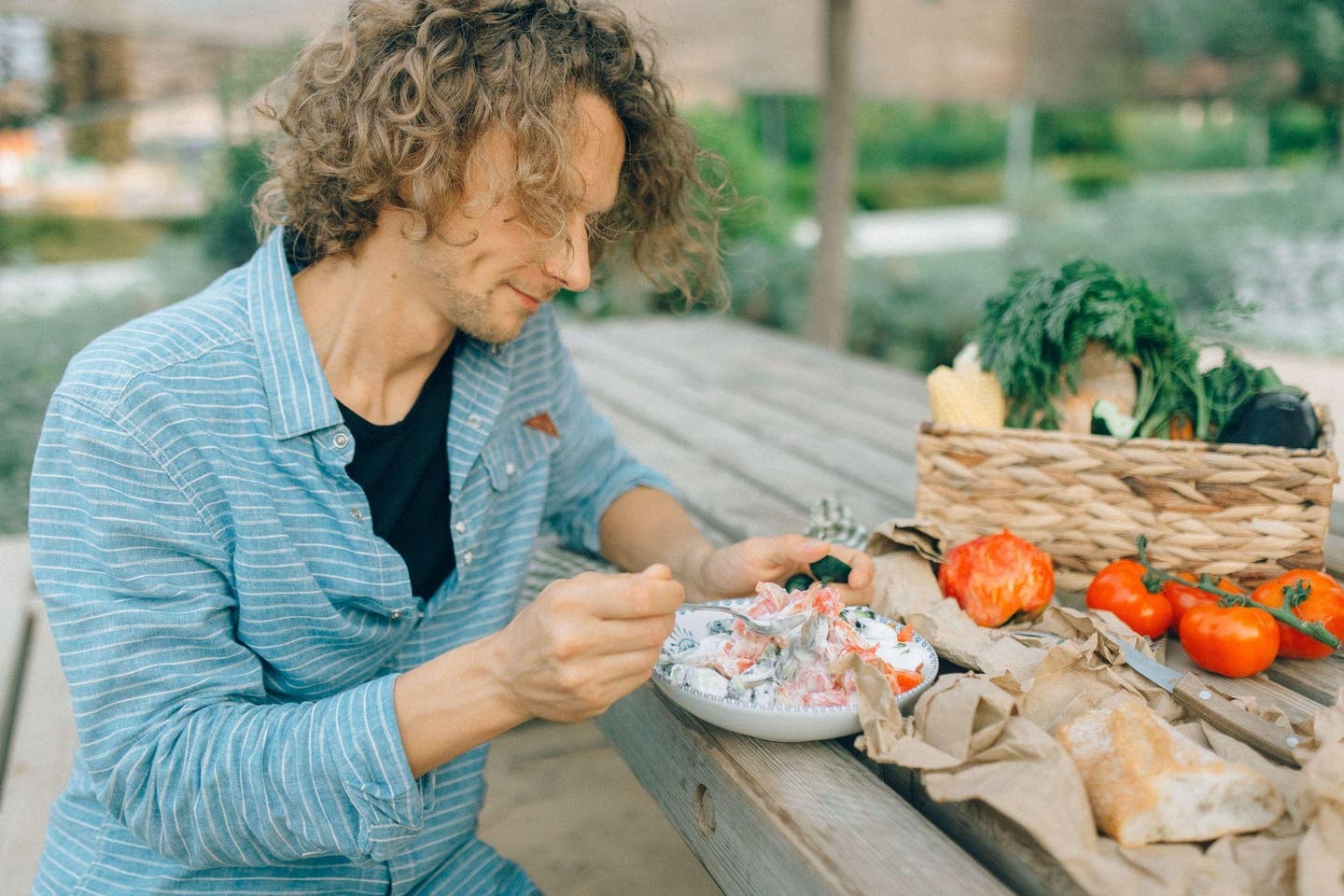
Pinene is the herb garden: rosemary chicken, salsa verde heavy with parsley, basil oil on ripe tomatoes. A pinene-forward note sits next to those dishes the way a sprig of rosemary sits on the platter, present and slightly resinous.
Myrcene is ripe fruit. Leafly notes that the terpene is found in mangoes, which is a pairing instruction hiding in a chemistry line. Late-summer peaches and nectarines from the Central Valley, a mango salsa on grilled fish, a ripe apricot with salt. Earthy-sweet, musky, a little tropical. Myrcene-leaning flavors belong with a fruit course, not against a delicate crudo.
Linalool is the quiet floral. Lavender honey, a bergamot-scented cream. Use a light hand. Floral notes turn soapy when they shout.
Los Angeles has already tried to put this conversation inside restaurants. In 2019, the Original Cannabis Cafe on La Brea opened as the nation's first legally permitted cannabis restaurant. PleasureMed's Irie, with cooking from former Hatchet Hall chef Wes Whitsell, asked diners to move between inventive courses and a consumption room. Eater LA has since reported that the West Hollywood lounge boom cooled, the Cafe closed after the building was vandalized and later burned, and livelier rooms have shifted toward Hawthorne. Assembly Bill 1775 now lets licensed lounges serve nonpsychoactive food and nonalcoholic drinks. The pairing logic does not require a lounge. It requires a plate and a little attention.
Quiet hardware, fewer leftovers
Dining etiquette is mostly about not crowding other people. A stack of disposable pens on a table is visually loud, and it leaves lithium batteries behind when the evening is over. A refillable 510-thread battery, used among adults, is smaller, quieter, and meant to stay. The flavor lives in the cartridge you choose to match the course, not in a new piece of plastic every time someone wants a citrus note with the oysters.
Marc Pitts, co-founder of Discount Vape Pen, an online vaping store, says he has watched hardware follow flavor rather than the other way around. "The table is a flavor room, not a gadget drawer," Pitts says. "A refillable 510 setup is quieter than a pile of disposables, and it wastes less. If the citrus on the plate and the citrus in the vapor are speaking the same language, the hardware should disappear."
That last point is hospitality. Match the note, keep the device off the middle of the table, and do not blow a cloud across someone else's crudo.
Waste is a supporting argument, not the whole meal. Still, kitchens already think about what leaves the building. U.S. PIRG Education Fund reports that Americans discard nearly 500,000 disposable vapes each day, and that the lithium in a year's worth of those batteries weighs nearly 30 tons, enough, in PIRG's accounting, for the batteries of 3,350 electric vehicles. The same report notes that lithium-ion cells can ignite in waste facilities, and it argues for refillable, repairable devices instead of hardware thrown away after a day or two. A dinner table is not a recycling plant. It is a place where people already choose the good olive oil bottle over single-serve packets.
The table remains the point
Los Angeles food culture is seasonal, local, and slightly obsessed with the way a thing smells before it tastes. Terpenes are simply that obsession, named. Limonene with the ceviche. Caryophyllene with the grill. Pinene with the herbs. Myrcene with the mango and the peach. Linalool with the honey. If cannabis flavor belongs here at all, it belongs the way a squeeze of lemon belongs: as part of the plate's own language, among adults, without turning the gathering into a tutorial.
The best nights will sound like a kitchen. Pepper. Peel. Pine. Ripe fruit. A quiet battery at the edge of the table, and the conversation going back to the food.