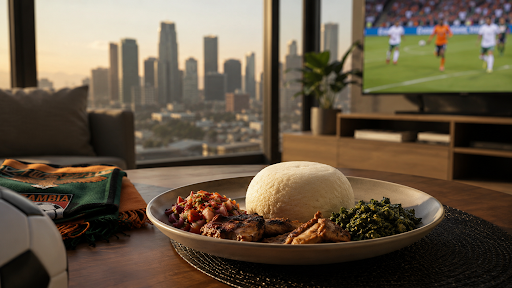
The LA28 Olympic marathon will start at the Venice Beach Boardwalk on the final weekend of the Games. Long before the runners reach that line, they will have completed thousands of ordinary meals. breakfasts after dark morning runs, plates eaten between sessions, and recovery food consumed without ceremony.
Kenyan training camps draw attention because their food is often simple, familiar, and high in carbohydrate. Ugali, rice, potatoes, bread, beans, greens, milk, tea, fruit, and modest portions of meat appear more often than expensive performance products. The point is not to copy a national diet. It is to understand why repeatable food supports repeatable training.
The Famous 76.5% Figure Came From Ten Runners
A 2004 study followed ten elite Kenyan distance runners during seven days of intense training. Researchers estimated that carbohydrate supplied 76.5% of energy intake, or 10.4 grams per kilogram of body mass per day. Fat accounted for 13.4%, while protein averaged 1.3 grams per kilogram.
Those numbers are not a universal Kenyan formula. The sample was small, the observation period was short, and the athletes were training beyond the level of most recreational runners. Researchers also estimated energy intake below expenditure and recorded a slight reduction in body mass across the week. The useful finding is the diet’s carbohydrate emphasis, not an instruction to reproduce every percentage.
Ugali Works Because It Is Ordinary
Ugali is cooked from maize meal and water until it becomes thick enough to portion. It supplies carbohydrate, carries other flavors well, and sits easily beside beans, leafy vegetables, eggs, fish, meat, or stew. For an athlete eating around heavy training, those qualities are practical rather than exotic.
Los Angeles runners do not need one exact staple to use the same logic. Rice, tortillas, potatoes, oats, bread, pasta, and maize porridge can all cover the carbohydrate role. Protein and micronutrient-rich foods then complete the plate. The best choice is usually the one a runner digests well and will eat again after the next hard session.
A demanding training day can follow a simple pattern:
- familiar carbohydrate before training;
- carbohydrate and protein soon afterward;
- fruit and vegetables spread across the day;
- fluids and sodium adjusted for heat and sweat loss;
- enough dinner to support the next morning.
Marathon Odds Begin With Fuel, Weather, and Pace
A marathon cannot be priced from personal bests alone. Course profile, recent racing, travel, weather, pacing groups, and fueling execution all affect the probability of an athlete surviving the final ten kilometers. The Venice Beach start will add a coastal setting to LA28, but the full route and race-day conditions will carry more analytical weight than the photograph.
Marathon betting rewards a narrow question and verified evidence. Fame can shorten an athlete’s price even when recent form is less convincing. Before opening Melbet KE, a bettor should check confirmed entries, current results, championship experience, and reliable injury information. Head-to-head markets reduce the field to two runners, while outright markets expose the stake to every tactical surprise. One missed bottle, cramp, early surge, or late withdrawal can overturn a strong model. Food belongs in the analysis because poor fueling often becomes visible only after thirty kilometers.
An early split may look reckless, yet a tailwind, downhill segment, or large pacing group can explain it. A gap becomes more meaningful when it persists across several checkpoints and the chasing athletes begin losing time rather than choosing a different rhythm.
The Phone Has Replaced the Paper Split Sheet
Marathon spectators once waited for television commentators to explain gaps between groups. Official timing now provides intermediate splits, projected pace, and positions while the broadcast follows another section of the course. The data gives viewers a clearer picture of the race’s internal shape.
A camera angle can exaggerate a gap or hide the work being done behind the lead group. Timing data supplies the missing scale. When event markets are available, the Melbet Kenya app keeps odds, the bet slip, statistics, and account history within one mobile route. The useful habit is to compare a price move with verified splits rather than reacting to a single attack. Broadcast delay matters because the market may respond before the viewer sees what caused the change. A pre-set stake prevents the final kilometers from rewriting the bankroll plan.
What to Borrow From Kenyan Camps
The popular image of a Kenyan camp emphasizes altitude, dawn runs, and bowls of ugali. The deeper pattern is routine. Athletes train in groups, rest between sessions, and return to foods they know well. Meals do not need to entertain them; they need to support the next piece of work.
Los Angeles runners can borrow five parts of that pattern:
- Build meals around training demand rather than food trends.
- Keep pre-run food familiar before important sessions.
- Increase carbohydrate when volume and intensity rise.
- Use beans, dairy, eggs, fish, or meat for recovery.
- Test race fuel during long runs, not during the goal race.
Individual needs still differ. Body mass, workload, gut tolerance, climate, and sweat rate matter more than copying another runner’s plate.
The LA28 Experiment Starts on the Next Long Run
Choose one long run and record the meal eaten the night before, the food taken beforehand, and any carbohydrate or fluid used during the session. Note energy, stomach comfort, thirst, pace stability, and how the legs feel later that day.
Repeat the same structure before changing it. A runner who finds a breakfast that digests cleanly and a recovery plate that is easy to prepare has gained more than a dramatic one-week diet. By 2028, the meals that matter will be the ones nobody photographed.