Where Did the Black Raspberries Go? A Guide to Black Raspberries Season
Discover black raspberries season: peak June-July harvest, ID tips vs blackberries, picking & preserving hacks for this rare summer treat!
The Fleeting Magic of Black Raspberries Season
Black raspberries season is one of the shortest, most blink-and-you'll-miss-it windows in the summer fruit calendar. Here's a quick answer if you need it fast:
When is black raspberries season?
| Region | Peak Season | Typical Duration |
|---|---|---|
| Appalachia / Midwest | Early–Mid July | 2–3 weeks |
| Northeast US | Late June–Mid July | 2–3 weeks |
| Pacific Northwest | Late June–Early July | 2–3 weeks |
| California (Central Valley) | Late May–Early July | 3–4 weeks |
- Best time to look: Late June through mid-July, depending on your region
- How long they last in stores: Often just 1–2 weeks per season
- Where to find them: Farmers markets, U-pick farms, and wild patches — rarely in grocery stores
If you've ever spotted a small, dark berry at a farmers market, bought it on a whim, and then spent the next year trying to find it again — you're not alone. Black raspberries (Rubus occidentalis), also called "black caps," are beloved by foragers, chefs, and home cooks alike. But they disappear almost as fast as they arrive.
They're sweeter and crunchier than blackberries. They're smaller and darker than red raspberries. And they carry a bold, earthy flavor that makes them a prized ingredient — at retail prices reportedly reaching $16–35 per pound when you can find them at all.
The reason they're so hard to track down comes down to one simple truth: their season is brutally short. Three weeks, at most.
This guide covers everything you need to know — when and where to find them, how to identify them, how to store them, and what to do with them before they're gone again.
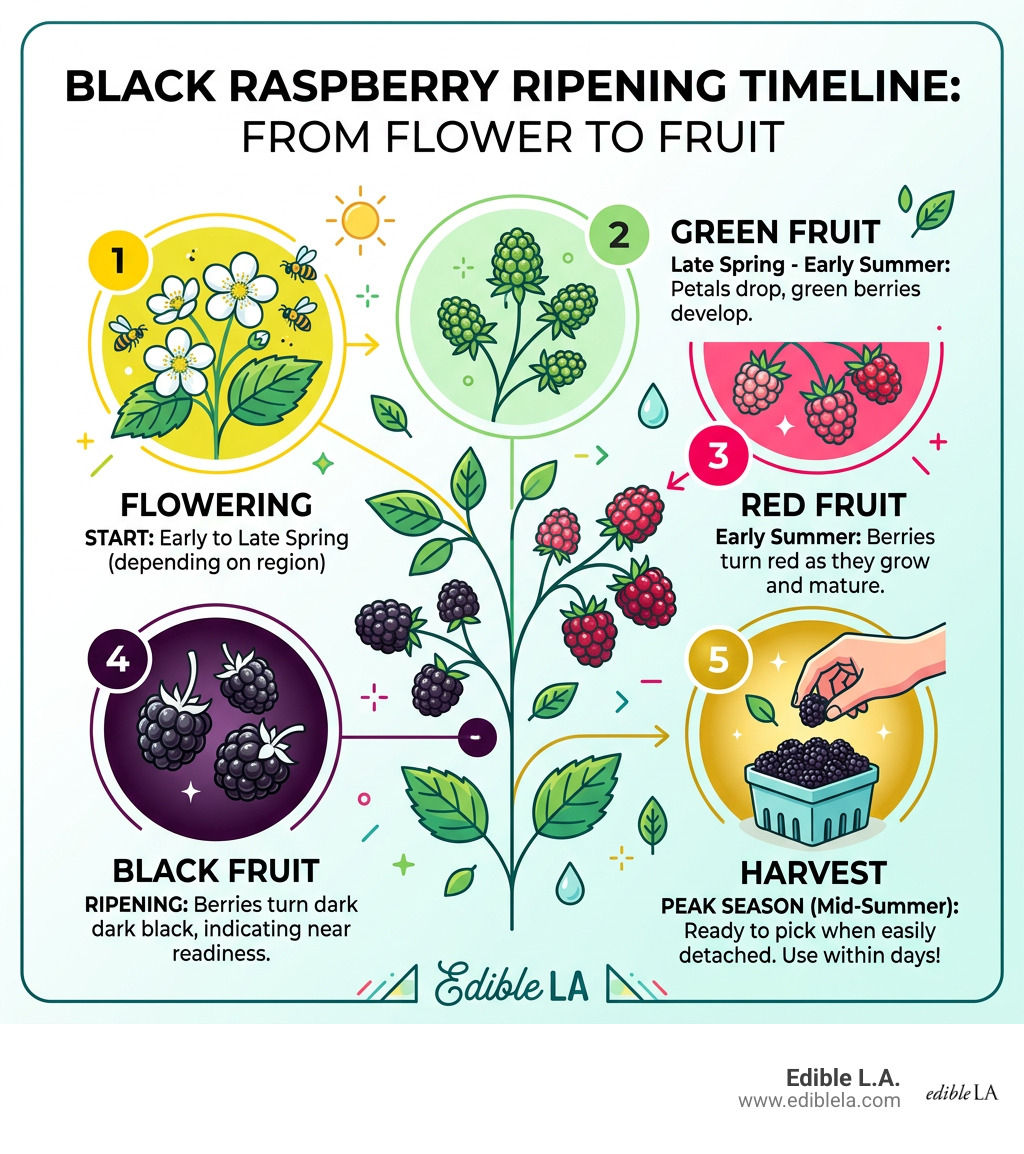
Black raspberries season terms at a glance:
- princess polly
- bop meaning
- brittany mahomes sports illustrated
Understanding the Black Raspberries Season
To truly master the art of the harvest, we have to look at the black raspberries season through the lens of timing. Unlike their red cousins, which often have "everbearing" varieties that produce fruit well into the fall, black raspberries are predominantly summer-bearers. This means they put all their energy into one spectacular, concentrated sprint.
The typical window for these berries opens in very late June and slams shut by the third week of July. In many regions, the peak is a mere seven to ten days of abundance. If a heatwave hits or a heavy rainstorm rolls through during this time, the window can shrink even further. Because the fruit is so delicate, weather sensitivity is a major factor in determining exactly when the local supply will hit our favorite stands in Santa Monica or Hollywood.
For those of us planning our summer preserves, keeping a close eye on a Raspberry Ripening Chart is essential. While red raspberries might linger, the black caps are the "opening act" that refuses to do an encore.
Peak Black Raspberries Season in California
In our neck of the woods, the black raspberries season looks a little different than it does in the rainy Northeast or the humid Midwest. California is a major producer of black raspberries, with much of the cultivation happening in the fertile Central Valley. Because of our warmer spring temperatures, we often see the first trickles of fruit appearing as early as late May.
However, for those of us in Los Angeles, the real excitement happens in June. This is when growers from the Central Valley and areas like Brentwood bring their hauls to the Sunday markets. If you are willing to make the drive north to Brentwood, you can find U-pick farms that offer a hands-on experience, though you should always call ahead to ensure the "black caps" are currently in their peak window. For more tips on navigating our local bounty, check out our More info on local seasonal produce.
Why the Harvest Window is So Short
You might wonder why we can't have black raspberries all summer long. The answer lies in the biology of the plant. Most black raspberry cultivars are "floricane-fruiting." This means they only produce fruit on the wood that grew during the previous year. Once those canes have finished their three-week production cycle, they die back, and the plant spends the rest of the summer growing "primocanes" (new green canes) for next year.
Furthermore, the fruit development process is a high-speed race. According to Scientific research on fruit development, raspberries gain about 85% of their final size in the very last days of maturation. This rapid swelling makes them incredibly prone to splitting or bruising if they aren't picked the moment they reach deep purple-black. Their high respiration rate means they begin to break down almost immediately after being detached from the plant, contributing to their legendary "here today, gone tomorrow" reputation.
Black Raspberries vs. Blackberries: How to Tell the Difference
It happens every year: a shopper at the Hollywood Farmers Market points to a basket of black raspberries and asks, "How much are these blackberries?" It’s an easy mistake to make, but once you know what to look for, the differences are striking.
The most definitive test is the "hollow core" test. When you pick a raspberry (red or black), the fruit slips off a white, cone-shaped core called the receptacle. This leaves the berry with a hollow center. Blackberries, on the other hand, take that core with them. If the berry has a solid white or green center, it’s a blackberry.
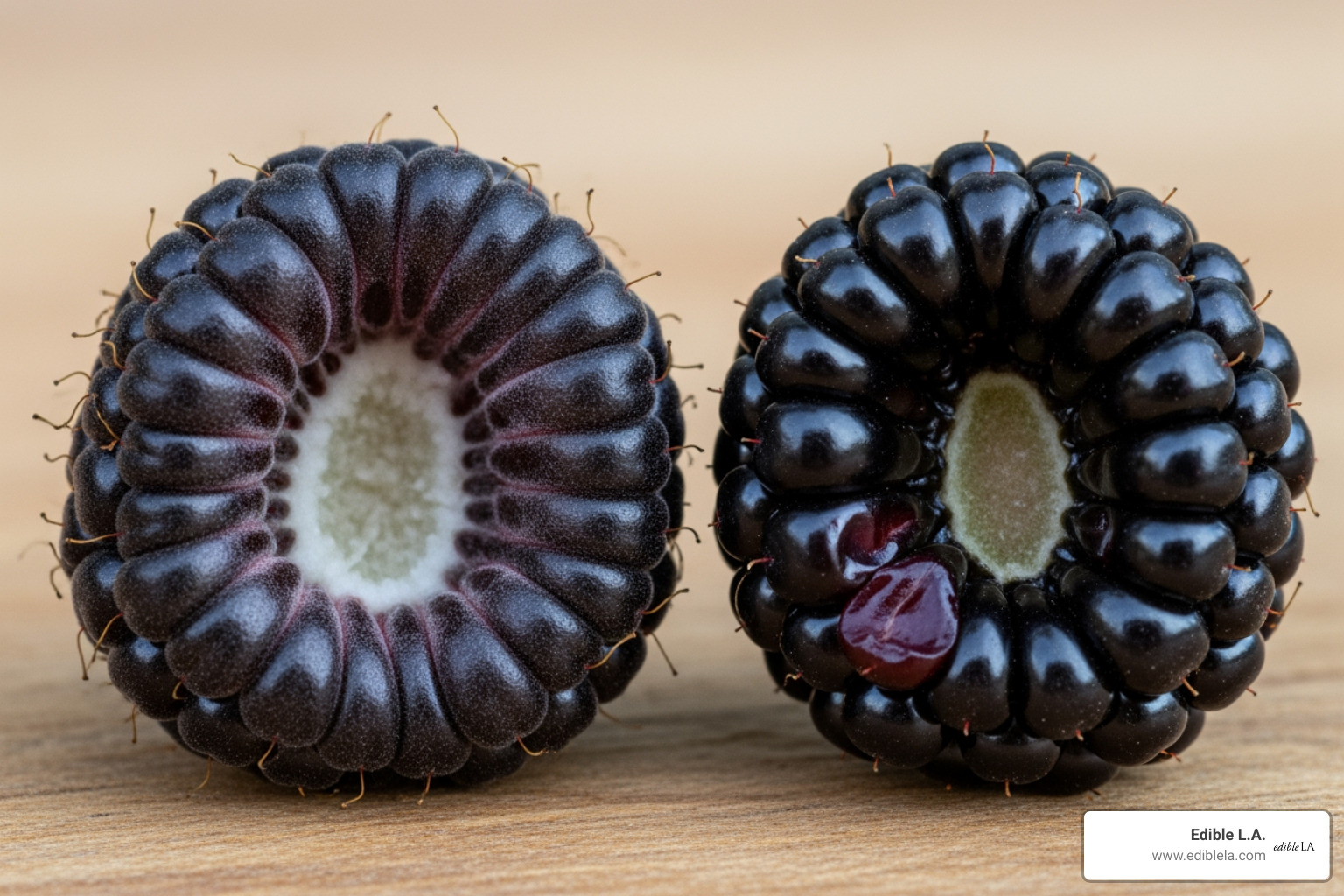
Beyond the core, the flavor and texture profiles are worlds apart. Black raspberries are significantly sweeter and have a more complex, earthy "blue" flavor compared to the tart, wine-like profile of a blackberry. They are also much smaller and covered in tiny, velvety hairs. While blackberries are often glossy and smooth, black raspberries have a matte finish.
From a nutritional standpoint, black raspberries are powerhouses. They contain significantly higher levels of anthocyanins—the antioxidants that give them their dark pigment—than even blueberries or red raspberries. This high concentration of antioxidants is part of what makes them so attractive for gourmet applications and health-conscious cooking.
Identifying the "Black Cap" in the Wild
For those who enjoy foraging in the hills or along the edges of local canyons, identifying the plant is half the battle. Black raspberry canes (Rubus occidentalis) have a very distinct look. Unlike the upright, brownish canes of blackberries, black raspberry canes are long, arching, and often a striking shade of purple or burgundy.
The most recognizable feature is the "bloom"—a dusty, bluish-white waxy coating on the stems that can be rubbed off with your thumb. This is technically called a "glaucous" stem. The leaves are typically trifoliate (in groups of three) with a silvery-white underside that flashes in the wind. If you're looking to bring this wild magic to your own backyard, we recommend checking out this Guide to growing raspberries in home gardens.
Popular Cultivars and Ripening Times
If you’re looking to extend your personal black raspberries season, planting a variety of cultivars is the way to go. Here are the heavy hitters you’ll likely encounter:
- Jewel: The gold standard of black raspberries. It produces large, glossy, firm berries and typically ripens in late June. It’s known for being more disease-resistant than older heirloom varieties.
- Bristol: Ripening just a few days after Jewel, Bristol is famous for its high yields and classic, intense raspberry flavor.
- Niwot: This is a game-changer. Niwot is a "primocane-bearing" variety, meaning it can produce a second crop in the fall on the current year’s growth. While the fall crop is usually smaller, it’s a treat for those who miss the summer window.
- Cumberland: An old-fashioned heirloom variety that ripens in mid-July. It’s prized by jam-makers for its high pectin content and deep color.
For more on how these late-summer treats fit into the broader California harvest, see september's-sweetest-harvest-a-guide-to-in-season-fruits.
Harvesting and Preserving Your Summer Catch
If you’re lucky enough to find a patch—whether at a U-pick farm or in your own garden—harvesting requires a gentle touch. These berries are fragile. The best time to pick is in the early morning, just after the dew has dried but before the midday sun has softened the fruit.
Use the "pinch and roll" technique: gently grasp the berry between your thumb and index finger and give it a slight tug. If it’s truly ripe, it will slide off the receptacle with zero resistance. If you have to pull, it’s not ready. Keep your harvest in shallow containers to prevent the weight of the top berries from crushing those on the bottom. For a deeper dive into the mechanics of the harvest, visit Tips on how to harvest raspberries.
Maximizing the Short Black Raspberries Season
Once you get your berries home, the clock is ticking. Do not wash them until the very moment you are ready to eat them. Moisture is the enemy of the raspberry, leading to mold (specifically botrytis) within hours.
Store them in a single layer on a paper-towel-lined plate or in a breathable container in the coldest part of your refrigerator. Ideally, you want to consume them within 24 to 48 hours of picking. If you find yourself with a larger haul than you can eat fresh, immediate preservation is key. You can find more detailed storage hacks at How to store fresh raspberries for longevity.
Freezing and Long-Term Preservation
To enjoy the taste of black raspberries season in the middle of a Los Angeles winter, freezing is your best bet. We recommend the IQF (Individually Quick Frozen) method. Spread the unwashed berries in a single layer on a baking sheet lined with parchment paper. Place them in the freezer for about two hours until they are rock hard, then transfer them to a freezer bag. This prevents them from clumping together into a giant berry-brick.
If you prefer preserves, black raspberry jam is legendary. Because the seeds are larger and crunchier than those in red raspberries, many chefs prefer to strain half the pulp through a fine-mesh sieve or a food mill. This creates a smoother, more luxurious spread. Surprisingly, the earthy notes of black raspberries pair beautifully with toasted nuts; for a seasonal pairing idea, check out our guide on walnuts-in-season.
Culinary Uses and Commercial Rarity
You might wonder why, if they are so delicious, you can’t buy black raspberries at every supermarket in Culver City or Silverlake. The answer is a combination of economics and biology.
First, they are incredibly labor-intensive. Because the berries are small and the canes are notoriously thorny, hand-harvesting takes significantly longer than it does for strawberries or even blackberries. This drives up the labor cost, making them a "luxury" fruit.
Second, black raspberries are highly susceptible to diseases like Verticillium wilt and various viruses. They don't ship well; a clamshell of black raspberries would likely be a container of purple juice by the time it traveled from a commercial farm to a distribution center.
This rarity is exactly what gives them their gourmet appeal. Chefs in Downtown L.A. and Venice clamor for them to create house-made Chambord-style liqueurs, vibrant purees for panna cotta, and concentrated syrups for artisanal cocktails. Their deep pigment is so stable that it was historically used as a dye for the USDA's meat inspection stamps!
For those interested in the technical side of why some berries make it to the grocery store and others don't, this Research on commercial blackberry and raspberry production offers a fascinating look at the industry.
Frequently Asked Questions about Black Raspberries
Do black raspberries ripen after they are picked?
No. Black raspberries are non-climacteric fruits. This means that once they are detached from the plant, their sugar development stops completely. While they might get softer or darker as they sit on your counter, they will not get sweeter. This is why it is vital to only pick berries that are fully black and detach easily. A red-colored black raspberry is simply an unripe berry, and it will remain tart and hard.
Why are black raspberries harder to find than red raspberries?
Beyond the shipping and disease issues mentioned earlier, black raspberries have a smaller native growing range and a much shorter shelf life. While red raspberries have been bred for decades to withstand the rigors of the global supply chain, black raspberries remain closer to their wild ancestors. They are a "specialty crop" that thrives in small-scale, diversified farming systems rather than industrial monocultures.
How many harvests can you expect per season?
For 90% of the varieties grown today, you can expect exactly one harvest per season, lasting about three weeks. If you are growing or buying from a farm that has Niwot or "Sweet Repeat" varieties, you might see a small second harvest in late August or September, but the "main event" is always the early summer window.
Conclusion
At Edible LA, our mission is to celebrate the stories behind our local food culture, from the soil of the Central Valley to the plates of Silverlake. The black raspberries season is a perfect example of why seasonal eating is so rewarding. It forces us to slow down, pay attention to the calendar, and appreciate a flavor that cannot be manufactured or mimicked by year-round industrial produce.
When you support the small-scale growers who bring these "black caps" to our markets, you aren't just buying fruit; you're preserving a piece of agricultural heritage that refuses to be tamed by the grocery store shelf. So, next time June rolls around, grab your basket, head to the market, and get them before they're gone.
Ready to explore more of what's hitting the stands this month? Explore the full seasonal produce guide.