Wild Tree Bee Company: the Terroir of Honey
You can draw a direct line from the mix of wildflowers cultivated by bees to a particular honey’s aroma and taste, creating honey that feels exquisitely location-specific.
We naturally think about wine and chocolate and coffee in terms of terroir -- where does it come from? What were growing conditions like? What makes it unique? Wine grapes are all about the soil, the sun, the moisture, the proximity to ocean, the climate, really everything nature serves up, as are coffee and cacao beans.
You can also draw a direct line from the mix of wildflowers cultivated by bees to a particular honey's aroma and taste, creating honey that feels exquisitely location-specific, a very different way to taste and experience a landscape. In fact you could say bees capture terroir in what could be its truest expression. Foraging over two-to-five-miles, they blend nectars from different microclimates and trace geography, weather, soil, and bloom features into every honey cell. A valley next to a meadow next to a coastal cliff all create subtly different flavor portraits.
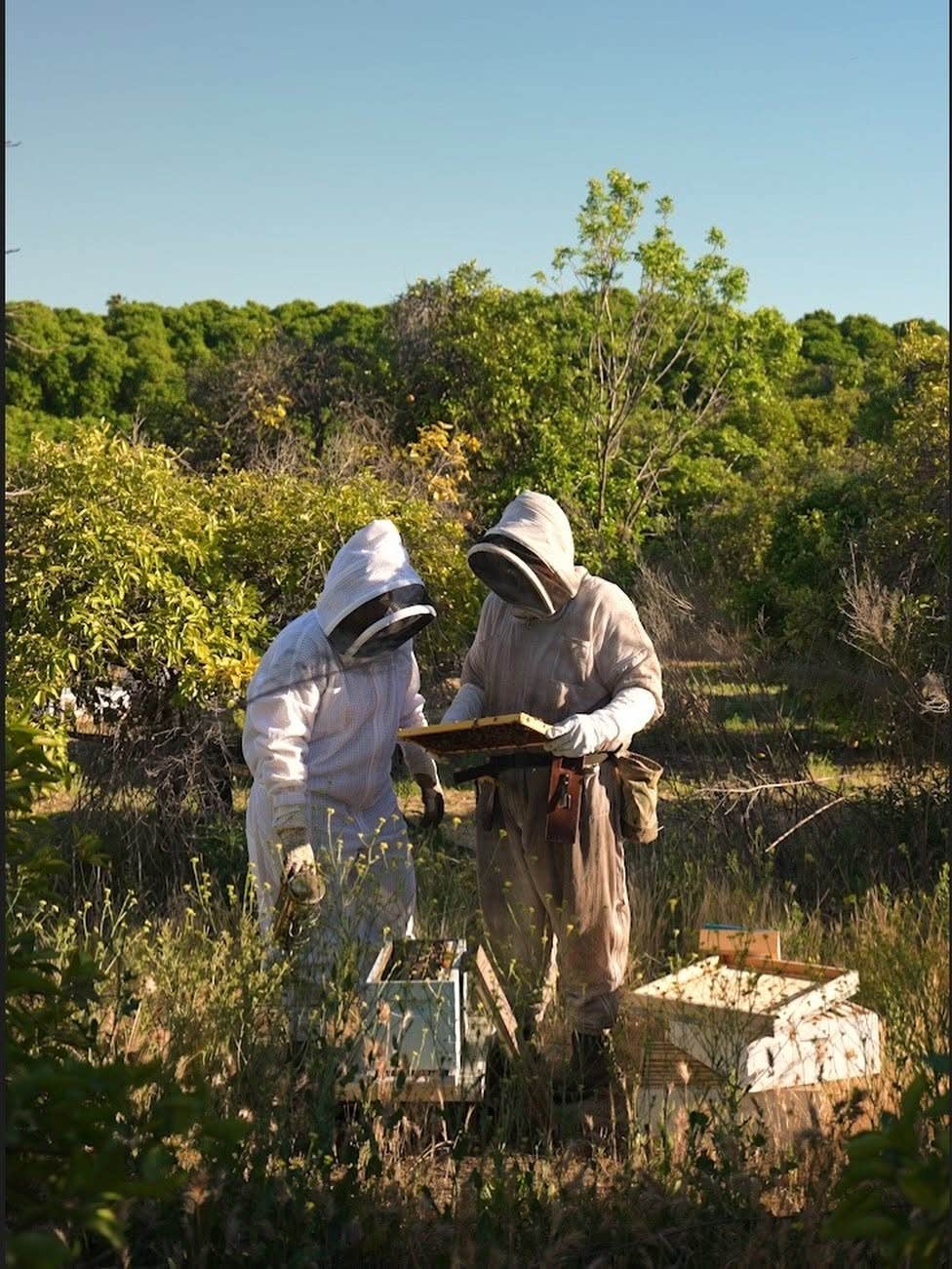
Wild Tree Bee Company is all about that, according to founder Andy Kennedy. Ebullient and honey-passionate, he tells me how his whole family now has the honey bug and is determined to introduce us to the many varied terroirs in California. He also shipped me a whole of honey, so I got to experience its full range myself.

Picture me at the kitchen table surrounded by bottles of liquid gold. Orange Blossom was up first -- clear and golden and floral. With the first taste, I was rocketed back to a sense of memory of stepping out of a sweat lodge in the San Fernando Valley and into an orange grove. Wildflower was thicker, with a flavor journey that started floral and deepened into something complex. I could swear I could experience the slight saltiness of an ocean breeze in Coastal. Superbloom seemed like a concentrated swipe of sugar. Desert Bloom was dark and viscous. Avocado Bloom was also dark, almost cognac-y. And Sunflower had the texture of applesauce with the single note wallop of a monofloral landscape.
"We don't make flavored honey, which you can see from Farmers Market beekeepers," Andy said. "We’re really letting the landscape flavor the honey."
And celebrating it.

"We're also really fortunate that we live in Temecula, California," Andy goes on. "There's a big agricultural band, starting at the Mexico border, all the way up to here in Riverside County. This year's Avocado Bloom tastes very different than last year's and that's what makes it interesting."
Your average supermarket honey will have 'wildflower' on the label and is blended between hive locations.
"It's for uniformity," Andy says. "Like so many things that end up on the shelf at the grocery store, consistency is king. We have Avocado Blossom Honey, Citrus Honey, and Desert Bloom, which is wildflower and comes from the Imperial Valley. It's basically a furnace down there, very hot, and that what makes it a rich and dark. So we look at honey through a different lens, and our main goal is to have people embrace its range and terroir."
Andy and his family got into honey tending a few hives in an organic citrus orchard in the foothills of Temecula. Season after season, the bees transformed citrus blossoms, wildflowers, buckwheat, coastal blooms, and native California plants, but what was surprising (and obsession-making) was that each location tasted remarkably different. It felt like the bees were interpreting the landscape, reflecting it back, and serving up a snapshot of a time and place.

As they've expanded their honey farm and apiaries, Wild Tree Bee has stayed a family enterprise. Even though their honey is now on the shelves at Erewhon, if you order from the website, Andy's 19-year-old daughter will be the one packing at the warehouse.
"I do a lot of the work and manage our relationships," Andy says. "We also really into cooking at home and grow a lot [at the house]. When people walk into our backyard, they can't believe what's growing on concrete in the suburbs."
He also gets scores of fan letters from people loving the uniqueness of his honey, and gives away his harvest residual wax cappings (the thin layer of beeswax used to seal the honey cells which often has significant leftover honey) to a group of dads making mead in his neighborhood. It all sounds like a honey renaissance.
Pick up Wild Tree Bee Company honey at Erewhon or order your own suite of honey flavors direct from their website here.