Beginner’s Guide to Rice Cakes
Discover rice cakes: types, nutrition, homemade recipes, toppings & storage tips for beginners. Gluten-free, versatile snacks!
What Are Rice Cakes? A Quick Answer for Every Craving
Rice cakes are one of the most versatile foods on the planet — and they mean very different things depending on where you're from.
Here's a quick overview to match what you're looking for:
| Type | Description | Best For |
|---|---|---|
| Puffed rice cakes | Light, crispy discs made from puffed rice (think Quaker) | Low-calorie snacking, toppings |
| Korean tteok | Chewy, dense cakes made from pounded or steamed rice flour | Tteokbokki, soups, celebrations |
| Japanese mochi | Soft, sticky cakes from glutinous rice | Desserts, tea ceremonies |
| Filipino kakanin | Steamed or baked cakes using fermented rice paste | Festivals, family gatherings |
| Homemade pan-fried cakes | Quick savory patties made from leftover cooked rice | Breakfast, easy weeknight meals |
Whether you're here for a quick snack idea, an authentic Korean garaetteok recipe, or a deeper look at global rice-based traditions — you're in the right place.
Rice has fed the world for thousands of years. But shaped, steamed, pounded, or puffed into cakes? That's where it gets really interesting.
From Seoul street food stalls to Filipino family dessert tables to the snack aisle at your local grocery store, rice cakes show up in wildly different forms across cultures. And here in Los Angeles — with its rich tapestry of Asian, Pacific Islander, and immigrant food communities — rice cakes are anything but ordinary.
This guide covers everything: types, nutrition, recipes, storage, and where to find the good stuff locally.
Key rice cakes vocabulary:
Understanding the Different Types of Rice Cakes
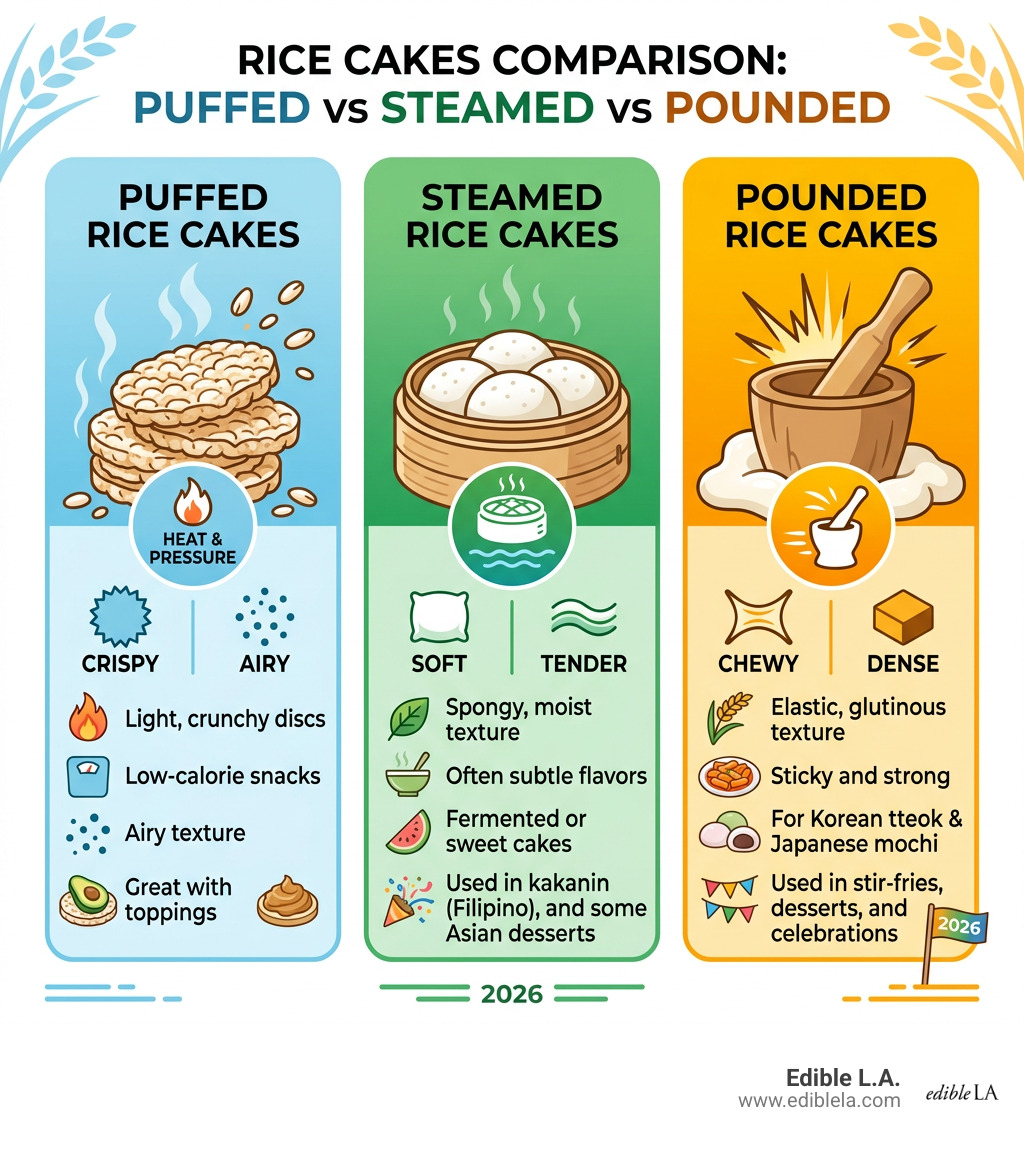
When we talk about rice cakes, we are actually discussing a massive family of global foods. In Western grocery stores, the term usually refers to the circular, crunchy "puffed" discs. However, in most of the world, a rice cake is a dense, chewy, or steamed creation made from rice flour or whole grains.
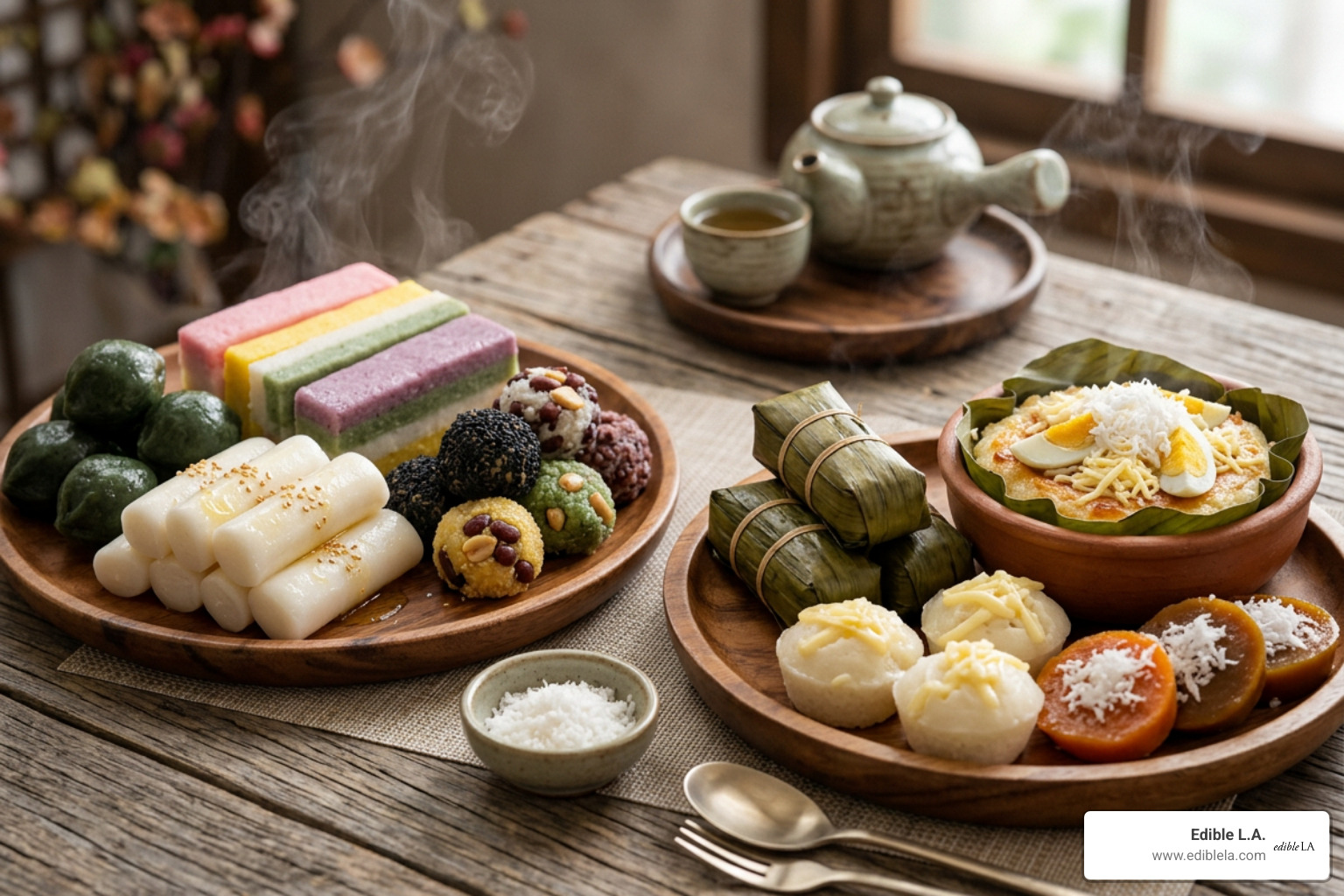
The primary difference lies in the preparation. Commercial puffed varieties are made using high-pressure steam that causes the rice grains to expand and fuse together. Traditional Asian varieties, on the other hand, are often steamed, boiled, or pounded into an elastic dough.
Traditional Cultural Varieties
- Korean Tteok: In Korea, rice cakes (tteok) are a cultural cornerstone. They range from the cylindrical garaetteok used in spicy tteokbokki to sweet, colorful varieties like mujigae-tteok (rainbow cake) served at birthdays.
- Japanese Mochi: Made from pounded glutinous rice, mochi is famous for its soft, stretchy texture. It is a staple of New Year celebrations and tea ceremonies.
- Filipino Kakanin: This category includes puto (steamed cakes) and bibingka (baked cakes). Many use galapong, a traditional fermented rice paste, to achieve a unique tang and texture.
- Chinese Mi Gao: These steamed cakes can be sweet or savory. Varieties like nian gao are essential for Lunar New Year, symbolizing progress and growth.
- Indian Idli: A fermented batter of rice and black lentils is steamed to create these soft, spongy cakes, which are a breakfast staple in South India.
- Vietnamese Bánh Chưng: A savory, square-shaped cake made from glutinous rice, mung beans, and pork, traditionally wrapped in banana leaves.
- Cambodian Num Akor: These are small, steamed rice cakes often enjoyed during festivals like the Khmer New Year.
Nutritional Profile and Health Benefits of Rice Cakes
Are rice cakes a "health food"? The answer depends on what’s in the cake and, more importantly, what you put on top of it.
Standard puffed rice cakes are famous for being low in calories — usually between 35 and 60 calories per cake. However, they are also low in fiber and protein, meaning they have a high glycemic index. This can cause a quick spike in blood sugar if eaten alone. To balance this, we recommend pairing them with healthy fats or proteins.
According to scientific research on rice cake nutrition, whole grain brown rice versions are superior. Brown rice retains the bran and germ layers, providing essential minerals like manganese, which supports bone health and immune function.
Dietary Suitability and Facts
- Gluten-Free: Most rice cakes are naturally gluten-free, making them an excellent bread substitute for those with celiac disease or gluten sensitivity.
- Vegan-Friendly: Plain rice cakes are 100% vegan. Be cautious with flavored varieties like "White Cheddar," which often contain dairy.
- Brown vs. White: Brown rice cakes offer more nutrients (protein, lipids, and minerals) than refined white rice versions.
- Stats: A typical 75-calorie brown rice cake provides roughly 9g of carbohydrates and 3g of protein, making it a more substantial snack than the airier 35-calorie versions.
For more details, check out what to know about rice cake health facts.
How to Make Authentic Rice Cakes at Home
Making your own rice cakes is a rewarding way to connect with local ingredients and reduce food waste. Whether you want to master the art of Korean dough or just use up last night's dinner, the process is surprisingly simple.
If you're starting from scratch, having the right flour is key. We've explored how a Japanese rice flour toolkit can transform your gluten-free baking.
Making Traditional Korean Rice Cakes (Garaetteok)
To make authentic garaetteok (the cylinder cakes used for tteokbokki), follow these steps:
- Soak: Use short or medium-grain rice. Soak it for at least 12 hours (overnight in the fridge is best).
- Grind: Drain and grind the rice into a fine powder. Sift it twice to ensure a smooth texture.
- Steam or Microwave: You can steam the flour mixed with a little water and salt for 20 minutes, or use a microwave in 2-minute bursts, stirring in boiling water incrementally.
- Pound: This is the secret step! Pound the hot dough with a pestle for about 5 minutes. This creates that iconic elastic, chewy texture.
- Shape: Roll the dough into long cylinders. If you plan to make soup (tteokguk), let the logs firm up in the fridge for an hour before slicing into ovals.
Quick 10-Minute Savory Recipes
If you have leftover cooked rice in the fridge, you can have a hot meal in minutes. These savory cakes are a favorite for a quick L.A. breakfast.
- The Mix: Combine 1/2 cup cooked rice, 1 egg, a splash of milk, and fresh herbs like basil or scallions.
- The Cook: Melt butter in a skillet over medium heat. Scoop the mixture in, flatten into patties, and fry for 3 minutes per side until golden brown.
- The Result: A 229-calorie breakfast cake that is crispy on the outside and tender on the inside.
For a sweeter take on rice flour, try making gluten-free apple fritters with rice flour.
Creative Ways to Use Rice Cakes in Your Kitchen
Rice cakes are the ultimate culinary canvas. Their mild flavor allows them to take on the personality of whatever sauce or topping you choose.
In our kitchens, we often look for Koshihikari rice inspiration to elevate simple grains into gourmet dishes. The same logic applies to rice cakes!
Creative Toppings for Puffed Rice Cakes
Move over, toast! Puffed rice cakes are a lighter way to enjoy your favorite spreads:
- The Californian: Smashed avocado, a squeeze of lemon, and chili flakes.
- The Protein Punch: Almond butter topped with sliced bananas or hemp seeds.
- The Lox: Cream cheese, smoked salmon, and fresh dill (pro tip: put a piece of lettuce down first to keep the cake from getting soggy!).
- The Mediterranean: A thick layer of hummus topped with sliced cucumbers and cherry tomatoes.
- The Pizza: A smear of tomato sauce, a sprinkle of mozzarella, and a quick melt under the broiler.
Cooking with Tteokbokki Sticks
If you’ve bought a pack of Korean rice cakes (the sticks or "sticks"), you’re ready for one of the world’s best comfort foods.
To make classic tteokbokki, simmer the sticks in a sauce of gochujang (Korean chili paste), gochugaru (chili flakes), sugar, and soy sauce. The cakes will soak up the spicy-sweet sauce while remaining perfectly chewy. For a modern twist, add a handful of shredded cheese on top or toss them into your favorite ramen bowl for extra texture.
Storage and Buying Guide for Freshness
Freshness is everything when it comes to rice cakes. In Los Angeles, we are lucky to have access to incredible specialty markets in neighborhoods like Koreatown, Little Tokyo, and the San Gabriel Valley.
Proper Storage and Shelf Life
- Puffed Rice Cakes: Keep these in a cool, dry place. Once opened, seal the bag tightly with a clip. If they go stale (soft), you can briefly toast them in a dry pan to bring back the crunch.
- Fresh Korean Tteok: These are best the day they are made. If you can't finish them, store them in an airtight container in the fridge for 2-3 days.
- Freezing: This is the best way to keep garaetteok long-term. Slice them first, then freeze in a single layer before transferring to a freezer bag. They will last for a month. To use, just soak the frozen cakes in cold water for 10 minutes before cooking.
- Mold Prevention: Packaged rice cakes from the store can sometimes develop mold quickly due to moisture in the bag. Always check the package before buying and store in the freezer if you don't plan to use them within 48 hours.
Frequently Asked Questions about Rice Cakes
Are rice cakes actually healthy for weight loss?
They can be! Because they are low in calories and fat, they are a popular snack for volume eaters. However, they don't keep you full for long on their own. The key to using rice cakes for weight loss is to top them with fiber and protein (like turkey, eggs, or beans) to keep your hunger at bay.
Can I make rice cakes if I don't have a steamer?
Yes. As mentioned in our garaetteok guide, the microwave method works well for home cooks. You can also make pan-fried versions using leftover cooked rice, which requires nothing more than a standard skillet.
Are all traditional rice cakes vegan and gluten-free?
Most are, but always check the ingredients. Some Filipino cakes use eggs as a binder, and some Chinese or Japanese varieties might be processed in facilities that handle wheat. Pure rice flour and water cakes are naturally both vegan and gluten-free.
Conclusion
At Edible L.A., we believe that every ingredient tells a story of the people and seasons that shaped it. Rice cakes are a perfect example of this — a humble grain transformed into a global icon of celebration, convenience, and comfort.
Whether you are exploring the aisles of a market in Santa Monica or Hollywood, or experimenting with homemade dough in your own kitchen in Silverlake or Echo Park, we hope this guide inspires you to see the "rice cake" in a whole new light. Support our local farmers and artisans by seeking out fresh, high-quality rice products right here in Los Angeles County.
Ready to get cooking? Discover more seasonal recipes and continue your journey through the vibrant flavors of our city.