How to Master Fusion Hamachi Crudo Recipes
Master hamachi crudo fusion recipes at home! Sourcing tips, step-by-step guides, sauces & pairings for pro results.
Why Hamachi Crudo Fusion Recipes Belong in Your Kitchen
Hamachi crudo fusion recipes combine the silky richness of raw Japanese yellowtail with bold, globally inspired flavors — and they're easier to make at home than you'd think.
Here's a quick overview of the most popular fusion styles to try:
| Fusion Style | Key Flavors | Signature Ingredients |
|---|---|---|
| Japanese-Italian | Bright, clean, herbaceous | Olive oil, lemon, capers, basil |
| Spicy Asian | Bold, umami-forward, fiery | Ponzu, chili crisp, sesame, serrano |
| Mediterranean | Savory, nutty, citrusy | Orange oil, pine nuts, olives, mint |
| Australian-inspired | Fresh, herbal, tangy | Finger lime, coriander oil, chili |
| Japanese-Southeast Asian | Complex, tangy, aromatic | Sweet chili, fish sauce, yuzu kosho, pickled veg |
Hamachi (Japanese yellowtail) is one of the best fish for eating raw. It has a buttery texture, a mild flavor, and holds up beautifully to acidic dressings without falling apart.
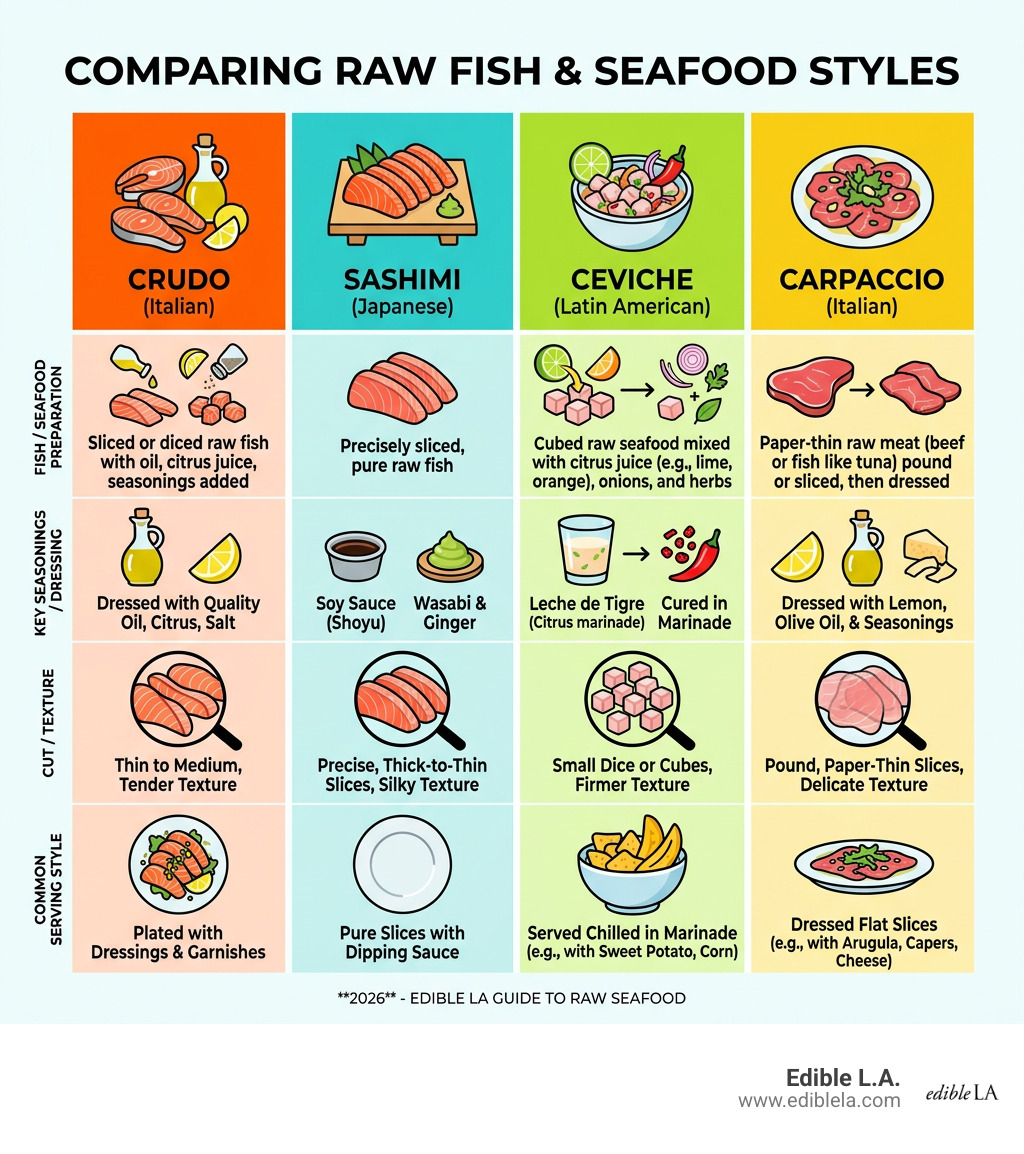
Crudo itself — meaning "raw" in Italian — is simply high-quality fish dressed with citrus, oil, and minimal seasonings. It's not sashimi (which focuses purely on the fish). It's not ceviche (which chemically "cooks" the fish in acid). It's its own thing: elegant, fast, and endlessly adaptable.
Americans ate over 20.5 pounds of seafood per person in 2021 — a 31% jump from 2002. Dishes like hamachi crudo are a big reason why. They're light, healthy, visually stunning, and take as little as 5 to 10 minutes to assemble.
Whether you're cooking for a dinner party or just want something special on a weeknight, this guide walks you through everything: sourcing safe fish, slicing it right, building great sauces, and plating like a pro.
Easy hamachi crudo fusion recipes word list:
Understanding Hamachi Crudo: The Ultimate Fusion Canvas
When we talk about hamachi crudo fusion recipes, we have to start with the star of the show: the fish itself. Hamachi, or Japanese yellowtail (also known as amberjack), is prized in the culinary world for its dense, buttery texture and rich, oil-forward flavor profile. Unlike leaner fish, hamachi has a high fat content that melts on the tongue, making it the perfect partner for acidic dressings and spicy garnishes.
In Los Angeles, we are fortunate to have access to some of the world's best seafood. From the fish markets in Downtown Los Angeles to specialized purveyors in Santa Monica, hamachi is a staple because it bridges the gap between traditional Japanese sushi culture and the modern, global palate of L.A.
Beyond its taste, hamachi is a nutritional powerhouse. According to USDA Economic Research Service data, seafood consumption is on the rise as more people recognize the heart and brain health benefits of Omega-3 fatty acids. However, a CDC’s 2023 data brief notes that only 1 in 4 U.S. adults eat seafood twice per week. Mastering a few simple crudo recipes is a fantastic way to bridge that gap.
Hamachi is particularly ideal for crudo because it is robust. While a delicate white fish might get lost under a truffled chili crisp or a heavy citrus oil, hamachi stands its ground. It’s a "rich-yet-light" decadence that feels indulgent but remains incredibly healthy.
Sourcing and Preparing Sashimi-Grade Yellowtail
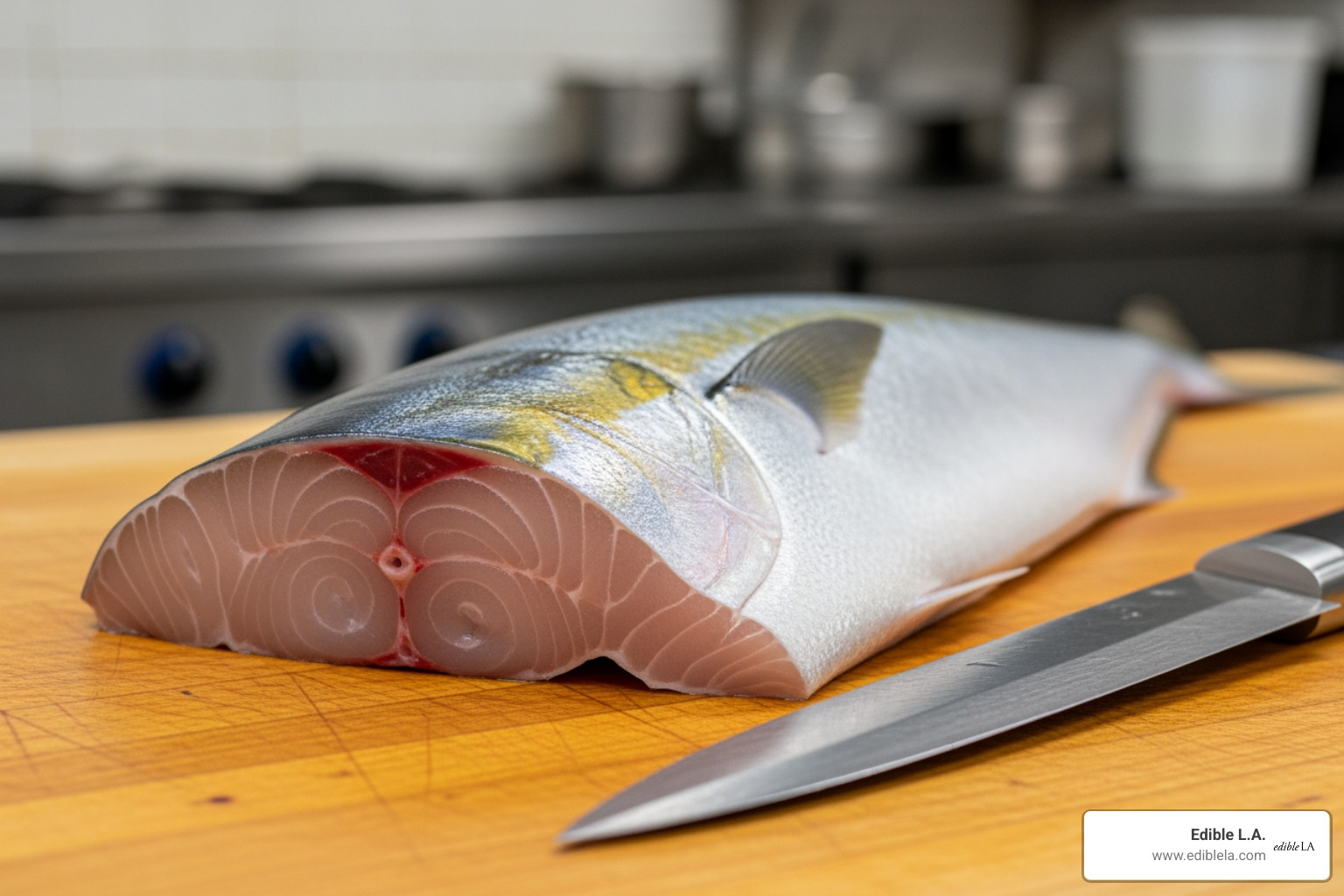
The most important step in any raw fish preparation is sourcing. You cannot simply walk into a standard grocery store and buy any piece of fish to eat raw. For hamachi crudo fusion recipes, you must look for "sashimi-grade" or "sushi-grade" labels.
Where to Source in L.A.
We recommend visiting reputable fishmongers in areas like Hollywood, Culver City, or Venice. If you prefer the convenience of delivery, you can source high-quality hamachi from Riviera Seafood Club, which provides the same caliber of fish used in top-tier restaurants.
Understanding Safety
The U.S. FDA recommends 8 oz of seafood per week, and for raw consumption, they emphasize the importance of "flash-frozen" fish. This process involves freezing the fish to extremely low temperatures (often -40°C) shortly after harvest to kill potential parasites, making it safe for your crudo platter.
Knife Techniques for the Perfect Slice
Once you have your sushi-grade hamachi, preparation is all about precision. Here are our top tips:
- Chill the Fish: Place the hamachi in the freezer for 10–15 minutes before slicing. This firms up the proteins, allowing for cleaner, thinner cuts without tearing the flesh.
- Use the Right Knife: A long, thin blade is best. While a traditional Japanese yanagiba is ideal, a sharp carving knife works well as a substitute.
- Slice Against the Grain: Identify the grain of the fish and cut across it at a 90-degree angle. This ensures each bite is tender rather than chewy.
- The Single Stroke: Avoid a sawing motion. Pull the knife toward you in one smooth, continuous stroke to maintain the integrity of the slice. Aim for pieces about 1/4 inch (6 mm) thick.
If you need a visual guide, this slicing technique video shows exactly how to handle a fillet against the grain.
Mastering Hamachi Crudo Fusion Recipes: A Step-by-Step Guide
Creating hamachi crudo fusion recipes at home is about layering flavors. You want a balance of fat (the fish and oil), acid (citrus or vinegar), salt, and texture (crunchy garnishes).
Classic Japanese-Italian Hamachi Crudo Fusion Recipes
This variation is a favorite in bistros from Brentwood to Silverlake. It leans into the "crudo" roots of Italy while respecting the Japanese origins of the fish.
- The Base: Arrange thin slices of hamachi on a chilled plate.
- The Dressing: Drizzle with high-quality extra virgin olive oil and a squeeze of fresh lemon juice.
- The Aromatics: Add finely grated lemon zest and a pinch of flaky sea salt (like Maldon).
- The Garnish: Top with a few capers, torn basil leaves, and perhaps some thinly sliced Fresno chilies for a hint of heat.
Spicy Asian-Inspired Hamachi Crudo Fusion Recipes
For those who love bold, umami-rich flavors, this Southeast Asian twist is a showstopper.
- The Base: Use a sushi-grade hamachi saku (block).
- The Sauce: Mix Ponzu with a touch of yuzu kosho for a salty, citrusy, and spicy kick.
- The Heat: Drizzle with truffled chili crisp and add paper-thin rounds of serrano pepper.
- The Crunch: Garnish with fried garlic chips or toasted sesame seeds. This provides a necessary textural contrast to the soft fish.
Essential Sauces, Garnishes, and Substitutions
The beauty of hamachi crudo fusion recipes lies in the pantry. You can swap ingredients based on what’s seasonal in L.A. or what you have on hand.
| Ingredient Type | Top Choice | Substitution |
|---|---|---|
| Acid | Yuzu juice | Lime juice or Rice vinegar |
| Salt/Umami | Ponzu sauce | Tamari or Soy sauce + Lemon |
| Fat/Oil | Extra Virgin Olive Oil | Toasted Sesame Oil or Orange Oil |
| Heat | Yuzu Kosho | Serrano peppers or Chili Crisp |
| Texture | Fried Garlic | Toasted Pine Nuts or Radish |
Signature Sauces
- Ponzu-Yuzu Vinaigrette: Combine 2 tablespoons of Ponzu, 1 tablespoon of yuzu juice, and a teaspoon of neutral oil. This is the "gold standard" for crudo.
- Orange Olive Oil: Blend the zest of two oranges with 1/2 cup of olive oil. Strain and drizzle over hamachi paired with mint and olives.
- Aojiso Dressing: Some chefs use a non-oil aojiso dressing for a herbal, shiso-forward finish.
Garnishing Like a Pro
To get that restaurant-quality look, use a mandoline slicer for your vegetables. Thinly sliced red onions, radishes, or cucumbers add height and color. If you want a burst of citrus without the liquid, look for finger limes (often called "citrus caviar") at local farmers' markets in Beverly Hills or Santa Monica.
Presentation, Pairings, and Nutritional Benefits
Presentation is half the experience with crudo. We recommend using a large, flat, chilled plate. Arrange the fish in a single layer, ensuring there is "negative space" so the dish doesn't look crowded. Use tweezers to place small garnishes like microgreens or flower petals.
Perfect Pairings
- Wine: A crisp, dry Riesling or a Sauvignon Blanc from the Central Coast pairs beautifully with the acidity of the crudo.
- Sake: Look for a Junmai Ginjo sake, which offers floral notes that complement the hamachi's richness.
- Non-Alcoholic: A sparkling cucumber-mint water or a light iced green tea provides a refreshing palate cleanser.
Nutritional Powerhouse
A standard serving of hamachi crudo is roughly 150–200 calories, making it an excellent high-protein, low-carb option. It is rich in Vitamin B12 and Omega-3s, which support cardiovascular health. When sourcing, look for environmental safety standards to ensure your fish is sustainably raised or caught.
Frequently Asked Questions about Hamachi Crudo Fusion Recipes
Can I make hamachi crudo ahead of time?
You can prepare the sauces and pickle the vegetables up to a day in advance. However, you should only slice and dress the fish right before serving. Acidic dressings will eventually "cook" the fish (like ceviche), changing its delicate raw texture.
What are the best substitutes for yuzu kosho or finger limes?
If you can't find yuzu kosho, mix lemon zest with a bit of minced green chili and salt. For finger limes, finely diced lime segments or a splash of lime juice will provide that necessary tang.
How should I handle leftovers and raw fish safety?
Raw fish should be consumed the day it is prepared. If you have leftovers, we recommend searing them quickly in a pan rather than eating them raw the next day. Always keep your hamachi at or below 40°F until the moment it hits the plate.
Conclusion
At Edible L.A., we believe that supporting local food culture starts in your own kitchen. By mastering hamachi crudo fusion recipes, you're not just making an appetizer; you're celebrating the incredible fusion of cultures that defines Los Angeles. From the Japanese techniques of the South Bay to the Mediterranean influences of Malibu, this dish is a true reflection of our city.
Remember to source your sashimi-grade hamachi responsibly, keep your knives sharp, and don't be afraid to experiment with seasonal garnishes from your local market. Whether it's a hamachi crudo with heirloom tomato or a spicy ginger-soy creation, the possibilities are endless. Happy slicing!