Sowing History with Black-Owned Heirloom and Herb Farms
Discover black owned heirloom farms reviving African Diaspora seeds, food sovereignty, and resilient crops. Support Black farmers today!
The Seeds of a Movement: Why Black-Owned Heirloom Farms Matter Right Now
Black-owned heirloom farms are places where rare, open-pollinated crops meet deep cultural memory — and they're easier to support than you might think.
Here are some of the most notable Black-owned heirloom farms and seed sources you can explore or buy from today:
| Farm / Organization | Specialty | Where to Find Them |
|---|---|---|
| Ujamaa Seeds | Collards, culturally curated seed collections | ujamaacooperativefarmingalliance.com |
| TrueLove Seeds | African Diaspora heirloom varieties | trueloveseeds.com |
| Footprint Farms | Urban heirloom vegetables | footprintfarmsms.com |
| Mt. Pleasant Acres | Organic produce, food forest | mpleasantacres.com |
| Clemmons Family Farm | Heritage farming, cultural programs | clemmmonsfamilyfarm.org |
| Mother's Finest Family Urban Farms | Urban heirloom crops, beekeeping | mothersfinesturbanfarms.com |
These farms are doing something powerful. They're not just growing food — they're recovering history.
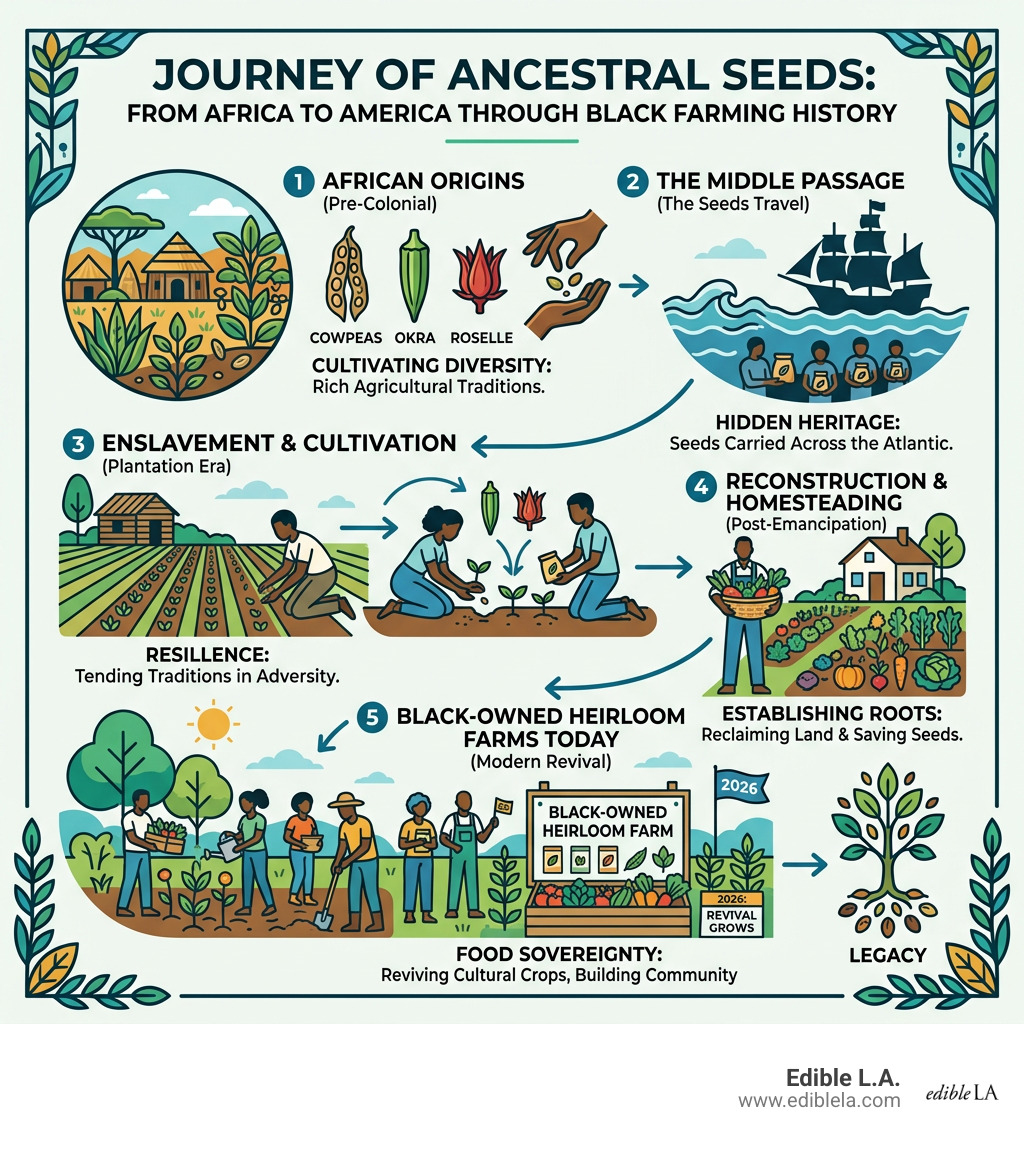
Heirloom seeds carry stories. Crops like okra, roselle, and cowpeas traveled from West Africa to the Americas through one of history's darkest passages. For generations, Black farmers kept those seeds alive. They saved them, planted them, and passed them down — even as they faced enormous obstacles.
The numbers tell part of the story. Black farmers have lost roughly 80% of their farmland between 1910 and 2007, largely due to documented discrimination by the USDA. Today, Black farmers make up less than 2% of all farmers in the United States. African American family farms account for just 1.3% of total U.S. family farms.
But something is growing again.
Across the country — and right here in the Los Angeles region — Black farmers, seed keepers, and food entrepreneurs are reclaiming land and reviving ancestral crops. They're building food sovereignty, one heirloom seed at a time.
The Legacy and Resilience of Black Agricultural Traditions
The history of Black farming in America is a narrative of profound resilience against systemic erasure. To understand the importance of black owned heirloom farms today, we must look at the "land loss" crisis. In 1910, Black farmers operated about 14% of all U.S. farms; by 2007, that number plummeted. A significant driver was the report on the devastating effect of USDA discrimination, which detailed how Black farmers were systematically denied the loans and support granted to their white counterparts.
Despite these hurdles, the Reconstruction era saw a surge of African Americans establishing their own homesteads. Today, while African American family farms represent only 1.3% of total family farms, they are often at the forefront of regenerative agriculture and land stewardship. Many of these farms utilize indigenous practices that prioritize soil health and biodiversity over industrial yields.
For many growers, farming is a form of community healing. By cultivating land that has been in their families for generations—some dating back to the late 1800s—they are reclaiming a narrative of agency. These farms serve as sanctuaries of peace and harmony, connecting modern communities to their ancestral roots through the very dirt under their fingernails.
Leading Black-Owned Heirloom Farms and Seed Companies
When we talk about heirloom seeds, we are talking about "open-pollinated" varieties. Unlike commercial hybrids, these seeds can be saved year after year, maintaining their unique traits. This biodiversity is crucial for climate resilience and flavor. If you are looking to bring these stories into your own garden, there are several Black-owned California farms and national organizations leading the way.
Ujamaa Seeds: A Hub for black owned heirloom farms
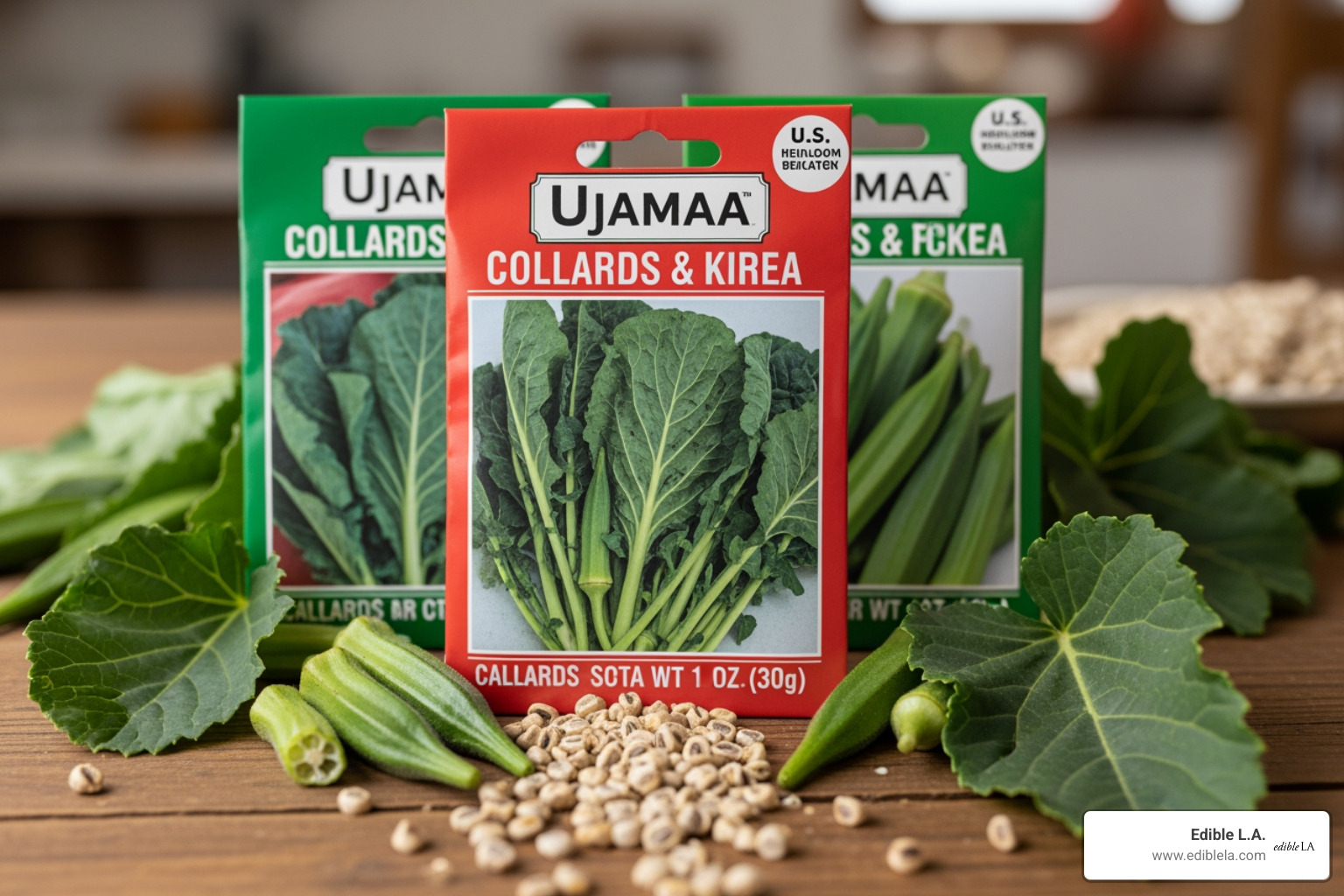
Formed as an entrepreneurial program of the Ujamaa Cooperative Farming Alliance (UCFA), Ujamaa Seeds is working to increase diversity in the $15 billion U.S. seed industry. They focus on "culturally meaningful" seeds, organizing their catalog by cultural cuisines—such as African, Southern Soul, and First Nations gardens.
One of their standout offerings is the "Big Daddy’s Greasy Green Collards" collection. This isn't just a packet of seeds; it’s a cultural bridge. The collection often includes a book and growing guide, teaching the next generation how to sow, harvest, and cook this staple of the African Diaspora.
TrueLove Seeds and the African Diaspora Collection
TrueLove Seeds is a farm-based company that operates with a profit-sharing model: 50% of seed sale profits go back to the individual farmer who grew them. Their "African Diaspora Collection" is a masterclass in botanical history.
You’ll find varieties like the Fish Pepper, a stunning variegated pepper historically used in the Black catering halls of the Mid-Atlantic, and Roselle, a hibiscus variety used for traditional teas and jams. By purchasing these seeds, gardeners directly support the preservation of crops that might otherwise vanish from the American landscape.
Regional Pioneers and black owned heirloom farms to Watch
While many historic farms are located in the South, the movement has strong roots in the West and Northeast. In Vermont, the Clemmons Family Farm stands as a rare historic Black-owned farm that blends agriculture with arts and cultural empowerment. In Maryland, Mt. Pleasant Acres manages 111 acres that include a "food forest" designed to support local wildlife and pollinators.
Closer to the urban heart, farms like Mother’s Finest Family Urban Farms in North Carolina and Footprint Farms in Mississippi demonstrate how black owned heirloom farms can transform food deserts into food oases. These urban pioneers often incorporate innovative practices like beekeeping and vermiculture, proving that you don't need hundreds of acres to make a massive community impact.
Cultivating Food Sovereignty Through Rare Crop Varieties
The crops grown on these farms are selected for more than just their yield; they are chosen for their nutritional density and cultural resonance.
- Collard Greens: Varieties like 'Memphis Blue' offer flavors and textures far superior to grocery store staples.
- Okra: A crop with deep West African roots (the word "gumbo" is derived from the Bantu word for okra). Heirloom varieties can vary from deep red to pale green.
- Roselle: Known for its vibrant red calyxes, it is a nutritional powerhouse used in beverages across the Diaspora.
- Pigeon Peas: Specifically bred "Northern Adapted" varieties allow growers in cooler climates to enjoy this protein-rich staple.
These crops are naturally non-GMO and often more climate-resilient because they have adapted over centuries to specific local conditions. Beyond food, many Black heirloom farmers grow medicinal herbs and even loofah plants, promoting a "Back to Eden" style of gardening that respects the natural ecosystem.
How to Support the Resurgence of Black Farmers
Supporting black owned heirloom farms is about more than just a single purchase; it’s about participating in a sustainable food system.
- Shop Local Markets: In Los Angeles, look for vendors at the Hollywood Farmers’ Market who source directly from Black growers. The Freedom Farmers’ Market is another excellent hub for "legacy foods."
- Join a CSA: Community Supported Agriculture (CSA) programs provide you with a seasonal box of produce while giving the farmer guaranteed income at the start of the season.
- Direct-to-Consumer Seeds: Purchase your spring and fall seeds from companies like Sistah Seeds, Seed Mail Seed Co, or Ujamaa Seeds.
- Volunteer and Donate: Many of these farms are nonprofits or cooperatives. Your time or financial support helps them acquire land and provide agricultural consulting to new farmers.
- Youth Involvement: Support programs that bring children onto the farm. By teaching youth about seed saving, these farms are ensuring the legacy continues.
Frequently Asked Questions about black owned heirloom farms
What are the most common crops found on black owned heirloom farms?
You will frequently find "staple" crops of the African Diaspora, including various types of collard greens, okra, cowpeas (black-eyed peas), roselle, amaranth, and sweet potato greens. These farms also specialize in rare peppers, like the Fish Pepper, and heritage grains.
How did historical land loss impact modern Black heirloom farming?
Because Black farmers lost 80% of their land due to USDA discrimination and legal loopholes like "heirs' property," the modern movement is often focused on land reclamation. Today's heirloom farmers are not just growing crops; they are fighting to secure land tenure to ensure these seeds have a permanent home.
Where can I buy culturally significant heirloom seeds?
Top sources include Ujamaa Seeds, TrueLove Seeds, Sistah Seeds, and Seed Mail Seed Co. Many of these companies offer online shipping, making it easy to start your own heirloom garden anywhere in Los Angeles or beyond.
Conclusion
At Edible L.A., we believe that every season brings a new opportunity to tell the story of our local food culture. Supporting black owned heirloom farms is a vital part of that story. Whether you are planting a single pot of heirloom okra on a Venice balcony or sourcing your Thanksgiving greens from a local Black-owned farm, you are helping to preserve a global ingredient heritage.
The future of farming is diverse, resilient, and deeply rooted in history. By choosing heirloom, you aren't just buying a vegetable—you're sowing the seeds of sovereignty. Explore more local agriculture and gardens to find your next favorite grower.