Sustainable and Sophisticated: The Best Yellowtail Crudo in Los Angeles
Discover the best hamachi crudo near me in LA: top spots, recipes, pairings & sustainable sourcing in Santa Monica, Beverly Hills.
Los Angeles Has Some of the Best Hamachi Crudo Near Me — Here's Where to Start
If you're looking for hamachi crudo near me, Los Angeles delivers. Here are some of the top neighborhoods and restaurant types to search in right now:
Quick answer — best places to find yellowtail crudo in LA:
- Santa Monica — coastal raw bars with seasonal, locally sourced ingredients
- Beverly Hills — modern Asian fusion spots with premium hamachi and A5 Wagyu pairings
- West Hollywood — upscale sushi-forward restaurants with ponzu and jalapeño variations
- Culver City — creative neighborhood spots blending Japanese and Peruvian flavors
- Silver Lake — independent restaurants with chef-driven crudo programs
Hamachi crudo has quietly become one of the most exciting dishes on the LA dining scene. It's technically simple — thinly sliced raw yellowtail, dressed with citrus and olive oil — but in the right hands it becomes something memorable.
The dish sits at a crossroads. It borrows from Italian and Spanish crudo traditions, nods to Japanese sashimi, and often pulls in Peruvian flavors like leche de tigre or serrano chiles. In Los Angeles, where those culinary threads are always tangling together, hamachi crudo feels completely at home.
Prices typically range from $21 to $23 at high-end spots, though you'll find it on tasting menus that push well beyond that. The quality gap between a great version and a forgettable one is enormous — and it comes down to fish sourcing, knife technique, and the balance of the dressing.
This guide breaks down the best places to find it, what to look for on the menu, and how to make a solid version at home if you can't get a reservation.
Hamachi crudo near me terms to remember:
What Defines the Perfect Hamachi Crudo Near Me?
When we search for the best hamachi crudo near me, we aren't just looking for raw fish. We are looking for a specific culinary harmony. The star of the show is Hamachi, or Japanese Yellowtail (Seriola quinqueradiata). This fish is prized for its high fat content and buttery, melt-in-your-mouth texture. Unlike the leaner wild "Buri" caught in winter, the Hamachi we often see in Los Angeles is farmed to ensure that consistent, creamy richness.
The word "crudo" simply means "raw" in Italian and Spanish. While the fish is Japanese, the preparation style is Mediterranean. A perfect crudo isn't just sliced; it is dressed. A high-quality extra virgin olive oil is essential here—it acts as a bridge between the fatty fish and the acidic citrus, creating a silky mouthfeel that coats the palate.
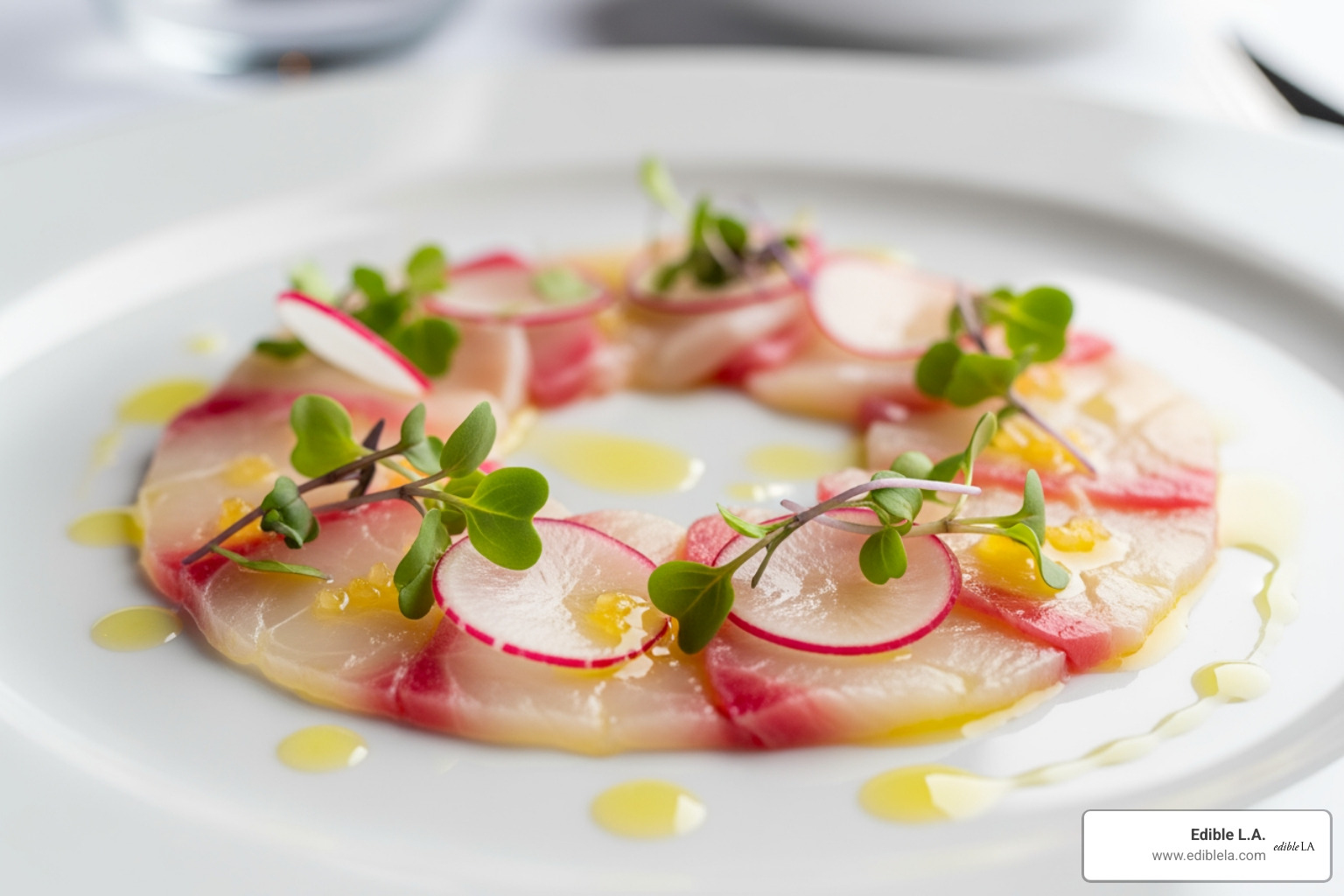
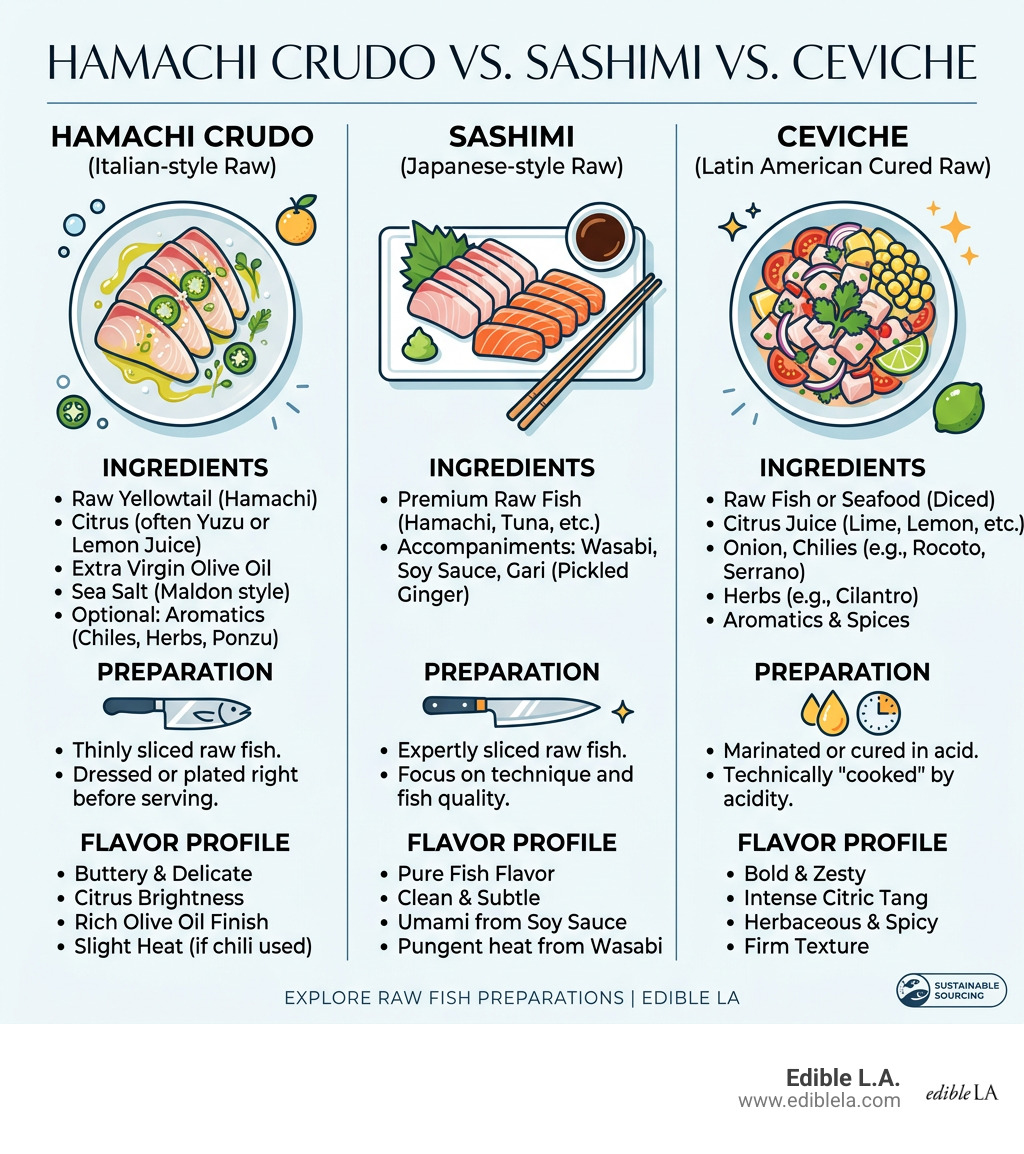
The Difference Between Crudo, Sashimi, and Ceviche
It is easy to get these raw preparations confused, but the distinctions are vital for any L.A. foodie.
- Sashimi: This is the purest Japanese form. It focuses entirely on the quality of the cut and the freshness of the fish. It is typically served with soy sauce and wasabi on the side, rather than being pre-dressed.
- Ceviche: In this Latin American staple, the fish is "cooked" by the citric acid in a marinade (like lime juice). The fish usually sits in the juice long enough for the proteins to denature, changing the texture from translucent to opaque.
- Crudo: This is the middle ground. The fish is dressed immediately before serving so the acid doesn't "cook" it. It relies on an emulsion of oil and citrus.
- Tiradito: A Peruvian variation that is perhaps the closest cousin to hamachi crudo. Like sashimi, the fish is sliced into thin rectangles rather than cubes, and like crudo, it is dressed with a spicy, citrusy sauce (leche de tigre) right before it hits the table.
To truly appreciate these nuances, it helps to understand the japanese premium ingredients that elevate these dishes from simple appetizers to edible art.
Key Flavor Profiles: Yuzu, Ponzu, and Serrano
The flavor profile of a classic L.A. hamachi crudo usually hits four major notes: fat, acid, salt, and heat.
- The Acid: Most chefs reach for Yuzu, a Japanese citrus that tastes like a hybrid of lemon, mandarin, and grapefruit. It provides a floral brightness that cuts through the hamachi's oiliness.
- The Umami: Ponzu—a citrus-based soy sauce—is the standard seasoning. It adds a savory depth that plain salt cannot achieve.
- The Heat: To wake up the palate, a thin slice of Serrano or Jalapeño is almost mandatory. Some modern L.A. versions use Fresno chiles for a milder, fruitier heat.
- The Aromatics: Finishing touches like oysters with yuzu mignonette rose wilde or aromatic oils (like hoja santa or chive oil) add a layer of complexity that lingers after the bite is gone.
Top Los Angeles Destinations for Yellowtail Crudo
Los Angeles is a sprawling mecca for seafood, but certain neighborhoods have become hubs for the "raw bar" culture. Whether you are strolling through the Culver City art district or looking for a power lunch in Beverly Hills, the city's menus reflect a commitment to both tradition and fusion.
| Neighborhood | Typical Price | Signature Ingredients | Vibe |
|---|---|---|---|
| Santa Monica | $21 - $26 | Heirloom tomato, opal basil, celery heart | Coastal & Fresh |
| Beverly Hills | $23 - $35 | Garlic, truffle, A5 Wagyu pairings | Sophisticated Fusion |
| West Hollywood | $21 - $24 | Avocado leche de tigre, serrano | Trendy & Bold |
| Silver Lake | $18 - $22 | Seasonal stone fruit, yuzu kosho | Chef-Driven |
Finding Premium Hamachi Crudo Near Me in Santa Monica
In Santa Monica, the crudo scene is heavily influenced by the proximity to the ocean and the famous Wednesday Farmers Market. Here, you will find versions that lean into seasonal produce. A standout preparation we've encountered involves hamachi crudo with heirloom tomato celery heart opal basil vernis olive oil.
The use of heirloom tomatoes adds a watery, sweet acidity that complements the buttery fish, while the opal basil provides a visual pop and a peppery finish. At coastal spots, expect to pay between $21 and $26 for a starter portion, often served alongside other "Live Specialties."
Sophisticated Flavors: Hamachi Crudo Near Me in Beverly Hills
Beverly Hills takes the crudo concept and wraps it in luxury. Here, the hamachi is often just one part of a larger, decadent experience. You might see it on a menu near a japanese wagyu beef tartare tostada, bridging the gap between land and sea.
The flavor profiles in 90210 tend to be bolder—think garlic-infused oils, crispy shallots, or even "garlic crustacean" styles that highlight the umami of the fish. These restaurants often position hamachi crudo as a "Cold Appetizer" or within a "Raw Bar & Crudos" section, typically priced around $23.
Standout Variations: From Uni to Avocado Leche de Tigre
If you want to move beyond the classic ponzu-and-jalapeño combo, L.A. chefs are getting incredibly creative:
- The Peruvian Twist: Some West Hollywood spots serve their hamachi with an avocado leche de tigre. This creates a double-creamy effect where the healthy fats of the avocado mirror the fats in the yellowtail.
- The Premium Upgrade: Look for "Specialty" versions that top the hamachi with Uni (sea urchin) or Ikura (salmon roe). These additions add a briny, oceanic "pop" to the dish.
- The Tasting Menu Essential: In Silver Lake and Downtown L.A., hamachi often appears in multi-course tasting menus. You might find it in a $72 Premium Tasting alongside A5 Wagyu or as a standalone "Live Specialty" for $21.
Sourcing and Safety: Making Crudo at Home
While dining out is a treat, making hamachi crudo near me at home is surprisingly easy—provided you have the right source.
First, let's debunk the "sushi-grade" myth. There is no official USDA or FDA regulation that defines "sushi-grade." It is a term used by fishmongers to indicate their highest-quality, freshest fish that has been handled with raw consumption in mind.
For the safest experience, look for blast-frozen yellowtail. "Flash freezing" or "blast freezing" at extremely low temperatures (below -60°C) kills parasites while preserving the cellular structure of the fish. Many high-end L.A. sushi chefs actually prefer high-quality frozen hamachi over "fresh" fish that has been sitting on ice for days. You can often find frozen Dutch Yellowtail loins at specialty markets like Whole Foods or Japanese grocers in Little Tokyo.
Expert Slicing Techniques for Yellowtail
To get that restaurant-quality look, follow these steps:
- The Chill: Place your hamachi loin in the freezer for 10–15 minutes before slicing. It won't freeze through, but it will firm up enough to make clean, even cuts.
- The Knife: Use your sharpest knife. A dull blade will tear the delicate flesh.
- The Grain: Always slice against the grain. This breaks up the muscle fibers, ensuring the fish melts in your mouth rather than feeling chewy.
- The Thickness: Aim for 1/4-inch thickness. If you slice it too thin (like carpaccio), the fish can get lost in the dressing. Too thick, and the texture becomes overwhelming.
Dietary Considerations and Substitutions
One of the reasons hamachi crudo is so popular in health-conscious L.A. is its nutritional profile. A standard serving is only about 58 calories, making it a high-protein, low-carb dream.
- Gluten-Free: If you are avoiding gluten, swap the soy sauce in your ponzu for Tamari or Coconut Aminos.
- Heat Sensitivity: If jalapeños are too much, use thinly sliced radish or cucumber for crunch without the burn.
- Substitutions: If you can't find Hamachi, look for Kampachi (Amberjack) or Hiramasa (Yellowtail Kingfish). Kampachi is often firmer and slightly sweeter, making it an excellent alternative for crudo.
Perfect Pairings: Wine, Sake, and Cocktails
The goal of a pairing is to complement the buttery fat of the fish without drowning out the delicate citrus.
- Wine: Reach for a crisp, high-acid white. A Sauvignon Blanc from the Central Coast or a dry Rosé works beautifully. The acidity in the wine mimics the citrus in the dish.
- Sake: A Junmai Ginjo is the gold standard. It has fruity and floral notes that mirror yuzu while providing a clean finish.
- Cocktails: Look for drinks with "green" or "bright" notes. A gin-based cocktail with cucumber or a tequila spritz with lime and soda won't overpower the fish.
Best Times to Visit: Happy Hour and Tasting Menus
If you want the hamachi experience without the Beverly Hills price tag, timing is everything.
Many L.A. restaurants offer Happy Hour (typically 4 PM – 6 PM) where you can find crudo-style appetizers or specialty rolls at a discount. Some spots even offer $12 cocktails and $2 oysters to round out the meal. For a more formal experience, look for "Theater Menus" or "Pre-fixe" options. We've seen three-course theater menus starting at $69 per person, which often feature a crudo or tartare as the first course.
Frequently Asked Questions about Hamachi Crudo
What is the difference between hamachi and yellowtail?
In the culinary world, "Hamachi" specifically refers to young, farmed Japanese Amberjack. "Yellowtail" is a broader term that can include wild-caught Pacific Yellowtail. Hamachi is generally fattier and softer, which is why it is the preferred choice for crudo.
Is hamachi crudo healthy and safe to eat?
Yes! It is packed with Omega-3 fatty acids and is a lean source of protein. As long as you source your fish from a reputable fishmonger who handles "sushi-grade" products, it is safe for most healthy adults. However, those who are immunocompromised or pregnant should consult a doctor before consuming raw seafood.
How much does hamachi crudo typically cost in Los Angeles?
Expect to pay between $21 and $23 for a standard appetizer portion. Premium versions with toppings like caviar or uni can climb to $35 or more.
Conclusion
At Edible L.A., we believe that every dish tells a story of our local culture and the seasons that shape it. Hamachi crudo is a perfect example of how Los Angeles takes global influences—Japanese fish, Italian technique, and Latin American heat—and turns them into something uniquely our own.
Whether you're looking for a sustainable dinner in Santa Monica or a sophisticated bite in West Hollywood, the hunt for the best hamachi crudo near me is a journey through the best flavors our city has to offer.
Discover more about the best hamachi crudo with heirloom tomato celery heart opal basil vernis olive oil and join us in celebrating the local chefs making L.A. the raw seafood capital of the West.