The Complete Guide to Branzino
Discover branzino: origins, nutrition, recipes, cooking tips & sustainability. Master grilling, roasting this Mediterranean sea bass at home!
What Is Branzino? A Quick Answer for the Curious Cook
Branzino is a mild, white-fleshed fish native to the Mediterranean Sea and Atlantic coast of Europe — and one of the most beloved fish in Italian and Greek cooking.
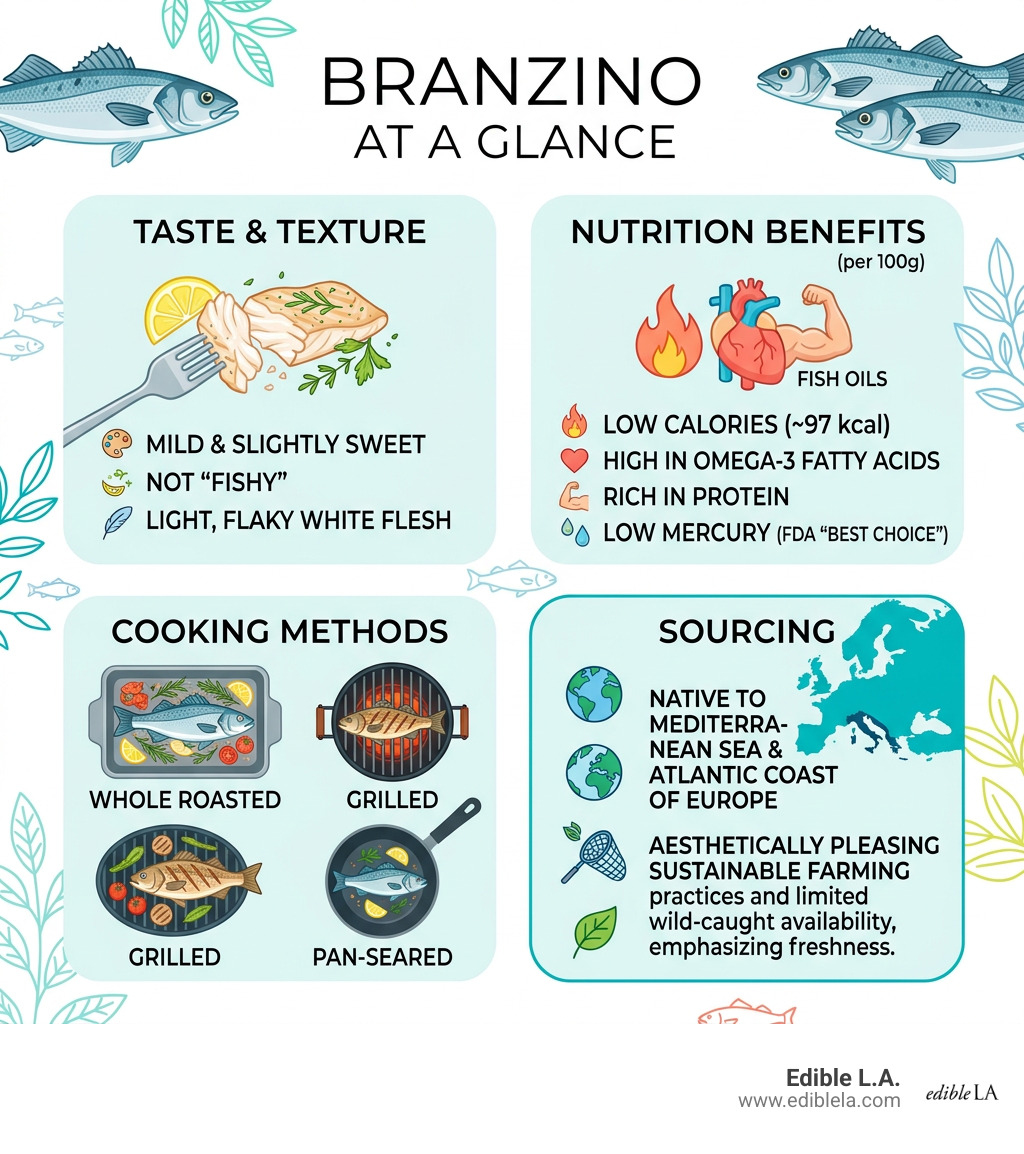
Here's what you need to know at a glance:
| Feature | Detail |
|---|---|
| Scientific name | Dicentrarchus labrax |
| Also known as | European sea bass, loup de mer, lavraki |
| Taste | Mild, slightly sweet, not "fishy" |
| Texture | Light, flaky white flesh |
| How it's cooked | Whole roasted, grilled, or pan-seared |
| Calories (per 100g) | ~97 kcal |
| Mercury level | Low — FDA "best choice" |
| Recommended servings | 2-3 times per week |
If you've spotted it on a restaurant menu and wondered what you'd be ordering — it's one of the most approachable fish you can eat. Less "oceany" than salmon, lighter than Chilean sea bass, and elegant enough for a dinner party.
Branzino has been a centerpiece of Mediterranean coastal cooking for centuries. Picture a whole fish, stuffed with lemon and herbs, roasted simply with olive oil — that's the classic. It's the kind of dish that feels both humble and impressive at the same time.
At Edible L.A., we love it because it fits perfectly into the way many Angelenos already eat: fresh, seasonal, and uncomplicated.
Glossary for branzino:
What is Branzino? Origins and Characteristics
If you have spent any time dining along the coast in Santa Monica or enjoying a long lunch in West Hollywood, you have likely seen branzino featured prominently on the menu. But what exactly is this fish? Known scientifically as Dicentrarchus labrax, it is a member of the Moronidae family. While we call it branzino (the Italian name), you might also find it labeled as European seabass, loup de mer in France, or lavraki in Greece.
This fish is a true Mediterranean staple, though its native range extends from the southern and western coasts of Europe down to North Africa. In the wild, branzino is a hardy, night-hunting predator. It is a "euryhaline" species, which is a fancy way of saying it can tolerate a wide range of salinity. You can find them in the open ocean, but they are just as comfortable in brackish lagoons and even freshwater estuaries.
Visually, the branzino is a striking fish. It boasts shimmering silver skin, a sleek body, and can grow up to a meter in length, though most seen in Los Angeles markets weigh between one and three pounds. It is prized for its lean, white, flaky flesh and a flavor profile that is delicately sweet. Because it isn't an "oily" fish in the traditional sense, it lacks that heavy "fishy" aftertaste that can sometimes turn off casual seafood eaters.
Branzino vs. Other Sea Bass Varieties
One of the biggest points of confusion for home cooks is the difference between branzino and other fish labeled "sea bass." In the culinary world, "sea bass" is often used as a catch-all term, but the differences in the kitchen are significant.
| Feature | Branzino | Chilean Sea Bass | Striped Bass |
|---|---|---|---|
| Scientific Family | Moronidae (True Bass) | Not a bass (Nototheniidae) | Moronidae (True Bass) |
| Flavor Profile | Delicate, sweet, mild | Rich, buttery, savory | Briny, meaty, versatile |
| Texture | Fine, small flakes | Large, oily, firm flakes | Flaky but sturdy |
| Common Prep | Whole roasted/grilled | Thick fillets/steaks | Pan-seared/grilled |
The most famous "imposter" is Chilean sea bass, which isn't a bass at all—it’s actually the Patagonian toothfish. Chilean sea bass is much oilier and has a very rich, buttery texture. On the other hand, the Striped Bass (found commonly in the U.S.) is a closer relative to branzino but tends to have a slightly more robust flavor. Branzino sits in the "Goldilocks" zone: it's light enough to be refreshing but flavorful enough to stand up to bold Mediterranean ingredients like olives, capers, and citrus.
Nutritional Profile and Health Benefits of Branzino
We all know that eating more fish is good for us, but branzino is a nutritional powerhouse that fits perfectly into a heart-healthy lifestyle. It is a lean source of high-quality protein, but what really sets it apart is its Omega-3 fatty acid content.
According to seafood health facts, these fatty acids play a vital role in cardiovascular health, helping to decrease blood pressure and heart rate. Research has shown that these fats can even reduce the risk of arrhythmias.
Here are some impressive stats for a 100g serving of branzino:
- Calories: 97 kcal
- Protein: 18.4g (about 33% of your RDA)
- Fat: Only 2g
- Vitamin D: 226 IU (over 50% of your daily needs)
- Selenium: 36.5 µg (66% of your RDA)
Beyond the heart, these nutrients support brain function and immune health. Selenium, in particular, is a powerful antioxidant. Perhaps most importantly for our local community, branzino is listed as an FDA "best choice" for low mercury levels. With a mercury concentration of just 0.167 PPM, it is safe for most people—including pregnant women—to enjoy 2 to 3 servings per week.
How to Select and Store Fresh Branzino
When you’re shopping at a local fishmonger in Culver City or a market in Downtown L.A., knowing how to spot a fresh fish is an essential skill. Since branzino is often sold whole, you have all the "clues" right in front of you.
- The Eyes: Look for clear, bright, and bulging eyes. If the eyes are cloudy or sunken, the fish is past its prime.
- The Gills: They should be a vibrant, bright pink or red. Avoid fish with brownish or slimy gills.
- The Smell: Fresh branzino should smell like the ocean—clean and briny. It should never smell "fishy" or like ammonia.
- The Scales: They should be metallic, shiny, and firmly attached to the skin.
Once you get your fish home, handling is key. Store it in the coldest part of your refrigerator and try to cook it within 48 hours. If you need to freeze it, ensure it is scaled and gutted first, then wrap it tightly in plastic wrap and foil to prevent freezer burn.
Sustainability and Sourcing: Wild vs. Farmed
The story of branzino is deeply tied to aquaculture. While wild populations exist in the Mediterranean and Atlantic, they have faced pressure from overfishing. Today, the vast majority of the branzino we eat is farm-raised.
Turkey is currently the world’s largest producer of farmed European seabass, often using marine net pens along the coastline. However, sustainability varies depending on the method. The Monterey Bay Seafood Watch provides excellent guidance here: branzino raised in indoor Recirculating Aquaculture Systems (RAS) is often rated as a "Best Choice." These land-based systems have a much lower environmental impact than open-water pens.
When sourcing in Los Angeles, we recommend asking your fishmonger about the origin. Many high-end markets now prioritize sustainable farms that avoid the use of antibiotics and manage waste responsibly. Choosing the right source ensures that we can enjoy this Mediterranean classic for generations to come.
Popular Branzino Recipes and Substitutes
The beauty of branzino lies in its versatility. In Greek cuisine, it is often served as Lavraki, simply grilled and topped with a Ladolemono sauce (a bright whisk of lemon juice, high-quality olive oil, and dried oregano). For a more aromatic twist, some chefs in the San Gabriel Valley or Silverlake might steam the fish whole with a fermented black bean sauce, ginger, and scallions.
Simple Citrus Marinade Recipe:
- 1/4 cup extra-virgin olive oil
- Zest and juice of one lemon
- 1 tablespoon fresh oregano (or 1 tsp dried)
- 2 cloves minced garlic
- Salt and cracked black pepper
Whisk these together and rub them over the fish (and inside the cavity) before roasting.
What if you can't find branzino? If your local market is out of stock, don't panic. You can substitute other mild, white-fleshed fish. Red snapper is a fantastic alternative for whole roasting. Rainbow trout offers a similar size and delicate flake, while tilapia or flounder can work if you are using fillets, though they lack the same depth of flavor.
Culinary Techniques: How to Cook Branzino at Home
Cooking a whole fish can be intimidating, but branzino is actually the perfect "starter fish" for beginners. Because it is relatively small and has a sturdy bone structure, it stays moist even if you overcook it slightly.
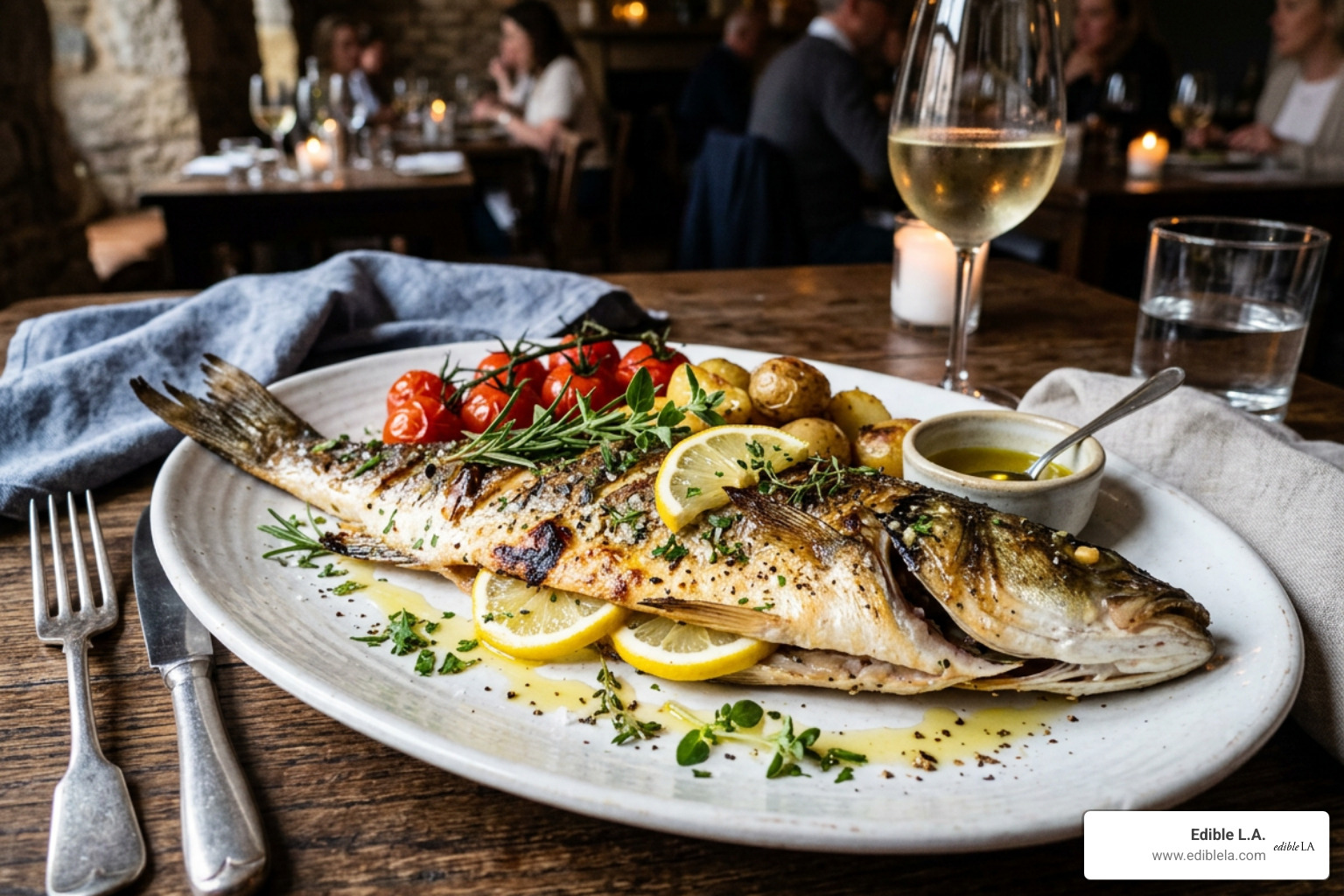
Whole Roasting (The Classic Method) Preheat your oven to 400°F. After patting the fish dry, make three shallow diagonal slits on each side. This helps the heat penetrate and allows your seasonings to soak in. Stuff the cavity with lemon slices, fresh herbs (thyme, rosemary, or parsley), and smashed garlic. Roast for about 18–22 minutes. For a professional finish, turn on the broiler for the last 3 minutes to get that skin extra crispy.
Grilling for Flavor Grilling is perhaps the best way to enjoy branzino in the California sun. High heat (around 400°F) is essential to prevent sticking. Brush the fish liberally with oil and grill for about 8–10 minutes per side. You’ll know it’s done when the flesh is opaque and flakes easily with a fork, or when it reaches an internal temperature of 145°F.
The Finishing Touch Once cooked, you’ll need to navigate the bones. If you're nervous about serving a whole fish, you can follow a carving tutorial to remove the fillets at the table. It’s an impressive skill that always wows dinner guests!
Frequently Asked Questions
Is it high in mercury?
No. Branzino is considered one of the safest seafood options. It is categorized as a "best choice" by the FDA due to its low methyl-mercury levels. It is recommended for 2–3 servings per week for most adults.
Can you eat the skin?
Absolutely! In fact, many foodies consider the skin the best part. When roasted or grilled at high heat, the skin becomes thin and crispy, similar to a potato chip. It also contains a concentrated amount of those healthy Omega-3 fats. Just make sure the fish has been properly descaled before cooking.
Why is it usually served whole?
Serving branzino whole isn't just about the "wow" factor at the table. Keeping the fish on the bone during cooking helps retain moisture and imparts more flavor to the meat. It is a traditional Mediterranean technique that protects the delicate flesh from drying out.
Conclusion
Whether you are picking up a fresh catch at a market in Malibu or ordering the signature roast in Downtown L.A., branzino is a fish that embodies the Mediterranean lifestyle: healthy, flavorful, and deeply connected to the seasons.
At Edible L.A., we believe that great food doesn't have to be complicated. By choosing sustainably sourced fish and using simple, high-quality ingredients, you can bring a taste of the Italian coast right into your own kitchen.
Ready to expand your seafood repertoire? If you enjoyed learning about this Mediterranean classic, you might also want to try our Hamachi crudo with heirloom tomato for a fresh, local take on raw preparations.