The Easiest Way to Clean a Microwave
Learn how to clean a microwave effortlessly with steam, vinegar, lemon & baking soda. Step-by-step guide + tips!
Why a Clean Microwave Matters More Than You Think
How to clean a microwave is simpler than most people expect — and it takes less than 10 minutes. Here's the quickest way to do it:
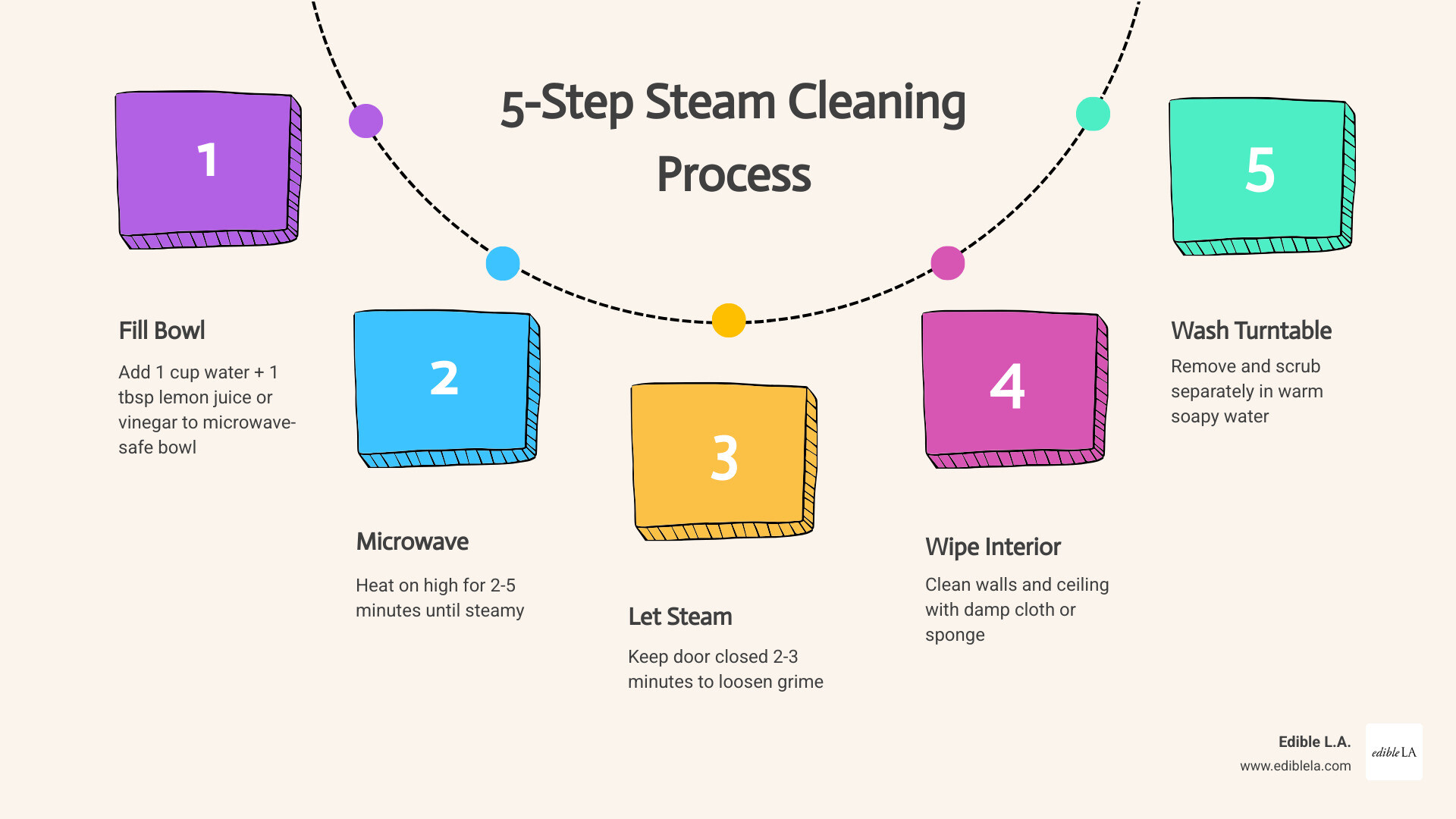
- Fill a microwave-safe bowl with 1 cup of water and 1 tablespoon of lemon juice or white vinegar
- Microwave on high for 2-5 minutes until the interior is steamy
- Leave the door closed for 2-3 minutes so the steam loosens stuck-on food
- Wipe down the interior with a damp cloth or sponge
- Remove and wash the turntable separately in warm soapy water
That's it. No harsh chemicals. No scrubbing.
If you've ever opened a microwave and been hit with the smell of last week's reheated fish — or spotted a splatter of dried tomato sauce on the ceiling — you're not alone. Microwaves are one of the hardest-working appliances in the kitchen, and one of the most overlooked when it comes to cleaning.
The good news? Keeping yours fresh doesn't require anything fancy. A bowl of water, a lemon, and about 10 minutes is genuinely all you need.
Experts suggest cleaning your microwave at least once a week, or wiping up spills immediately when they happen. The longer food sits and hardens, the harder it is to remove.
More from Edible L.A.:
Essential Supplies for Cleaning Your Microwave
Before we dive into the "how-to," let’s gather our tools. In our Los Angeles kitchens, we prefer natural, sustainable methods that don't involve harsh chemical fumes. Most of what you need is likely already in your pantry or sitting in a fruit bowl after a trip to the Hollywood Farmers Market.

To master how to clean a microwave, you will need:
- A microwave-safe bowl: Glass or ceramic works best to hold the heat.
- Water: The primary engine for creating steam.
- White Vinegar or Lemon Juice: These act as natural degreasers and deodorizers.
- Baking Soda: Perfect for scrubbing stubborn, burnt-on spots. To understand why it's so effective, check out this scientific research on baking soda properties.
- Microfiber Cloth or Soft Sponge: Essential for wiping away loosened grime without scratching the interior finish.
- Mild Dish Soap: For cleaning the removable turntable and the exterior handle.
- Toothbrush (Optional): Great for getting into the nooks and crannies of the door seal.
We recommend avoiding abrasive materials like steel wool or "magic" melamine sponges. While they might seem helpful for tough stains, they can actually damage the protective coating on the interior walls of your microwave.
How to Clean a Microwave Using the Steam Method
The steam method is the gold standard for microwave maintenance. Instead of scrubbing at hardened pasta sauce, we let the microwave do the work for us. By heating a liquid solution, we create a humid environment that rehydrates dried-on food, making it slide right off the walls.
When you start the process, pay special attention to the ceiling of the microwave. This is often the most neglected area, where splatters from soups and sauces accumulate and "bake" onto the surface every time you use the appliance.
Comparing Steam Cleaning Agents
| Ingredient | Best For | Pros | Cons |
|---|---|---|---|
| White Vinegar | Heavy grease and stuck-on food | Extremely effective; cheap | Strong "pickling" smell while heating |
| Lemon Juice | Deodorizing and light cleaning | Smells amazing; natural citric acid cuts grease | Slightly less powerful than vinegar |
| Baking Soda | Neutralizing acidic odors (like burnt popcorn) | Excellent deodorizer | Doesn't create as much "cutting" steam as liquids |
Step-by-Step: How to clean a microwave with vinegar
Vinegar is a powerhouse in the kitchen. The acetic acid in white vinegar breaks down the molecular bonds of grease, making it the perfect choice for a deep clean.
- Mix the Solution: Combine 1 cup of water with 1 to 2 tablespoons of white vinegar in a microwave-safe bowl.
- Heat: Place the bowl in the microwave and run it on high for 3 to 5 minutes. You want the water to reach a rolling boil so the window gets completely foggy.
- The "Wait" Rule: This is the most important step. Once the timer goes off, do not open the door. Let it sit for at least 5 minutes. This allows the steam to penetrate the toughest grime.
- Wipe Down: Carefully remove the bowl (it will be hot!) and the turntable. Use a damp microfiber cloth to wipe the ceiling, walls, and floor. The grease should come off effortlessly.
How to clean a microwave with lemon for fresh scents
If you aren't a fan of the smell of vinegar, seasonal citrus is your best friend. This method is popular in our Brentwood and Santa Monica communities where fresh lemons are a kitchen staple.
- Prep the Lemon: Cut a lemon in half and squeeze the juice into 1 cup of water. Drop the lemon halves into the bowl as well.
- Steam: Microwave on high for 3 to 5 minutes.
- Steam and Deodorize: Let the steam sit for 5 minutes. The citric acid will help loosen grease while the essential oils in the lemon peel provide a natural, fresh fragrance that eliminates lingering food smells.
- Final Wipe: Wipe the interior clean. If you find a particularly stubborn spot, dip your cloth directly into the warm lemon water and give it a gentle rub.
Deep Cleaning the Turntable, Exterior, and Filters
While the interior walls get the most attention, a truly clean microwave requires looking at the parts we often touch but rarely scrub.
The Turntable and Roller Ring
Most glass turntables are dishwasher-safe, but you must be careful. Always let the turntable cool completely before washing it in the sink or dishwasher. If you put a hot glass tray into cool dishwater, the thermal shock could cause it to shatter. Wash it with warm, soapy water and a non-scratch sponge. Don't forget to wipe the roller ring (the little plastic wheels underneath) as food crumbs often get trapped there, causing a "crunching" sound when the tray rotates.
The Exterior and Control Panel
The handle and keypad are high-touch areas that can harbor bacteria. To clean the control panel without accidentally starting a 99-minute cook cycle, look for a "Control Lock" feature. Many modern microwaves allow you to lock the buttons for cleaning.
Wipe the exterior with a soft cloth dampened with water and a drop of dish soap. If you have a stainless steel model, always rub in the direction of the metal’s grain to prevent streaks. For a polished finish, you can use a specialized affresh® stainless steel cleaning spray or a simple glass cleaner on the exterior door.
Over-the-Range Filters
If your microwave is mounted above your stove, it likely acts as a vent. These models have grease filters (usually metal mesh) on the bottom. Over time, these become clogged with aerosolized fat from your stovetop cooking.
- Grease Filters: These should be cleaned monthly. Slide them out and soak them in hot, soapy water for 10 minutes, then scrub gently. Many are also dishwasher-safe.
- Charcoal Filters: If your microwave recirculates air instead of venting outside, it has a charcoal filter to manage odors. These cannot be cleaned; they must be replaced every 6 months. You can find more info about cleaning microwave filters.
Maintenance Tips to Prevent Burnt Odors and Buildup
The easiest way to clean a microwave is to prevent it from getting dirty in the first place. Here in Los Angeles, where we value efficiency and clean living, a few small habits can save you hours of scrubbing later.
- Cover Your Food: This is the #1 rule. Use a microwave-safe lid, a glass plate, or a reusable silicone splatter guard. This keeps the explosions contained.
- The "Immediate Wipe" Policy: If you see a splatter, wipe it with a damp paper towel or cloth immediately while it's still wet. Once it dries, it becomes "cemented" to the wall.
- Leave the Door Open: After heating something particularly fragrant (like garlic-heavy leftovers), leave the microwave door slightly ajar for a few minutes to let the odors dissipate rather than trapping them inside.
- Weekly Schedule: Make how to clean a microwave part of your Sunday reset. A quick 5-minute steam once a week prevents grease from building up into a thick, sticky layer.
- Check the Seals: Use a damp cloth to wipe the rubber gaskets around the door. If crumbs or grease build up here, the door may not seal properly, which can affect the microwave's efficiency and safety.
- Avoid Abrasives: To prevent rust and maintain the interior finish, avoid using steel wool or abrasive cleaners. These can strip the protective coating, leading to long-term damage.
- Safety for Touch Controls: When cleaning the exterior, be careful not to spray liquid directly onto the control panel. Instead, spray your cloth first to avoid moisture getting behind the buttons.
Frequently Asked Questions about Microwave Care
Is the microwave turntable dishwasher-safe?
Yes, in most cases, the glass tray is dishwasher-safe. However, you should always check your manufacturer's manual to be certain. The most critical safety tip is to ensure the tray has reached room temperature before it touches water. The roller ring and the plastic support should generally be hand-washed to prevent warping in the high heat of a dishwasher.
How do I remove stubborn burnt smells?
Burnt popcorn is the classic microwave tragedy. If the lemon steam method doesn't work, try baking soda. Mix 2 tablespoons of baking soda with 1 cup of water and steam it for 5 minutes. Afterward, place an open box of baking soda or a bowl of dry coffee grounds inside the microwave and leave the door closed overnight (with the power off). These materials are excellent at absorbing lingering carbon smells.
Can I use dish soap to clean the interior?
Absolutely. A mild dish soap is perfectly safe for the interior walls. However, the "steam first" method is still recommended because it prevents you from having to use too much soap. If you use an excessive amount of detergent inside, it can be difficult to rinse away completely, potentially leaving a soapy residue that could scent your food the next time you cook. Always follow a soap wipe with a rinse using a clean, damp cloth. Avoid using bleach or other harsh chemicals, as they can weaken the plastic components and leave behind toxic fumes.
Conclusion
At Edible L.A., we believe that a clean kitchen is the foundation of great seasonal cooking. Whether you're melting local butter for a summer corn dish or reheating a bowl of stew made with Glassell Park produce, a fresh microwave ensures your flavors remain pure.
By using natural ingredients like vinegar, lemon, and baking soda, you're not just maintaining an appliance; you're supporting a sustainable, toxin-free home environment. Regular maintenance—cleaning those grease filters monthly and giving the interior a weekly steam—will keep your microwave running efficiently for years to come.
Ready to put your sparkling clean kitchen to use? Explore our seasonal produce guide to find out what's fresh at your local L.A. farmers market this week. Happy cooking!