The Ultimate Guide to Korean Corn Dogs
Master the Korean corn dog: Make viral cheese-pull hot dogs at home with recipes, toppings, tips & frying secrets!
What Is a Korean Corn Dog — and Why Is Everyone Obsessed?
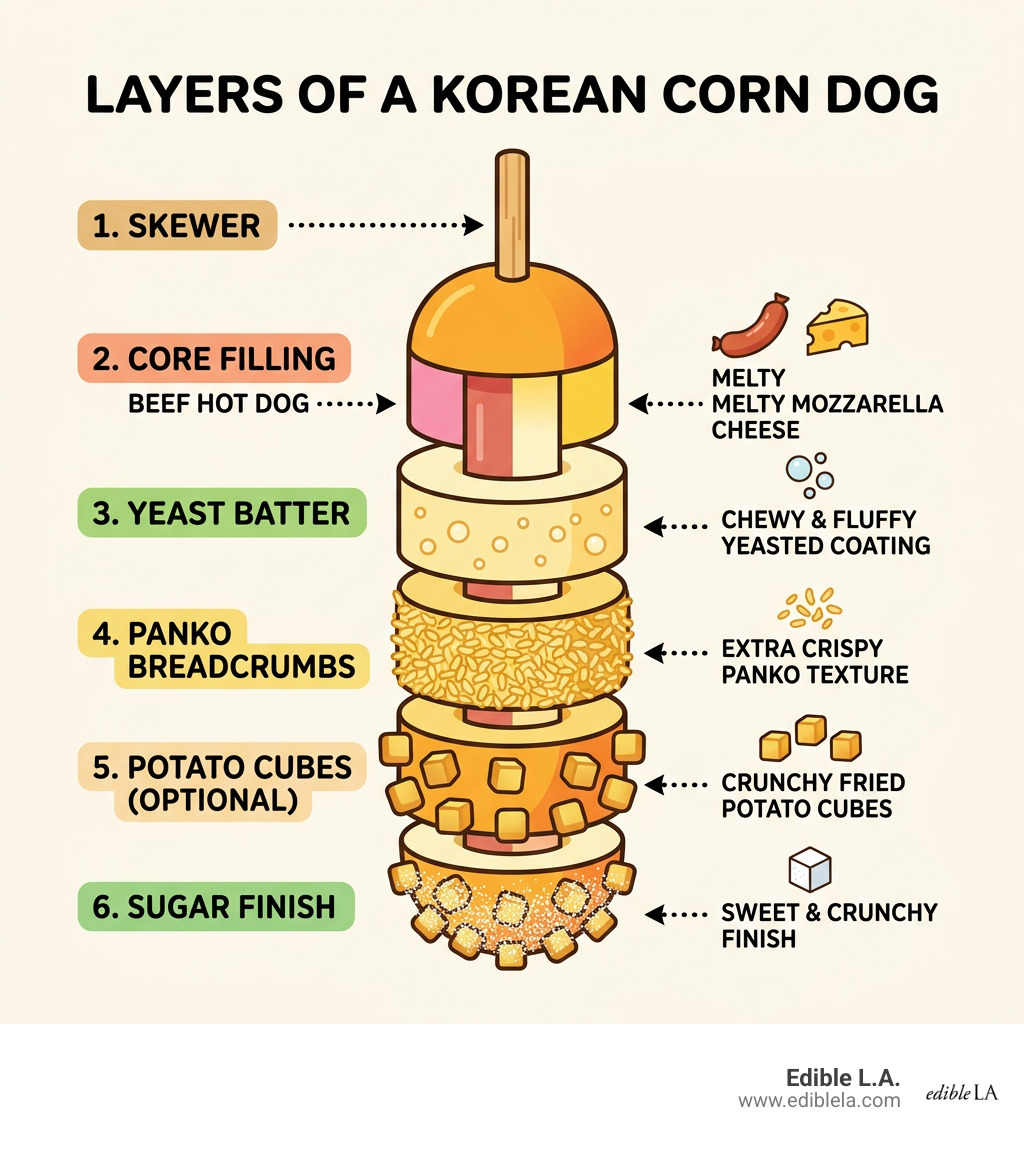
A korean corn dog is a skewered hot dog (or cheese stick) coated in a fluffy, yeasted batter, rolled in panko breadcrumbs, deep-fried until golden, and finished with a sprinkle of sugar. It is one of the most talked-about street foods in the world right now.
Quick answer — what makes a Korean corn dog different from an American one:
- Batter: Yeasted flour batter (sometimes with glutinous rice flour) vs. cornmeal batter
- Texture: Extra crispy panko crust outside, chewy and fluffy inside
- Fillings: Hot dog, mozzarella, fish cake, Spam, or a combo
- Toppings: Diced potatoes, ramen crumbles, Hot Cheetos, cornflakes
- Finish: Dusted with sugar, served with ketchup, mustard, or spicy aioli
- Origins: South Korean street food, popularized in the 1980s, franchised globally from 2016
It sounds like a simple upgrade to a fairground classic. But one bite — especially when melted mozzarella stretches a full foot from the stick — and you understand why these things broke the internet.
TikTok videos tagged #koreancorndog peaked in June and July 2021, triggering a Google Search spike and a brick-and-mortar boom across the US. Franchise chains expanded to dozens of locations almost overnight. In Los Angeles, lines wrapped around the block.
This guide covers everything: the history, the best homemade recipe, popular variations, where to find them in LA, and how to nail that signature cheese pull at home.
Must-know korean corn dog terms:
The Global Craze of the Korean Corn Dog
While the American corn dog is a nostalgic staple of state fairs and carnivals, the korean corn dog has transformed this humble snack into a customizable culinary event. The primary difference lies in the architecture of the batter and the "crunch factor." American versions typically use a cornmeal-based batter that results in a soft, cake-like texture. In contrast, the Korean version utilizes a yeasted dough, often enriched with glutinous rice flour, which provides a chewy, bread-like interior protected by a jagged, ultra-crispy panko shell.
Historically, hot dogs arrived in South Korea via American military rations during the Korean War. By the 1980s, they had evolved into a beloved street food, but the modern "gourmet" era began around 2016. A single franchise in Korea managed to open 650 stores in just three years, proving that the appetite for these sticks was more than just a passing phase.
| Feature | American Corn Dog | Korean Corn Dog |
|---|---|---|
| Batter Type | Cornmeal & Egg (Liquid) | Yeasted Flour/Rice Flour (Dough-like) |
| Outer Coating | Smooth Batter | Panko, Potatoes, or Ramen |
| Filling | Beef/Pork Sausage | Sausage, Mozzarella, Fish Cake, or Rice Cake |
| Flavor Profile | Savory | Sweet & Savory (Sugar dusted) |
| Texture | Soft & Spongy | Crunchy & Chewy |
The rise of the korean corn dog is inextricably linked to the "mukbang" culture and social media aesthetics. The visual appeal of a "Gamja-hotdog" (encrusted with cubed potatoes) or the legendary "cheese pull" made these snacks engineered for virality. To learn more about how corn is celebrated in other street food formats, check out our piece on grilled street corn.
Why the Korean Corn Dog Went Viral
The explosion of the korean corn dog on platforms like TikTok and Instagram was no accident. In June and July 2021, creator @dee.045 posted taste test videos that garnered millions of views, showcasing the audible "shatter" of the panko crust and the elastic stretch of the cheese.
The snack fits the "Instagrammable" mold perfectly: it is colorful, customizable, and offers a sensory experience that translates well to video. Unlike some viral food trends that are difficult to replicate or find, the korean corn dog sparked a massive brick-and-mortar expansion. In cities like Los Angeles, shops became community hubs where fans could wait for fresh, made-to-order sticks that looked exactly like the ones on their screens.
Essential Ingredients for a Korean Corn Dog
To achieve that authentic street-food quality at home, you cannot simply use pancake mix. You need a yeasted batter that can support heavy toppings.
- Glutinous Rice Flour: This is the secret to the "mochi-like" chewiness found in the best versions.
- Dry Yeast: Essential for creating a light, airy dough that expands during frying.
- Low-Moisture Mozzarella: Do not use fresh mozzarella; it contains too much water and will cause the batter to slip off. Use blocks of low-moisture mozzarella cut into thick sticks.
- Fillings: Beyond standard hot dogs, many authentic recipes use fish cakes or even rice cakes (tteok).
- Skewers: You need sturdy 6-inch thick skewers to handle the weight of the dough and potato toppings.
- Panko Breadcrumbs: These Japanese-style breadcrumbs provide the signature light and flaky crunch.
How to Make Authentic Korean Corn Dogs at Home
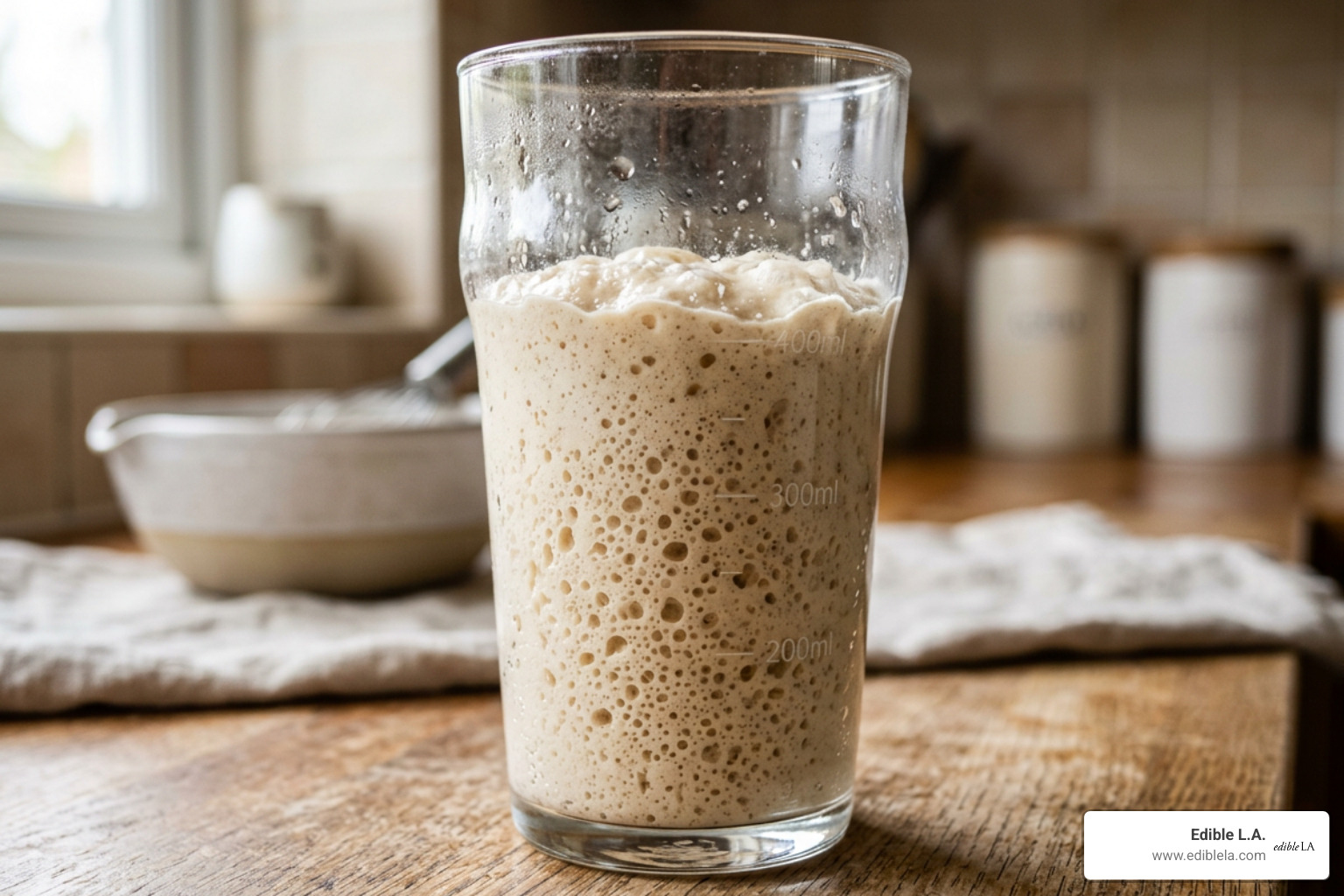
The process of making a korean corn dog is more about technique than complex cooking. The most critical stage is the batter preparation. You must whisk together your flour, sugar, yeast, and salt, then slowly fold in warm water until a thick, sticky dough forms.
This batter needs to proof in a warm place for about 45 to 60 minutes. You’ll know it’s ready when it has doubled in size and looks bubbly. A pro tip is to proof the batter in a tall, narrow vessel like a pint glass; this makes it much easier to submerge the entire skewer in one go. If you enjoy the intersection of corn and sweet-savory flavors, you might also like our recipe for sweet corn polenta with strawberries.
Achieving the Perfect Korean Corn Dog Texture
The "crunch" is what separates the amateurs from the pros. To ensure your toppings stick, follow these three rules:
- Keep it Cold: Your cheese and hot dogs should be chilled (or even slightly frozen) before dipping. This prevents the cheese from melting and leaking out before the batter has a chance to crisp up.
- The Twirl: When you dip the skewer into the batter, use a twisting motion to "wind" the dough around the filling.
- Adhesion: If you are adding potato cubes or ramen crumbles, press them firmly into the wet batter before rolling in panko.
Step-by-Step Frying and Assembly
- Assembly: Thread your chilled hot dog and mozzarella onto the skewer. Most people prefer the "half-and-half" style—cheese on top for the pull, sausage on the bottom for the savory finish.
- Dipping: Submerge and twirl the skewer in the proofed batter until fully coated.
- Coating: Immediately roll the battered stick in panko breadcrumbs (and optional toppings like potatoes).
- Frying: Carefully lower the stick into neutral oil (vegetable or canola) heated to exactly 350°F.
- The Cook: Fry for 3–4 minutes, rotating constantly to ensure an even golden-brown color.
- The Finish: Drain on a wire rack for 30 seconds, then immediately roll in granulated sugar while still hot.
Popular Variations and Toppings
The beauty of the korean corn dog is its versatility. In the streets of Myeongdong or the shops of Koreatown, you will find a dizzying array of options:
- Gamja-hotdog (Potato Corn Dog): The most iconic variation, featuring cubes of par-boiled potatoes embedded in the crust. It’s essentially a corn dog and french fries in one bite.
- Ramyeon-ttang: The outer layer is crusted with crushed instant ramen noodles for a unique, jagged crunch.
- Hot Cheetos: After frying and sugaring, the dog is brushed with mayo and rolled in crushed spicy flamin' hot chips.
- Cornflakes: For a lighter, toasted flavor, crushed cornflakes offer a different textural experience.
For those with dietary restrictions, the trend has evolved to include veganized French fry corn dogs using plant-based sausages and dairy-free cheese. Keto-friendly versions often swap the flour batter for a coating of crushed pork rinds or almond flour-based doughs.
Signature Sauces and Finishes
While the sugar coating is traditional and provides a necessary sweet-savory balance, the sauces are where you can get creative. The standard "street" style involves a zigzag of ketchup and yellow mustard. However, many modern fans prefer:
- Gochujang Aioli: A spicy, fermented chili mayo that adds heat.
- Honey Mustard: For a smoother sweetness.
- Condensed Milk: Often used on the "all-cheese" versions for a dessert-like finish.
- Spicy Mayo: A simple blend of Kewpie mayo and Sriracha.
Nutritional Information and Macros
Let's be honest: a korean corn dog is an indulgence. However, knowing the numbers can help with portion control.
A standard homemade cheese and sausage corn dog typically averages:
- Calories: 245–384 kcal (depending on toppings)
- Fat: 11–21g
- Carbohydrates: 27–34g
- Protein: 8–16g
Adding potato cubes or ramen crumbles will significantly increase the carbohydrate and calorie count.
Pro Tips for Success and Storage
The most common mistake when making a korean corn dog is oil temperature. If the oil is too cool, the batter will absorb the grease and become soggy. If it’s too hot, the outside will burn before the cheese inside has melted. Always use a kitchen thermometer to maintain 350°F.
Storage and Reheating:
- Fridge: You can store leftover corn dogs in an airtight container for 3–4 days.
- Freezer: For long-term storage, wrap them individually in plastic wrap and freeze for up to 2 months.
- The Secret to Reheating: Never use a microwave if you want to maintain the crunch. An air fryer is the gold standard for reheating.
Frequently Asked Questions about Korean Corn Dogs
How do you get the best cheese pull?
The secret to a legendary cheese pull is using low-moisture mozzarella and ensuring the cheese is at room temperature before it hits the fryer. If the cheese is ice-cold, it won't melt fully in the 3 minutes it takes to fry the batter. Serve the corn dog immediately—the pull is best within the first two minutes of coming out of the oil.
Can you make Korean corn dogs in an air fryer?
While you can't "fry" raw yeasted batter in an air fryer (it will just drip through the basket), the air fryer is perfect for cooking frozen, pre-made corn dogs. Set your air fryer to 375°F and cook for 8–9 minutes for a perfect, grease-free crunch.
What are the best fillings besides hot dogs?
If you aren't a fan of sausages, the "all-cheese" version is a crowd-pleaser. Other popular fillings include:
- Rice Cakes: For a very chewy, traditional Korean texture.
- Fish Cakes: Often found in street-side stalls.
- Spam: A classic savory alternative that pairs perfectly with the sugar coating.
- Cheddar: For a sharper, saltier flavor than mozzarella.
Conclusion
The korean corn dog is more than just a viral trend; it is a testament to culinary innovation and the global exchange of food culture. Here in Los Angeles, from the bustling streets of Koreatown to the beachside stands in Santa Monica, this snack has found a permanent home in our local food scene. Whether you are seeking out the best shop in your neighborhood or attempting the perfect yeasted batter in your own kitchen, the combination of crispy panko, melty cheese, and that surprising sprinkle of sugar is a delight that everyone should experience at least once.
At Edible L.A., we love sharing the stories behind the flavors that define our city. To find the best spots for street food and more in your area, be sure to explore our Neighborhood Guides.