Al Pastor 101
Discover al pastor origins, authentic marinade, trompo cooking tips & home recipes for perfect tacos al pastor.
The Mexican Street Food You Need to Know
Al pastor is a Mexican dish of thinly sliced, spit-roasted pork marinated in dried chilies, achiote, and pineapple — and it's one of the most beloved street foods in the world.
Here's the quick version:
- What it is: Marinated pork slow-cooked on a vertical rotisserie called a trompo, then shaved into warm corn tortillas
- Where it's from: Puebla, Central Mexico — with roots in Lebanese shawarma
- Key flavors: Smoky, tangy, sweet, and savory all at once
- Classic toppings: White onion, cilantro, roasted pineapple, and salsa
- How it's served: In small corn tortillas as tacos al pastor
If you've ever stood at a taqueria counter watching a taquero slice caramelized meat straight off a spinning cone of pork — catching it one-handed, then reaching up to shave a sliver of warm pineapple on top — you already know why al pastor has a cult following.
It's not just a taco. It's a centuries-long story of migration, culinary fusion, and pure street food magic. Lebanese immigrants brought vertical spit-roasting to Mexico in the early 20th century. Mexican cooks made it their own — swapping lamb for pork, adding achiote and guajillo chilies, and trading pita for corn tortillas. The result became one of Mexico's most iconic dishes.
For Angelenos, al pastor is everywhere — from late-night trucks to neighborhood taquerias. But not all al pastor is created equal, and understanding what makes it truly great changes how you eat it.
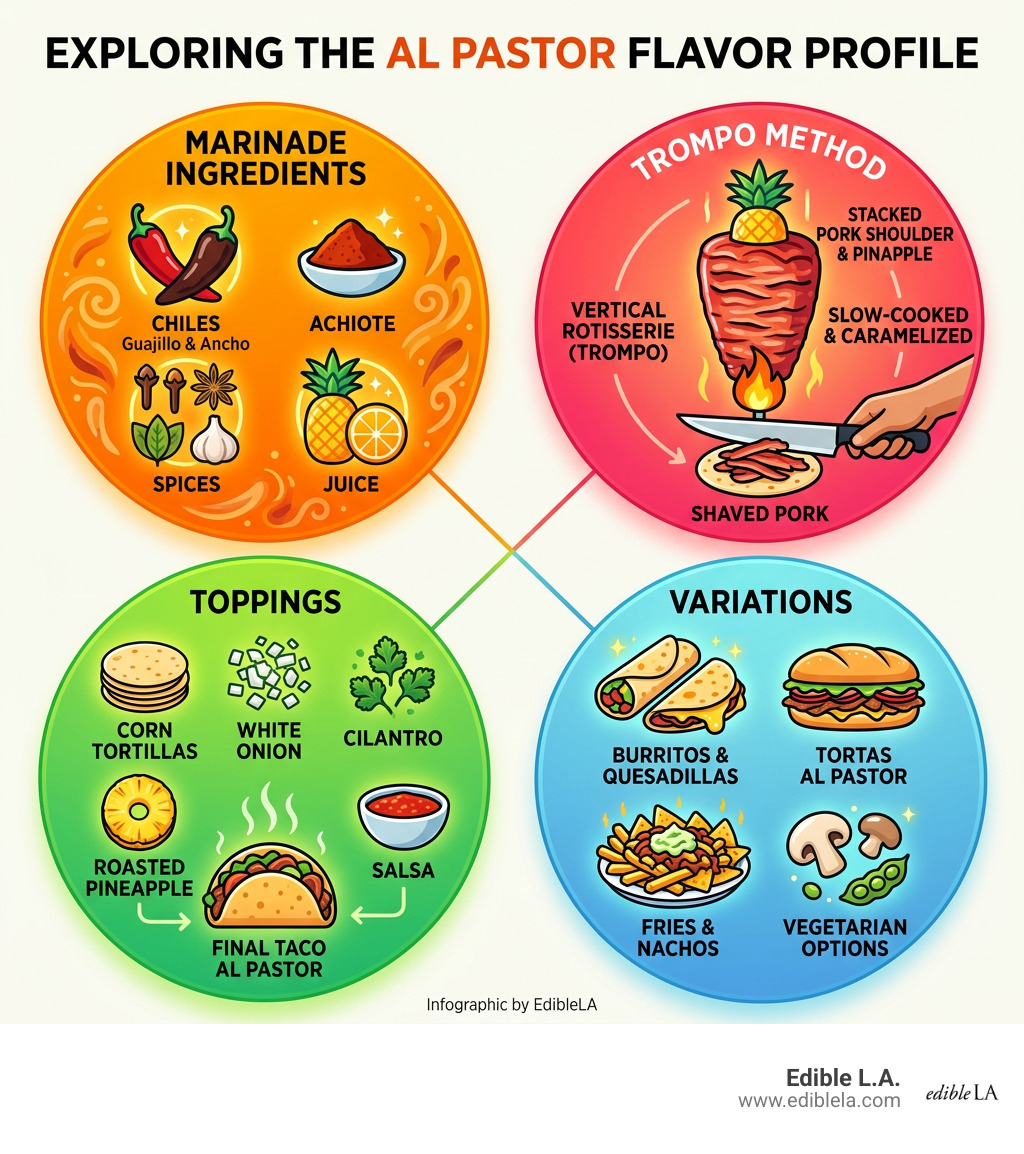
Al pastor vocab to learn:
What is Al Pastor? Meaning and Origins
The name al pastor literally translates to "herdsman style" or "shepherd style" in Spanish. While the modern version we eat on the streets of Hollywood or Silverlake is synonymous with the vertical rotisserie, the term originally referred to a traditional Mexican countryside method of roasting meat over an open fire. However, the al pastor we celebrate today is a beautiful example of culinary fusion.
The story begins in the Central Mexican region of Puebla. In the late 19th and early 20th centuries, a significant wave of Lebanese immigrants arrived in Mexico. Many were Maronite Christians who brought with them the tradition of shawarma — lamb marinated in Middle Eastern spices and cooked on a vertical spit.
In Puebla, these immigrants opened restaurants in the 1920s and 1930s, serving what became known as tacos árabes (Arab-style tacos). These early versions stayed true to their roots, using lamb served in pan árabe, a pita-style flour tortilla. But as the dish spread, Mexican cooks began to adapt it to local tastes. Because pork was more widely available and had no religious restrictions for the Lebanese Christian community, it replaced the lamb. The Middle Eastern spices were swapped for a vibrant Mexican adobo of dried chilies and achiote, and the pita was replaced by the humble corn tortilla.
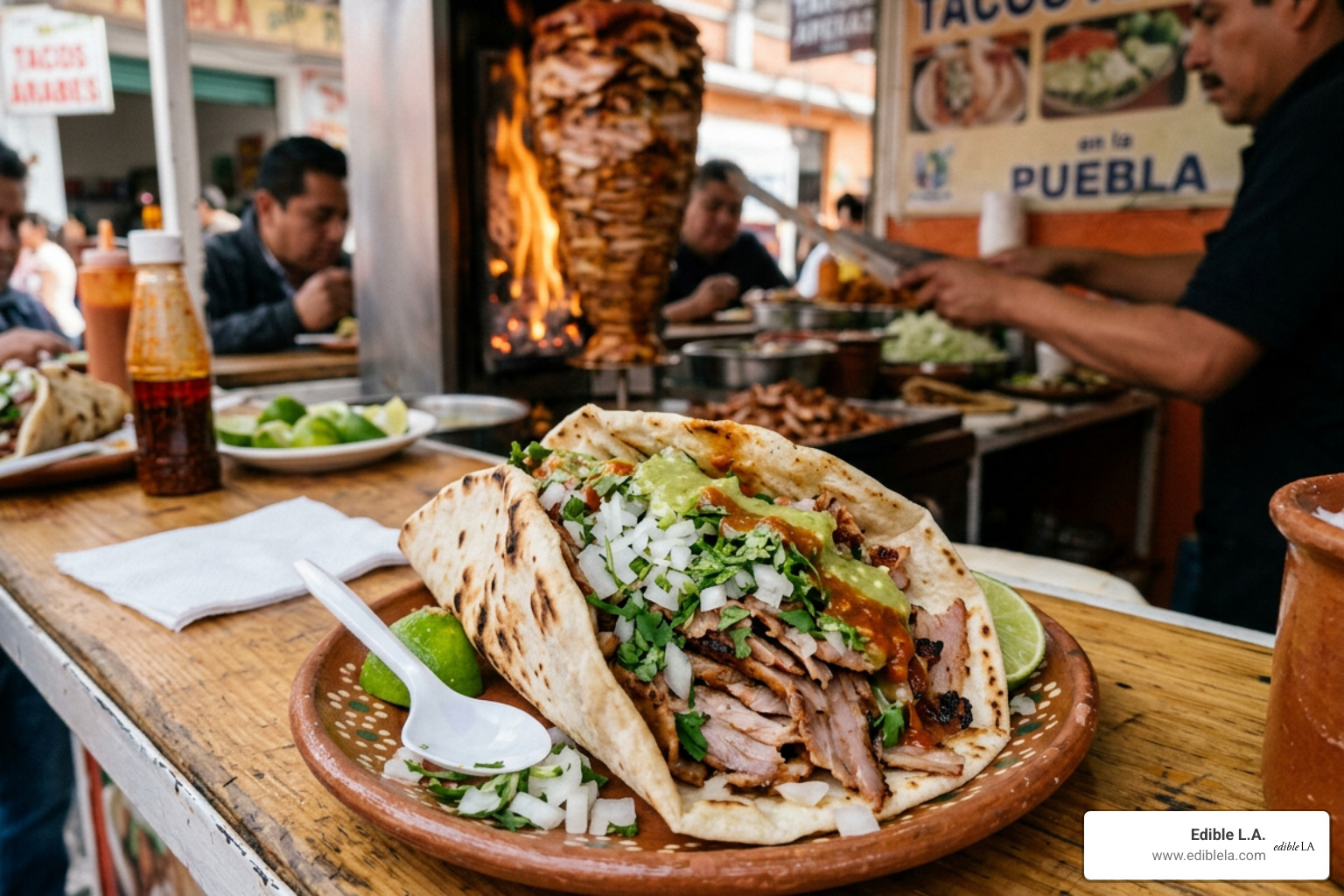
By the 1960s, al pastor exploded in popularity in Mexico City, where the evolution of the trompo reached its peak. The "trompo," which means "spinning top" in Spanish, refers to the toy-like shape of the stacked meat on the vertical rotisserie. This method allows the meat to baste in its own rendered fat and juices as it turns, creating those irresistibly crispy, caramelized edges that define the dish.
The Anatomy of an Authentic Marinade
The soul of al pastor lies in its marinade, a complex "adobo" that balances heat, earthiness, and acidity. An authentic marinade isn't just about flavor; it’s about the science of texture.
The Core Ingredients
- Guajillo Chilies: These are the workhorse of the marinade. They are dried mirasol chilies that provide a deep, reddish-brown color and a sweet, smoky flavor without being overly spicy. We recommend deseeding them to keep the heat manageable.
- Achiote Paste: Made from ground annatto seeds, this paste gives the meat its signature bright orange-red hue and a distinct, slightly bitter, earthy flavor.
- Pineapple Juice: This is a controversial but essential component. Many traditional recipes use pineapple juice in the marinade. However, there is a catch: fresh pineapple contains an enzyme called bromelain, which breaks down protein. If you marinate meat in fresh juice for too long, it can turn mushy. Canned pineapple juice is often preferred for marinades because the pasteurization process deactivates the bromelain, providing the sweetness and acidity without compromising the meat's structure.
- Vinegar: Usually apple cider or white vinegar, this provides the necessary acidity to balance the richness of the pork and helps the flavors penetrate the meat.
Salting and Timing
To achieve that "cured" texture seen in professional taquerias, some chefs use a salting technique of 1% to 2% salt by meat weight. This dissolves myosin in the muscle fibers, allowing the meat to retain more moisture and creating a tighter, sliceable texture once cooked. For the best results, we suggest marinating the pork for at least 4 to 8 hours, though 24 hours is the gold standard for full flavor penetration.
Essential Spices for Al Pastor
The spice profile of al pastor is where the Middle Eastern heritage meets Mexican terroir. We look for a blend that includes:
- Mexican Oregano: More citrusy and robust than Mediterranean varieties.
- Cumin and Allspice: A nod to the shawarma roots, providing warmth and depth.
- Cloves and Peppercorns: Just a hint to add aromatic complexity.
- Garlic: Roasted or fresh, it provides the essential savory backbone.
The Art of the Trompo: Cooking Al Pastor
Watching a master taquero work a trompo is like watching a performance. The meat—typically thin slices of pork shoulder (butt) or pork sirloin—is stacked meticulously on the vertical spit. Pork shoulder is the preferred choice because its high fat content ensures the meat stays juicy under the high heat of the vertical gas flame.
As the trompo spins, the outer layer of meat is exposed to direct heat, causing the fat to render and baste the layers below. This creates a beautiful caramelization. When an order is placed, the taquero uses a long, sharp knife to shave off thin, crispy ribbons of meat directly into a waiting tortilla.
Achieving the Perfect Al Pastor Texture at Home
Most of us don't have a vertical rotisserie in our kitchens in Santa Monica or Echo Park, but that shouldn't stop us from enjoying "taco bliss." There are several ways to replicate the trompo effect at home:
- The Loaf Pan Method: This is a brilliant hack for home cooks. By layering marinated pork slices (and sometimes thin strips of bacon for extra fat) into a loaf pan and baking it "low and slow" at around 275°F, you create a dense block of meat. Once cooled and sliced, you can sear the strips in a cast iron skillet to get those crispy edges.
- The "Mini Trompo": You can create a vertical skewer using a thick slice of pineapple as a base and a long wooden skewer. Stack your meat slices, top with another piece of pineapple, and roast it in the oven.
- The Broiler Technique: For the fastest results, slice your pork as thin as possible (pro tip: partially freeze the meat first to make slicing easier). Spread the slices in a single layer on a sheet pan and broil at 500°F until charred and smoky.
- Cast Iron Searing: If you're short on time, pan-frying small batches in a smoking-hot cast iron skillet or griddle provides excellent caramelization. Just be sure not to overcrowd the pan, or the meat will steam instead of sear.
How to Serve and Pair Tacos Al Pastor
An authentic taco al pastor is a study in balance. The richness of the pork needs the brightness of fresh garnishes to truly shine.
- The Tortilla: Always use small, "street taco" sized corn tortillas. We love to char them slightly over an open flame or on a dry skillet until they are pliable and fragrant.
- The "Holy Trinity" of Toppings: Finely chopped white onion, fresh cilantro, and a squeeze of lime juice.
- The Pineapple: A sliver of roasted pineapple is non-negotiable. The sweetness cuts through the spice of the adobo perfectly.
- The Salsa: Traditionally, a spicy salsa de chile de árbol is the go-to pairing. Its sharp heat and toasted chili flavor complement the smokiness of the meat.
Popular Variations
While the taco is king, the meat is versatile:
- Gringas: One of the most popular variations, consisting of al pastor meat and melted cheese (usually Oaxaca or Chihuahua) inside a large flour tortilla.
- Alambres: A stir-fry of al pastor meat, chopped bacon, bell peppers, onions, and melted cheese.
- Tortas: Served on a crusty bolillo roll with beans, avocado, and crema.
| Feature | Tacos Al Pastor | Gringas | Tacos Árabes |
|---|---|---|---|
| Tortilla Type | Corn (Small) | Flour (Large) | Pan Árabe (Pita-style) |
| Cheese | No | Yes (Melted) | No |
| Marinade | Chili & Achiote | Chili & Achiote | Middle Eastern Spices |
| Key Topping | Pineapple | Pineapple | Lemon/Chipotle Salsa |
Frequently Asked Questions about Al Pastor
Why is pineapple used in al pastor?
Pineapple serves two purposes. Historically, it was added as a local Mexican twist to the Lebanese recipe. Functionally, when placed at the top of a trompo, the juices drip down and help tenderize the meat while adding a sweet contrast to the savory spices. In a home setting, it provides the essential hit of sweetness that balances the smoky chilies.
Can you make al pastor with chicken or beef?
While pork shoulder is traditional due to its fat content, you can certainly adapt the recipe. Chicken thighs are a great substitute as they remain juicy. For beef, we recommend thinly sliced skirt steak or flank steak. Just keep in mind that cooking times will vary—chicken and beef generally cook faster than pork.
What is the difference between al pastor and adobada?
In many parts of Northern Mexico and Baja California, you might see "tacos de adobada." While the marinade is very similar (both use a chili-based adobo), the primary difference is often the cooking method. Al pastor specifically refers to the vertical spit method, whereas adobada can be grilled on a flat top or over charcoal. However, in many casual settings, the terms are used interchangeably.
Conclusion
From its origins in the kitchens of Puebla to the bustling street corners of Downtown Los Angeles and Venice, al pastor is a testament to the power of cultural exchange. It is a dish that honors its Middle Eastern ancestors while firmly planting its roots in Mexican soil.
At Edible L.A., we believe that the best food tells a story of the people and the seasons. Whether you are hunting for the best trompo in East L.A. or trying your hand at a loaf-pan version in your own kitchen, we hope this guide helps you appreciate the craft behind every bite. Supporting our local food culture means celebrating these diverse traditions that make our city's culinary landscape so vibrant.
Ready to bring these flavors into your own kitchen? Explore more authentic L.A. recipes and discover the best of what our local food scene has to offer.